US-Iran Escalation Intensifies: Naval Buildup, Missile Tests, and Failed Diplomacy Push Region Toward Brink
Published Date: 21 Feb, 2026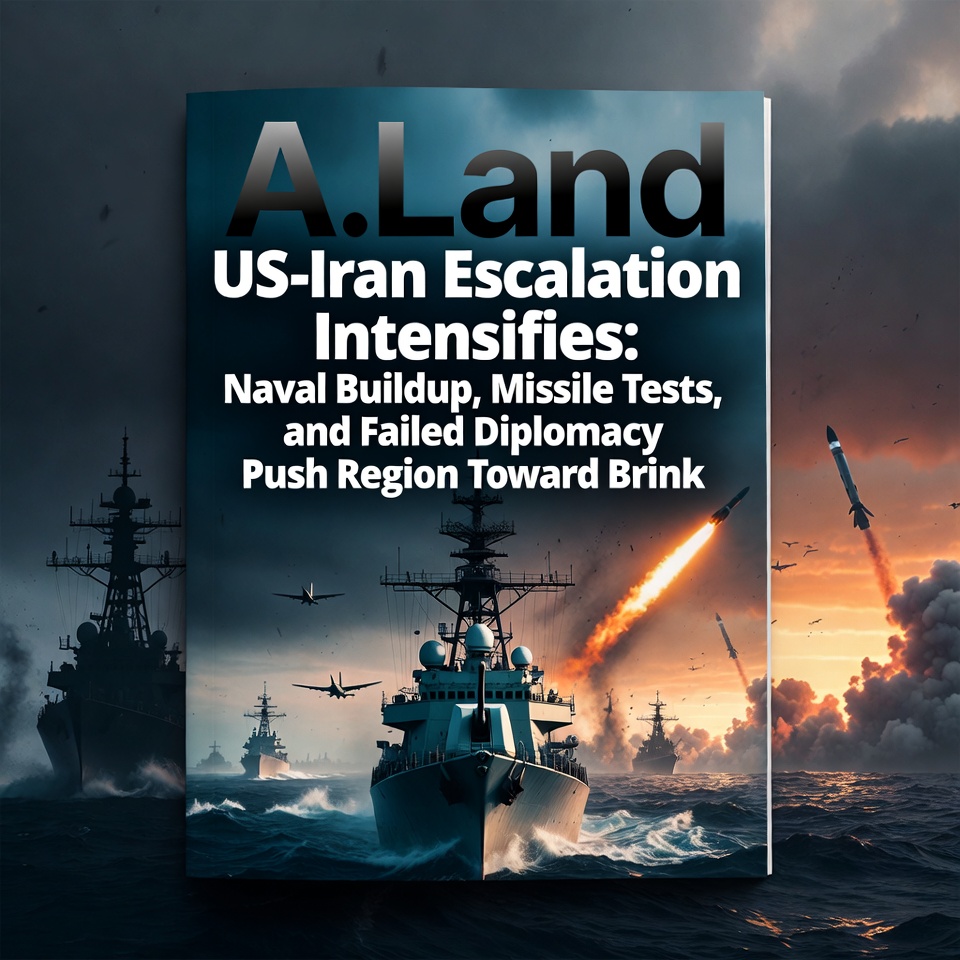
February 21, 2026
Tensions between the United States and Iran reached a dangerous new peak today as the U.S. deployed a second aircraft carrier strike group to the Arabian Sea, Iran conducted live-fire missile drills near the Strait of Hormuz, and indirect nuclear talks in Geneva collapsed without any agreement. The combination of military posturing, failed diplomacy, and proxy threats has created the most volatile environment in the Persian Gulf since the 2019 tanker crisis.
The USS Dwight D. Eisenhower carrier strike group joined the USS Abraham Lincoln in the region overnight, giving U.S. Central Command two carrier groups, multiple destroyers, submarines, and air wings within striking distance of Iran. Pentagon officials described the deployment as “defensive and proportionate” to protect freedom of navigation and deter Iranian aggression, but Iranian state media labeled it “an act of war” and a “clear provocation.”
In direct response, Iran’s Revolutionary Guard Corps conducted large-scale naval and missile exercises in the Strait of Hormuz and Gulf of Oman involving fast-attack boats, anti-ship cruise missiles, ballistic missiles, and submarine forces. Gen. Hossein Salami, IRGC commander, stated: “Any hostile move against Iranian vessels or territory will be met with crushing and multi-layered retaliation across land, sea, air, and cyber domains.”
The Geneva nuclear talks, mediated by Oman and Switzerland, ended without progress on February 17. U.S. Special Envoy Robert Malley reiterated demands for a complete halt to enrichment above 3.67 percent, dismantlement of advanced centrifuges, and missile curbs. Iranian Foreign Minister Abbas Araghchi rejected the conditions as “unrealistic and coercive,” confirming continued enrichment to 60% and additional IR-6 centrifuge installations.
Iranian Supreme Leader Ali Khamenei reinforced Tehran’s hard line in a speech yesterday, calling enrichment and missile programs “non-negotiable rights” essential for national defense.
Proxy and Regional Flashpoints
- Gaza: Israeli airstrikes intensified after detecting Hamas tunnel activity, killing 62 Palestinians in 24 hours according to Gaza health authorities. Hamas fired rockets toward Ashkelon.
- Lebanon: Hezbollah launched 45 rockets into northern Israel, injuring 14. The IDF responded with artillery and airstrikes north of the Litani.
- Yemen/Red Sea: Houthis fired four anti-ship missiles toward commercial vessels; three were intercepted by U.S. warships. Houthi spokesman Yahya Saree threatened “expanded operations” if U.S. naval presence continues.
- Iraq/Syria: Iranian-backed militias fired rockets at U.S. bases near Al Asad and Al-Tanf. U.S. forces conducted retaliatory airstrikes on militia sites in eastern Syria.
Oil prices surged 5.1% today, with Brent crude briefly exceeding $91 per barrel. Shipping insurance premiums for the Strait of Hormuz rose 48% in 72 hours.
European Union High Representative Kaja Kallas urged “immediate de-escalation” and warned that “the region is one misstep away from catastrophic conflict.” UN Secretary-General António Guterres called for an emergency Security Council meeting. Israel Prime Minister Benjamin Netanyahu stated Israel “will not hesitate to defend itself” if Iran or its proxies escalate further.
With the JCPOA snap-back mechanism still active until October 2025 and Iran’s breakout time now measured in weeks, diplomats warn the margin for error has nearly vanished. The next 48–72 hours will be critical in determining whether the current escalation can be contained through back-channel diplomacy or spirals into open regional war. Live updates continue from major broadcasters and official government sources.
Date: 21 Feb, 2026