US-Iran Brinkmanship Intensifies as Trump Signals Ongoing Talks
Published Date: 1 Feb, 2026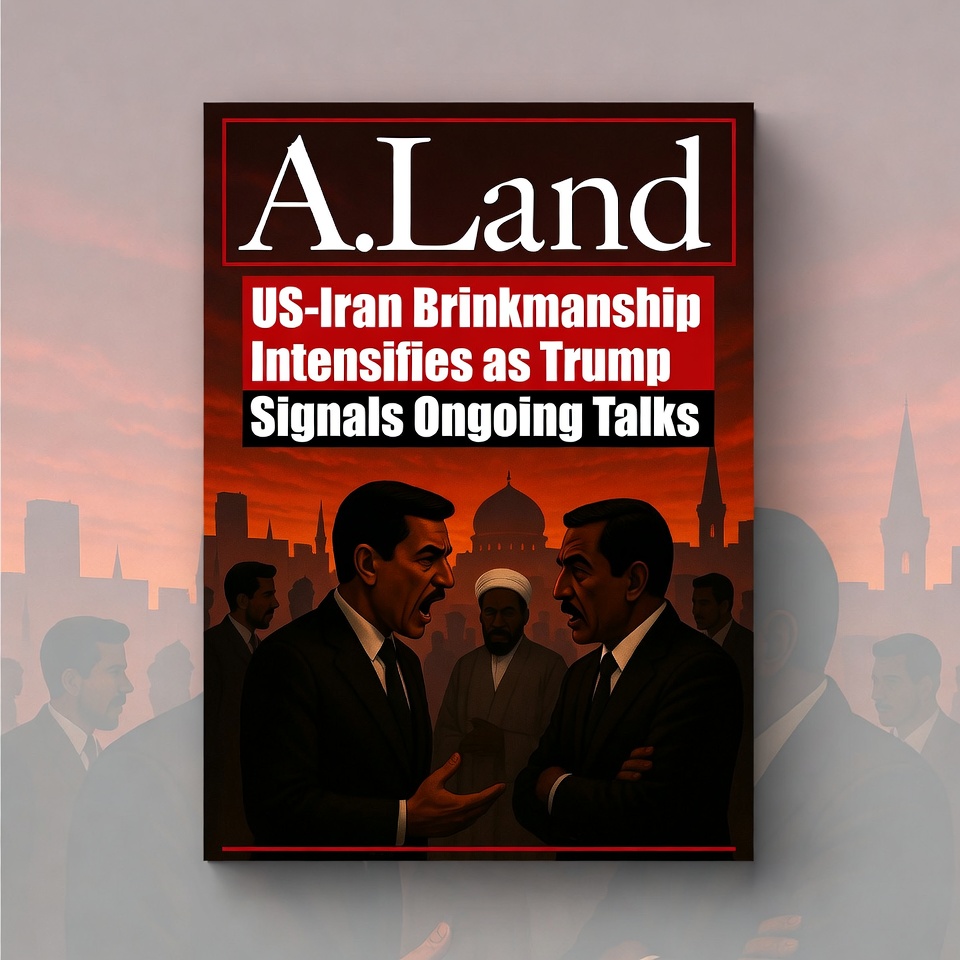
February 01, 2026
Tensions between the United States and Iran remain at a dangerous high as both sides exchange sharp warnings and mixed signals on diplomacy. President Donald Trump stated Saturday that Iran is "seriously talking" with Washington amid a massive U.S. naval deployment in the Gulf, while Iran's Supreme Leader Ayatollah Ali Khamenei declared Sunday that any American attack would ignite a broader regional conflict.
The exchange underscores a delicate balance between escalating military posturing and tentative diplomatic channels aimed at averting open confrontation over Iran's nuclear program, ballistic missiles, and regional influence.
Trump Emphasizes Negotiations Amid Armada Buildup
Speaking to reporters, Trump reiterated that Iran was engaging seriously in discussions, expressing hope for a deal ensuring "no nuclear weapons." He highlighted the U.S. naval presence, including the USS Abraham Lincoln carrier strike group, describing it as a powerful force moving with purpose and ready for action if needed.
Trump indicated a deadline had been conveyed to Tehran for meaningful progress, though he provided no specifics. He framed the talks as a path to a satisfactory outcome benefiting all parties, while cautioning that failure could lead to decisive measures.
The comments follow weeks of threats tied initially to Iran's crackdown on antigovernment protests and later focused on preventing nuclear reconstitution after U.S. and Israeli strikes damaged key facilities in 2025.
Khamenei Issues Stark Warning Against U.S. Aggression
In a public address broadcast on state television, Khamenei asserted that Iran seeks no war but would respond forcefully to any assault. He emphasized that U.S. military action would not remain confined to Iran, potentially drawing in the wider region and causing severe consequences for all involved.
The supreme leader's remarks came amid reports of Iranian military drills in the Strait of Hormuz and positioning of assets near U.S. naval forces. Officials reiterated that Iran's defensive capabilities, including missiles, remain non-negotiable red lines.
Diplomatic Flickers Amid Mutual Distrust
Despite the heated rhetoric, signs of communication persist. Iran's Supreme National Security Council head Ali Larijani indicated Saturday that structural arrangements for negotiations were advancing, countering narratives of inevitable conflict.
Foreign Minister Abbas Araghchi affirmed Tehran's readiness for fair, equitable nuclear discussions on equal footing, free from coercion or threats, while insisting missile and defense matters stay off the table. No direct meetings have been confirmed, and Iran rejects talks under military pressure.
Regional mediators, including Qatar, Turkey, and others, have intensified efforts to facilitate dialogue and de-escalate. Qatar's prime minister met Larijani in Tehran to discuss reducing regional tensions.
Core Disputes Center on Nuclear Demands
The standoff revolves around U.S. insistence on complete curbs to Iran's nuclear path, ballistic missile program, proxy support, and in some accounts, recognition of Israel, conditions Tehran views as existential threats to its sovereignty and security doctrine.
Iran maintains its nuclear activities serve peaceful purposes and accuses Washington of using threats to impose unilateral terms. Reconstruction of damaged sites continues, with reports of efforts to place infrastructure deeper underground for protection.
Previous indirect talks collapsed amid military actions in 2025, leaving deep mistrust. Current back-channel efforts appear limited, with both capitals balancing public toughness and private outreach to avoid miscalculation.
High Stakes for Regional Stability
With warships in proximity, exercises underway, and rhetoric sharp, the Gulf watches nervously for any spark that could disrupt global energy flows or ignite wider conflict involving proxies and allies.
The coming days will test whether diplomatic signals translate into substantive progress or if military preparations dominate. For now, the situation remains fluid, with both sides preserving options for negotiation while keeping fingers near triggers. The path to de-escalation narrows, but the alternative carries catastrophic risks for the Middle East and beyond.
Date: 1 Feb, 2026