US-China Trade War Escalates: 100% Tariffs Announced Over Rare Earths Dispute
Published Date: 11th Oct, 2025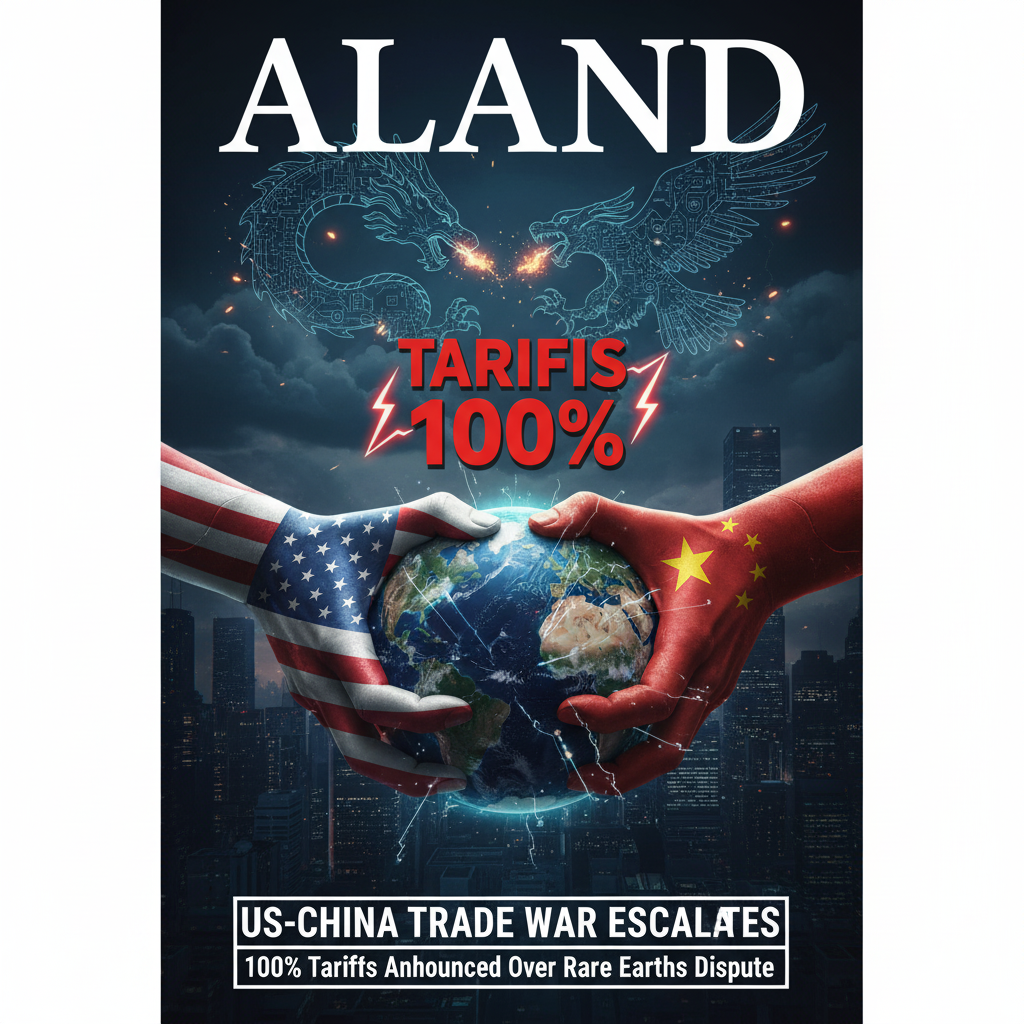
On Friday, US President Donald Trump announced the United States would impose an additional 100% tariff on all goods imported from China, effective November 1, 2025. This significant levy will be "over and above any tariff that they are currently paying," marking a dramatic escalation in the trade dispute. Alongside the tariffs, the US plans to implement export controls on "any and all critical software" starting the same date.
The move is a direct response to what President Trump described as "extraordinarily aggressive" trade actions by Beijing, specifically referencing China's new, sweeping export controls on rare earth elements and other critical minerals.
Rare earths—a group of 17 minerals essential for manufacturing everything from electric vehicles (EVs) and fighter jets to smartphones and wind turbines—are overwhelmingly controlled by China, which processes over 90% of the global supply.
Earlier this week, China significantly expanded its list of controlled rare earth elements and restricted the export of related production technologies. The new Chinese regulations require foreign companies using Chinese-origin rare earths, refining, or magnet-making technology to seek Beijing's export approval, a move the US views as an attempt to leverage its near-monopoly for geopolitical advantage.
Analysts are warning that the re-escalation of the trade war will have immediate and long-term consequences:
US consumers are likely to face higher prices on a vast range of goods, as businesses pass on the dramatically increased tariff costs.
Industries reliant on critical components, particularly those using rare earths, electronics, and high-tech software, face immediate disruption and a pressing need to diversify their supply chains away from both the US and China.
The new US export controls on critical software, while currently vague, could deal a significant blow to China's technology sector, mirroring US-led restrictions on advanced semiconductors and related equipment.
Some economies, notably India, are being positioned as potential beneficiaries. Experts suggest that the high tariffs on Chinese goods may prompt American buyers to shift sourcing to alternative manufacturing hubs, creating new export opportunities in sectors like textiles, toys, and electronics.
The sudden breakdown of the truce throws cold water on previously anticipated diplomatic efforts. A planned meeting between President Trump and Chinese President Xi Jinping on the sidelines of the upcoming Asia-Pacific Economic Cooperation (APEC) summit in South Korea is now in serious doubt.
Beijing has yet to announce its specific retaliatory measures but has condemned Washington’s actions as "reckless" and insisted that "dialogue must be based on mutual respect, not threats."
As the November 1st deadline approaches, the global business community remains on edge, bracing for an unpredictable new chapter in the US-China economic rivalry that is once again redefining the landscape of international trade.
Date: 11th Oct, 2025