U.S. Armada and Middle East Tensions Escalate
Published Date: 24th Jan, 2026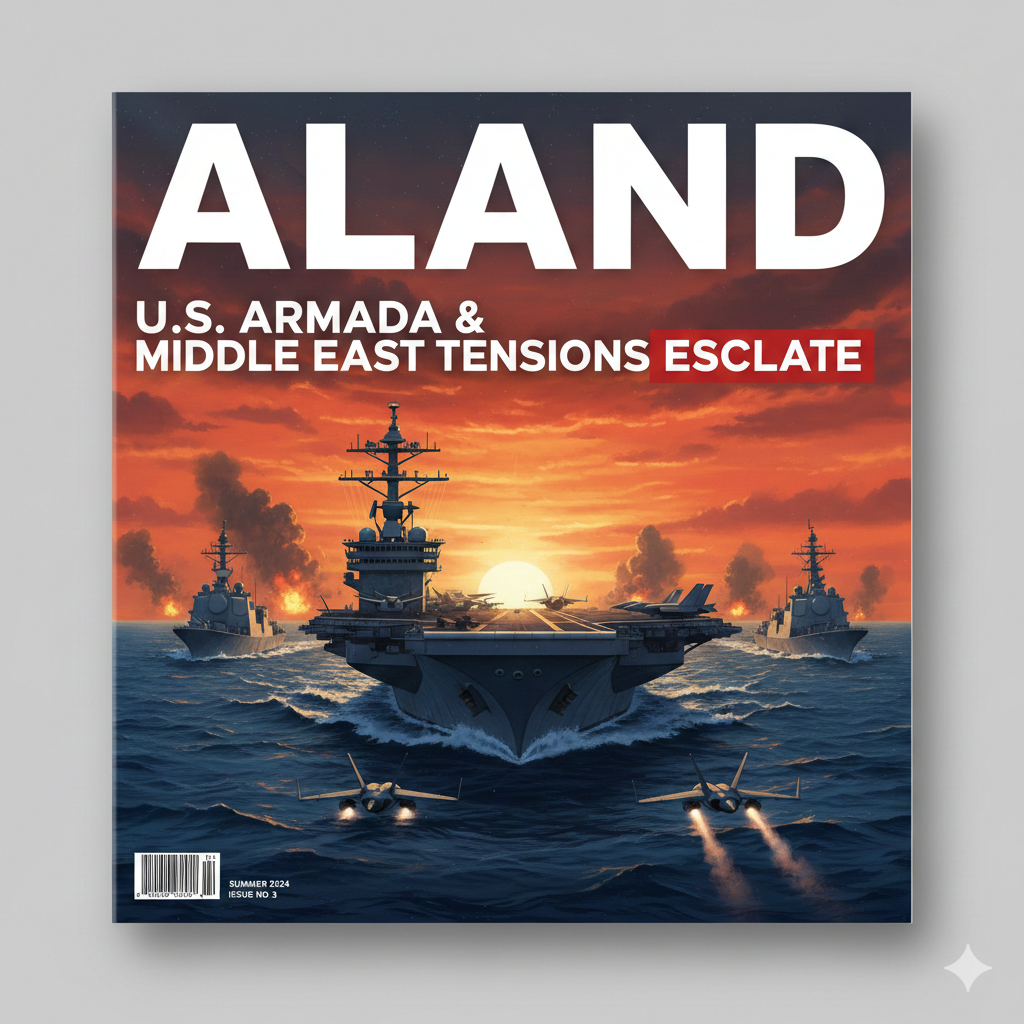
Military Buildup in the Middle East
Tensions between the United States and Iran have sharply increased as the U.S. military sends a powerful naval force toward the Middle East. The group includes a major aircraft carrier strike group along with multiple guided‑missile destroyers and support vessels. U.S. officials say the movement of these forces is intended to deter aggression and signal that Washington is watching developments in the region closely.
The aircraft carrier and accompanying ships are expected to join existing U.S. naval forces in the waters around the Persian Gulf and the Indian Ocean. In addition to surface fleet movements, the United States has intensified transport flights carrying heavy equipment and defense systems to bases in the region.
U.S. Leadership Emphasizes Restraint
The U.S. president described the buildup as an “armada” heading toward the region but stressed that he hoped military engagement would not be necessary. He reiterated that the United States is prepared for all scenarios but prefers a peaceful resolution through diplomatic channels. His comments reflect concern over recent developments and an effort to project strength without immediate escalation.
Iranian Response and Regional Alert
Iran has reacted strongly to the U.S. military presence. Senior Iranian officials have warned that any attack by foreign forces would be interpreted as an act of all‑out war. Tehran has placed its military on high alert and issued statements emphasizing readiness to respond to any provocation. This position has heightened fears of an unintended confrontation between the two powers.
Iran’s rhetoric has also underscored its determination to defend national sovereignty and resist what it perceives as external interference. Iranian military commanders have declared that their forces remain vigilant and prepared for the worst, reinforcing a tense environment throughout the region.
Airlines and Civilian Sector Impact
Amid rising concerns about potential conflict, several commercial airlines temporarily suspended flights to and over parts of the Middle East. These decisions were made as carriers reassess risks associated with geopolitical volatility and seek to prioritize passenger safety. Suspension of flights has added to a sense of uncertainty among travelers and commercial interests.
Civilian populations in countries across the Middle East are watching developments with anxiety as the buildup unfolds. Markets, diplomatic communities, and regional governments are all adjusting to the possibility of increased instability should tensions transition from threats to military action.
Broader Regional Dynamics
The current situation is unfolding against a backdrop of deep unrest and political turmoil in the region. Widespread protests in Iran were met with a severe government crackdown that resulted in thousands of deaths and mass arrests. The unrest has exacerbated existing strains between Tehran and Western capitals and has been a focus of international concern.
The presence of U.S. naval forces in the region is part of a broader strategy to reinforce deterrence, reassure allies, and maintain freedom of navigation in strategic waterways. It also reflects ongoing efforts to respond to evolving threats from proxy groups and state actors across the Middle East.
Future Uncertainties
With major military assets in motion and strong statements from both Washington and Tehran, the region finds itself at a crossroads. Diplomatic channels remain active, but fears of miscalculations or sudden flare‑ups persist. Leaders on all sides face the challenge of managing a volatile situation that has the potential to impact global security, energy markets, and civilian life across multiple nations.
As the U.S. armada moves closer and tensions remain high, world capitals are closely monitoring events, weighing cautious engagement against the risk of broader confrontation. The coming days may prove decisive in determining whether the current crisis de‑escalates or evolves into a larger conflict that reshapes regional dynamics.
Date: 24th Jan, 2026