Trump-Xi Face-Off in Gyeongju: Trade Truce or Tariff Trigger?
Published Date: 29th Oct, 2025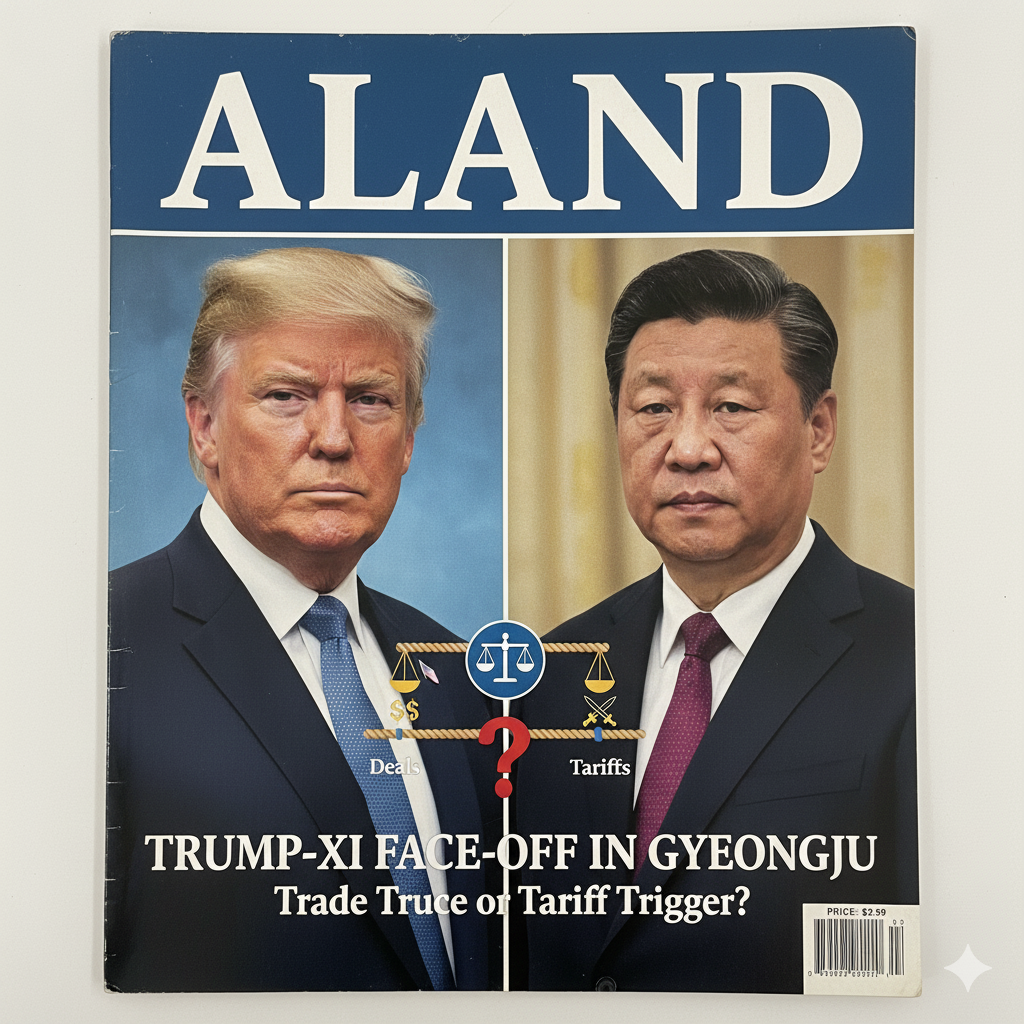
Asia Tour Climax Set for Thursday as Superpowers Seek Détente
Gyeongju, South Korea, October 29, 2025 – The historic city of Gyeongju—once capital of the ancient Silla kingdom—transforms into the global epicenter of power Thursday when President Donald Trump and Chinese President Xi Jinping sit down for their first summit since the renewal of trade hostilities. Against a backdrop of 1,400-year-old pagodas and autumn maples, the two leaders will attempt to stabilize a relationship that has whipsawed markets, rattled allies, and left the world economy on edge.
Trump touched down in South Korea Tuesday night after a high-octane swing through Tokyo and Kuala Lumpur, where preliminary US-China talks produced a fragile framework agreement. The deal, hammered out on the sidelines of the ASEAN summit, commits China to lift export quotas on rare earths and boost purchases of American farm goods. In exchange, the US agreed to hold off on a threatened 100 percent tariff escalation—set to hit everything from smartphones to steel—until after the Gyeongju talks.
From Brinkmanship to Bargaining
The stakes could not be higher. Since January, Trump has imposed or threatened tariffs totaling $550 billion on Chinese goods, citing fentanyl flows and currency manipulation. Beijing retaliated with duties on US agriculture and restrictions on critical minerals, driving soybean prices to decade lows and pushing global supply chains into chaos. Factories in Vietnam and Mexico scrambled to reroute production, while Wall Street endured its wildest swings since the pandemic.
Yet in Malaysia’s humid conference halls, a breakthrough emerged. China’s Vice Premier He Lifeng and US Trade Representative Jamieson Greer finalized a 90-day “cooling-off” pact that includes:
- Immediate resumption of rare-earth shipments to US defense contractors
- $18 billion in new orders for American pork, corn, and LNG
- A joint task force on fentanyl precursor chemicals
Trump hailed the draft as “the biggest agricultural deal in history,” while Xi’s team called it “a step toward mutual benefit.” Both sides now race to turn the framework into a binding accord before the Gyeongju clock strikes midnight.
The Gyeongju Agenda: Trade, Tech, Taiwan
Thursday’s summit, hosted at the lakeside Hilton Gyeongju, will run from 9 a.m. to early afternoon, followed by a working lunch overlooking Bomun Lake. Aides have leaked a packed agenda:
- Trade Normalization – Phased tariff rollbacks tied to verifiable Chinese purchases
- Tech Decoupling – US push for tighter export controls on AI chips; China seeks Huawei reprieve
- Taiwan Clause – Beijing demands explicit US opposition to independence; Washington wants arms-sales transparency
- Fentanyl Crackdown – Joint customs inspections and precursor tracking
South Korean President Lee Jae-myung will join for a brief trilateral segment, hoping to secure US commitments on North Korean denuclearization and Korean Peninsula stability.
Asia Caught in the Crosscurrents
The region has felt every tremor. Japan quietly lobbied for tariff exemptions on autos and robotics; the Philippines offered naval base access in exchange for trade relief. ASEAN leaders, meeting Trump in Kuala Lumpur, presented a unified plea: no more collateral damage. “We cannot be the battlefield for your trade war,” Malaysian Prime Minister Anwar Ibrahim told reporters.
Markets are pricing in cautious optimism. The Hang Seng rallied 3.2 percent on news of the framework deal, while Chicago corn futures jumped 8 percent. But analysts warn that failure in Gyeongju could trigger an immediate sell-off, with the IMF estimating a 1.8 percent hit to global growth in 2026.
The Human Element
Beyond balance sheets, real lives hang in the balance. Iowa farmers, burned by canceled Chinese orders, watch grain elevators fill to bursting. Shenzhen factory workers face layoffs if tariffs snap back. In Gyeongju’s nearby fishing villages, residents stockpile rice and batteries—not for typhoons, but for the economic storm that could follow a failed summit.
As the sun sets over the royal tombs of Silla, motorcades snake through narrow streets. Secret Service agents blend with Korean police; Chinese security teams scan rooftops. Inside the summit venue, translators rehearse phrases like “reciprocal benefit” and “strategic autonomy.”
History teaches that great-power deals are rarely born in harmony. But in Gyeongju—where ancient kings forged alliances under the same autumn sky—Trump and Xi have one day to prove that rivalry need not end in ruin. The world will know by sundown whether the handshake is a photo-op or the start of something durable.
Date: 29th Oct, 2025