Trump’s 15% Global Tariff Now in Effect: Prices Spike, Retaliation Begins, Markets Reel
Published Date: 24th Feb, 2026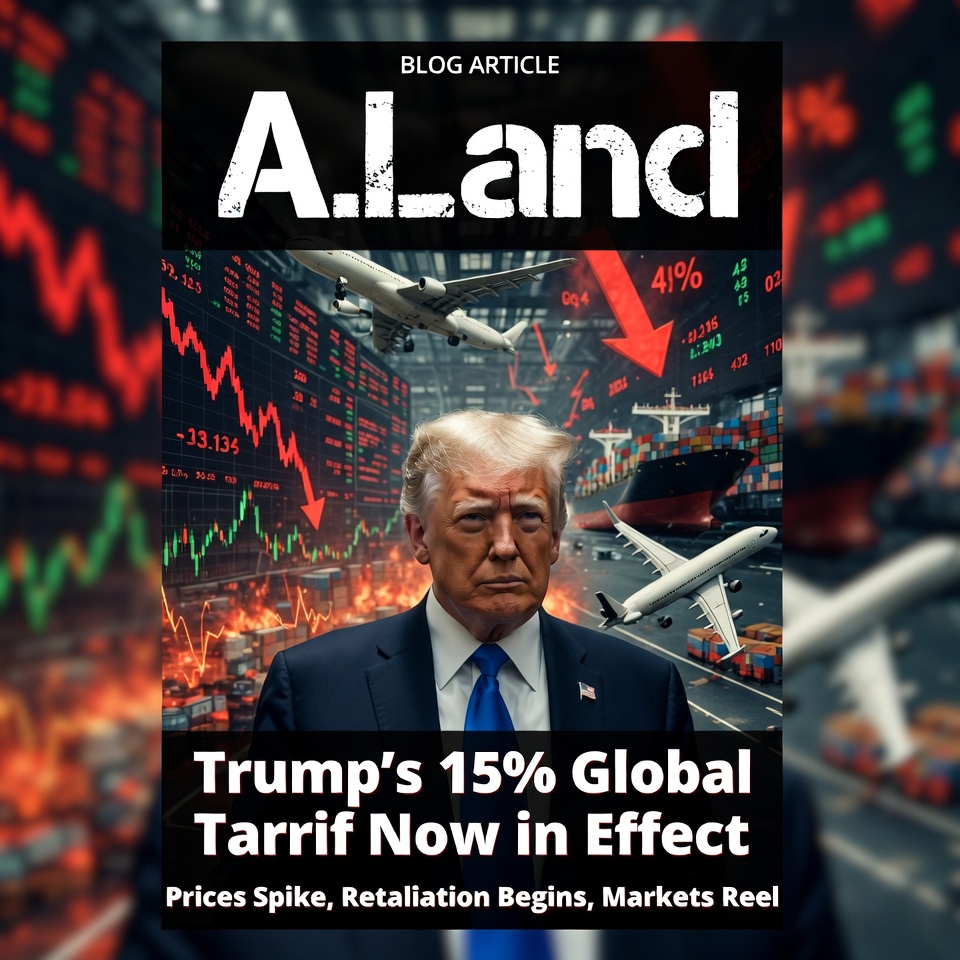
February 24, 2026
President Donald Trump’s controversial 15% universal tariff on nearly all imports officially took effect at midnight last night (March 1 implementation window closed), triggering immediate price increases at U.S. retailers, supply-chain disruptions, and a wave of retaliatory tariffs from major trading partners. The broad levy applied to most goods except those from free-trade partners (Canada, Mexico, South Korea) and a short list of exempted critical items has already driven up landed costs across consumer electronics, apparel, footwear, automobiles, toys, furniture, and thousands of everyday products.
Early retailer price surveys show:
- Consumer electronics (TVs, smartphones, laptops): +9–17%
- Apparel and footwear: +11–19%
- Home appliances and furniture: +8–15%
- Toys and sporting goods: +12–18%
- Imported food products (coffee, seafood, specialty items): +6–11%
Walmart, Target, Amazon, Best Buy, and Home Depot have issued blanket price adjustments on tens of thousands of SKUs since early March 1. Industry groups estimate the average American household will face an additional $1,900–$2,400 in annual costs from imported goods alone.
Trump defended the policy during a Fox News interview this morning: “We’re finally making the rest of the world pay their fair share. This tariff brings in hundreds of billions to rebuild our infrastructure, secure our borders, and cut taxes for working Americans. The pain is short-term; the gain is permanent.”
White House officials project $380–420 billion in annual revenue, though independent economists from the Peterson Institute and Tax Foundation estimate the figure closer to $290–340 billion after accounting for reduced import volumes, substitution effects, and retaliatory damage to U.S. exports.
Retaliation Accelerates
China announced 25–60% retaliatory tariffs on U.S. agricultural products (soybeans, pork, corn), aircraft, semiconductors, liquified natural gas, and passenger vehicles, effective immediately. The European Union approved countermeasures targeting U.S. whiskey, motorcycles, agricultural machinery, tech products, and pharmaceuticals, with duties starting April 1. Canada and Mexico have invoked emergency USMCA consultations and signaled mirror tariffs on U.S. energy, steel, and consumer goods if no exemptions are granted by March 15.
The World Trade Organization received formal complaints from 14 member states within 48 hours of implementation. Legal challenges have already been filed in the U.S. Court of International Trade by the National Retail Federation, Consumer Technology Association, and American Automotive Policy Council, citing the recent Supreme Court ruling limiting broad presidential tariff authority under Section 232 and IEEPA.
Market and Political Fallout
U.S. equity markets have lost more than 5% since the executive order was signed February 21: Dow -4.9%, S&P 500 -5.3%, Nasdaq -6.7%. Import-heavy sectors have been hit hardest, while domestic steel, aluminum, and select defense stocks have gained modestly.
The U.S. dollar has strengthened 2.8% against major currencies, making imports even more expensive in dollar terms. Inflation expectations have jumped, with the 5-year breakeven rate rising 35 basis points to 2.75% in the past week.
Republican congressional leaders have offered lukewarm support. Senate Majority Leader John Thune (R-SD) called the tariffs “a strong negotiating lever” but urged quick exemptions for critical inputs. House Speaker Mike Johnson (R-LA) defended the move as fulfilling campaign promises. Democratic leaders have condemned the policy as “a massive hidden tax on American families.” Senate Minority Leader Chuck Schumer (D-NY) stated: “This is inflation by executive order.”
The 15% global tariff is one of the boldest and most polarizing economic policies of Trump’s second term. Whether it survives legal challenges, international retaliation, and domestic political pressure will shape U.S. trade strategy and the broader global economy for years to come. Implementation effects, retaliatory measures, and potential exemptions will dominate headlines in the weeks ahead. Updates continue as markets, businesses, and governments react.
Date: 24th Feb, 2026