Trump Imposes 15% Universal Tariff on All Imports, Citing National Security and Trade Fairness
Published Date: 21 Feb, 2026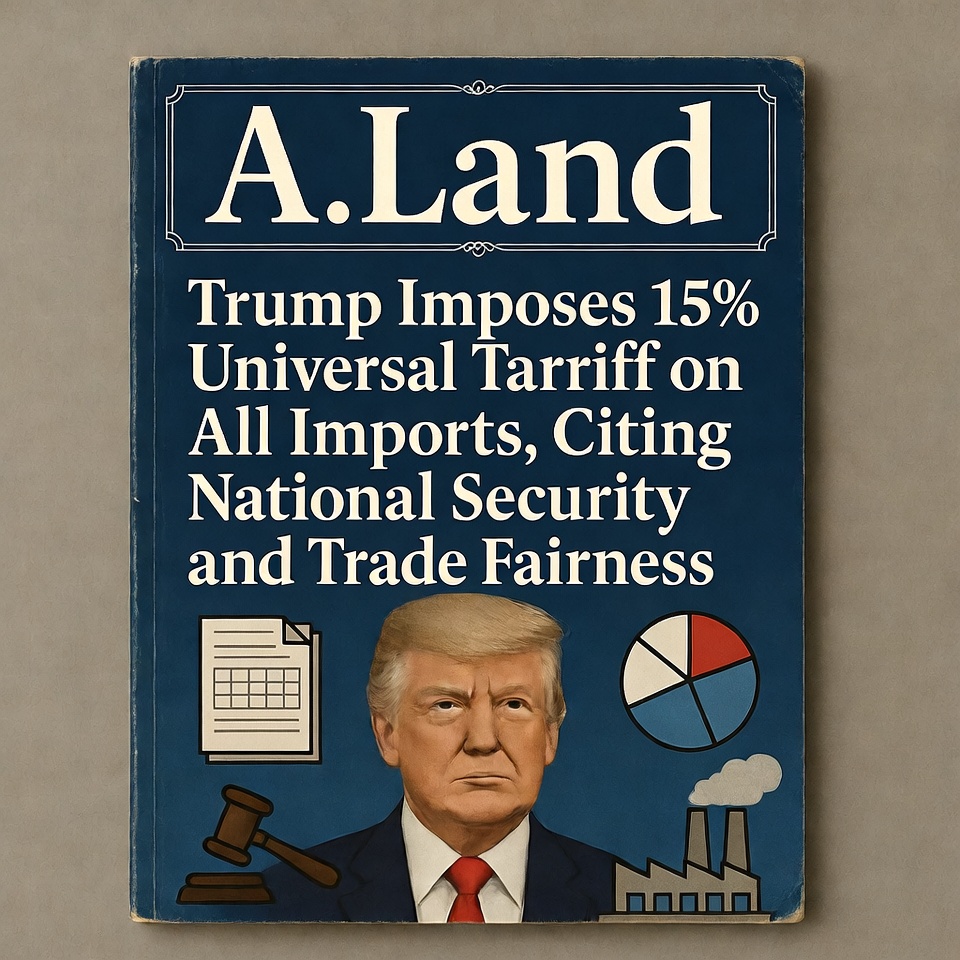
February 21, 2026
President Donald Trump signed an executive order this afternoon imposing a flat 15% tariff on virtually all goods imported into the United States, effective March 1, 2026. The measure described by the White House as “the largest single trade correction in American history” applies across the board except for a narrow list of exempted products and countries that meet strict new criteria on trade balance, defense spending, and intellectual property protection.
The 15% rate will replace most existing country-specific tariffs (except those on China under Section 301) and will be collected on top of current duties for many categories, including consumer electronics, automobiles, pharmaceuticals, apparel, toys, and furniture. Critical minerals, certain medical supplies, and agricultural inputs remain exempt to avoid immediate domestic shortages.
Trump defended the decision in a televised address from the Oval Office:
“For decades we’ve let other countries loot America with unfair trade, currency manipulation, and massive subsidies. No more. This 15% tariff makes everyone play by the same rules. It brings factories home, protects our workers, and generates hundreds of billions to rebuild our country infrastructure, military, tax cuts for working families. It’s simple, it’s fair, and it’s long overdue.”
White House officials project the tariff will generate $380–420 billion in annual revenue, which Trump pledged to use for:
- Infrastructure and manufacturing subsidies
- Border wall completion and immigration enforcement
- Defense modernization
- Middle-class tax relief
Market and Economic Reaction
U.S. equity markets sold off sharply after the announcement. The Dow Jones Industrial Average fell 2.3%, the S&P 500 dropped 2.0%, and the Nasdaq Composite declined 2.7% in late trading. Retailers (Walmart, Target, Amazon), consumer electronics firms, and automakers led the declines. Domestic steel and aluminum producers posted modest gains.
The U.S. dollar strengthened against major currencies as traders priced in reduced import demand and higher inflation expectations. Consumer groups and the National Retail Federation warned that the tariff could add $1,800–$2,200 to average household costs annually on imported goods.
International Backlash Begins
China’s Ministry of Commerce called the tariff “blatant economic aggression” and promised “resolute countermeasures.” The European Commission stated it would “vigorously defend EU interests” and prepare retaliatory tariffs if negotiations fail. Canada and Mexico invoked emergency consultations under the USMCA, while South Korea requested urgent bilateral talks.
The World Trade Organization received formal complaints from multiple members within hours of the announcement. Legal scholars expect a flood of WTO challenges and domestic lawsuits from importers claiming the executive order exceeds statutory authority under Section 232 and IEEPA especially after the Supreme Court’s recent ruling limiting broad tariff powers.
Political Response
Republican congressional leaders largely supported the move. Senate Majority Leader John Thune (R-SD) called it “a strong America First policy that voters demanded.” House Speaker Mike Johnson (R-LA) pledged to defend the order against legal challenges.
Democratic leaders condemned it as “a massive tax on American families.” Senate Minority Leader Chuck Schumer (D-NY) said: “This isn’t trade policy it’s inflation policy. Everyday Americans will pay the price at the register.” House Minority Leader Hakeem Jeffries (D-NY) predicted the tariffs would accelerate supply-chain inflation and hurt U.S. exporters through retaliation.
The executive order is expected to face immediate legal challenges from trade associations and affected industries. Several Republican senators have privately expressed concern about the revenue projections and potential inflationary impact but have not yet signaled opposition.
The 15% global tariff marks one of the boldest trade actions of Trump’s second term. Whether it survives court challenges, congressional pushback, and international retaliation will shape U.S. trade policy and the broader global economy for years to come. Implementation begins March 1, 2026, with U.S. Customs and Border Protection already preparing new collection systems. Updates will continue as legal, diplomatic, and market reactions develop.
Date: 21 Feb, 2026