Tehran's Toxic November: Capital Tops Global Pollution Charts Amid Deadly Smog Crisis
Published Date: 30th Nov, 2025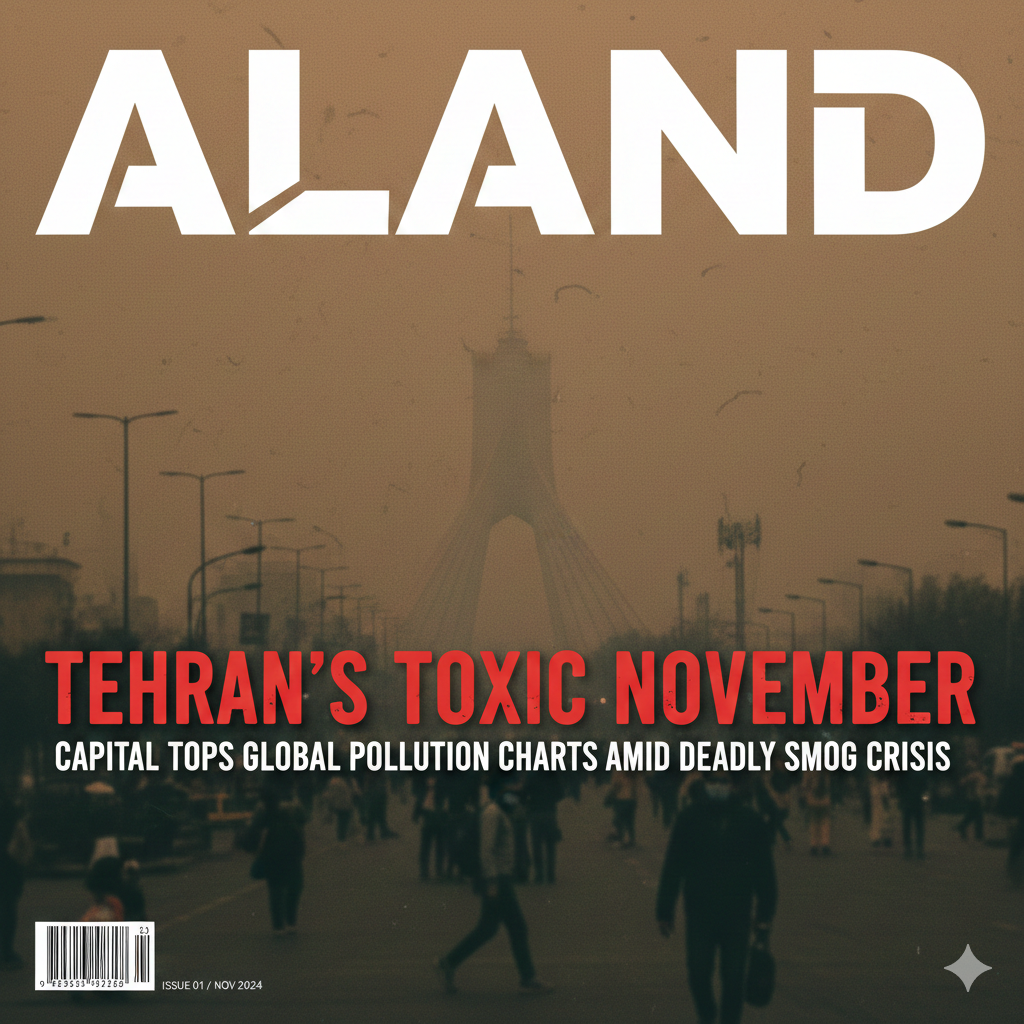
Tehran, Iran's bustling heartland of 9.5 million, has once again surrendered to the invisible enemy that stalks its winter streets: air pollution so severe it has propelled the city to the top of IQAir's global rankings multiple times this November. On November 28, 2025, the capital's Air Quality Index (AQI) surged to 200—deemed "unhealthy for all groups"—marking the latest peak in a month of hazardous haze that has shuttered schools, overwhelmed hospitals, and drawn stark warnings from officials that the smog is now "life-threatening." With PM2.5 levels averaging 133 µg/m³ in recent days—26 times the World Health Organization's safe limit of 5 µg/m³—Tehran's environmental nightmare underscores a nationwide crisis claiming 59,000 premature deaths annually, as stagnant weather traps emissions in a deadly embrace.
Inversion's Iron Grip: The Weather Weaponizing Waste
November's assault is no anomaly; it's amplified by Tehran's geography and the season's whims. Nestled in a high-plateau valley hemmed by the Alborz Mountains, the city becomes a natural trap when cold air sinks, creating a temperature inversion that seals pollutants like a toxic lid. This week's stagnant winds—coupled with a freak warm spell pushing temperatures to 15°C—have locked in fumes from 5 million vehicles, coal-guzzling power plants, and unregulated factories, per the Tehran Air Quality Control Company's November 25 report. Mazut, the low-grade fuel oil burned amid natural gas shortages, has spiked sulfur dioxide emissions by 40%, turning the skyline into a perpetual gray shroud.
The fallout is immediate and intimate. On November 21, thick smog engulfed the capital, prompting Vice President Mohammad Jafar Qaempanah to declare it "will kill" without swift action—a rare admission from a regime often accused of downplaying crises. By November 25, AQI readings hit 164 in central districts, forcing closures of preschools, primary schools, universities, banks, and public offices for two days across Tehran and five other cities: Karaj, Arak, Isfahan, Tabriz, and Mashhad. "The air is heavier than the traffic," quipped a commuter in Enghelab Square, where visibility plummeted to under a kilometer, blurring the iconic Azadi Tower into ghostly outline.
Hospitals on the Brink: A Human Toll in Every Breath
The health crisis is visceral and escalating. Tehran's hospitals reported a 340% surge in respiratory emergencies over the past week, with 4,800 cases flooding wards on November 29 alone—up from a daily average of 1,100. Heart attacks linked to pollution rose 25%, and acute asthma claimed three lives in 24 hours, per Health Ministry data. Pediatric pulmonologist Dr. Sara Ahmadi, speaking to state media from Valiasr Hospital, described "lungs like sandpaper" in young patients: "Children are arriving with chronic coughs that mimic smokers'—this isn't seasonal; it's systemic."
The vulnerable suffer most. Elderly residents in southern districts like Shahr-e Rey—where AQI peaked at 421 on November 22—face compounded risks, with 161 daily pollution deaths nationwide in the past Iranian year (March 2024-March 2025). Migrant workers and low-income families, lacking N95 masks or air purifiers (prices up 200% amid shortages), bear the brunt: a November 28 Newsweek report estimated $17.2 billion in annual costs from healthcare, lost productivity, and premature mortality.
Sanctions and Stubble: The Perfect Storm of Sources
Tehran's toxin tapestry weaves human hubris with harsh constraints. Sanctions since 2018 have starved upgrades: Tehran's vehicle fleet, averaging 20 years old, guzzles leaded fuel, while power plants burn mazut—a "brave act" briefly halted in November 2024 but resumed amid blackouts. Industrial sprawl adds insult: 1,200 brick kilns and refineries skirt emission caps, funneling particulates into the basin. A November 24 Al Jazeera analysis pinned 30% of the spike on transboundary dust from Iraq and Afghanistan, but local culprits dominate—construction dust from 500 high-rises, and seasonal stubble burning in nearby farms.
Government grapples with half-measures. The November 25 odd-even traffic ban and 30% factory curtailments offer temporary relief, but enforcement falters: only 20% of targeted sites complied, per EPA audits. Environment Minister Ali Salajegheh touted a "national clean air plan" on November 29—$500 million for electric buses and kiln conversions—but critics like the Tehran Times' Reza Nasri call it "aspirational at best," hampered by a $100 billion sanctions hit to green tech imports.
Protests in the Poison: A City's Gasping Uprising
The smog has ignited street fury. On November 29, 3,000 protesters—many in surgical masks—gathered at Tehran University, chanting "Clean Air or Revolution!" and blocking Valiasr Street with effigies of coal trucks. Clashes with Basij forces left 15 injured, but the spark spread: #TehranChokes trended with 1.2 million posts, blending dashcam clips of zero-visibility drives and pleas for reform. Student leader Amir Hosseini, 22, told Euronews: "We can't study, breathe, or dream in this poison—it's the regime's war on us."
Globally, Tehran's plight spotlights sanctions' shadow cost. The UNEP's November 28 briefing ranked it #1 for 12 days this month, part of a Middle Eastern malaise claiming 200,000 lives yearly. As COP30 nears in Brazil, Iran's delegation faces scrutiny: their capital as climate cautionary tale.
Winds of Warning: Tech Tweaks and the Path to Purity
Faint hopes flicker. November 27's pilot of 200 AI air monitors on buses feeds real-time alerts to 1.5 million users via a state app, while a biogas initiative in Varamin diverts farm waste, slashing emissions 20%. Salajegheh eyes a 2026 mazut ban and cross-border pacts with Iraq, but U.S. waivers—tied to nuclear talks—remain elusive.
For Tehran's tenacious souls, the haze is more than metric—it's muffled muezzins, muted markets, stolen sunsets. As December dawns, the inversion may lift with southerly gusts, but experts forecast a repeat sans root reforms. In the shadow of the Alborz, Tehran's battle for breath is a global gauntlet: will 2026 exhale easier, or just more exasperated? The air hangs heavy, waiting.
Date: 30th Nov, 2025