Syria Edges Toward Unity as Damascus and SDF Sign Historic Ceasefire and Integration Accord
Published Date: 31 Jan, 2026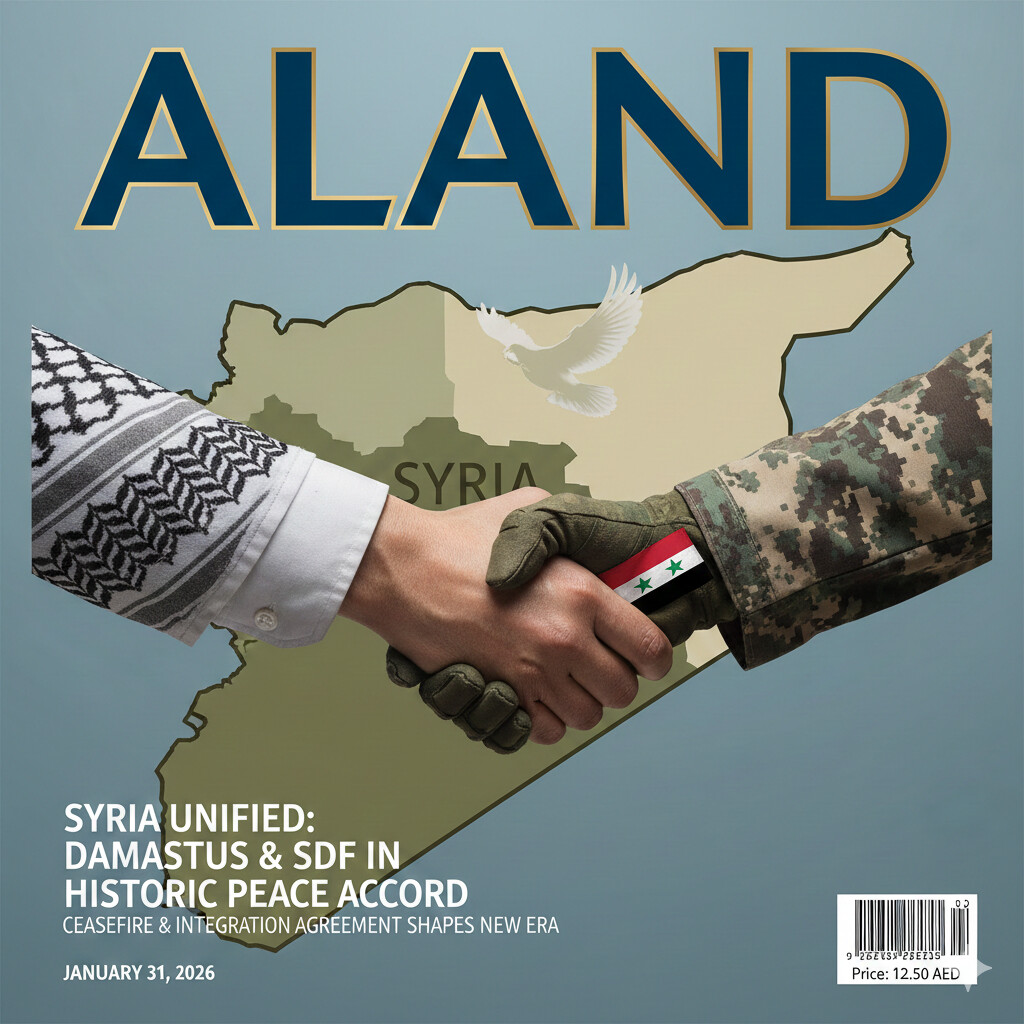
January 31, 2026
Syria's transitional authorities and the Kurdish-led Syrian Democratic Forces have finalized a sweeping agreement that imposes a nationwide ceasefire in the northeast and lays out a detailed roadmap for merging SDF military units and civilian administration into the central Syrian state. The deal, sealed after marathon talks and announced late Friday, represents the most significant reconciliation step since the fall of the previous regime and halts what had threatened to become a major new front in the country's long civil conflict.
U.S. Special Envoy Tom Barrack played a pivotal role in brokering the pact, which both sides hailed as a breakthrough for national cohesion and post-war stability under President Ahmed al-Sharaa's government.
Permanent Ceasefire Replaces Temporary Pauses
The accord supersedes a series of short-term truces, including an initial 14-point understanding on January 18, a four-day halt declared January 20, and a subsequent 15-day extension. Those interim measures largely prevented major fighting despite occasional skirmishes and accusations of breaches, providing the breathing room needed to negotiate this more durable framework.
Under the new terms, all military operations cease immediately across northeastern Syria. Both parties agree to pull forces back from forward positions, establish clear separation lines, and refrain from any provocative actions that could reignite hostilities.
Structured Merger Aims to End Fragmentation
The heart of the agreement is a phased integration plan designed to restore Damascus's authority while incorporating Kurdish contributions. SDF fighters will transition into the Syrian Arab Army and national security institutions on an individual basis, rather than preserving separate command structures. This preserves the principle of a single, unified national military.
Civilian governance in SDF-controlled regions, particularly Al-Hasakah and parts of Raqqa and Deir ez-Zor, will gradually transfer to central government ministries. Key economic and strategic assets—including oil fields, gas facilities, border crossings with Iraq and Turkey, and detention centers housing thousands of Islamic State-linked individuals—will come under Damascus control within a tight one-month window.
Interior Ministry police and security units will deploy to urban centers such as Qamishli and al-Hasakah to maintain public order during the handover.
Global Backing Signals Broad Support
The United States praised the deal as a historic advance toward a stable, unified, and inclusive Syria. Barrack called it a testament to sustained diplomacy and mutual compromise. The United Nations welcomed the ceasefire, pressing all parties to safeguard civilians, expedite humanitarian access, and facilitate the safe return of displaced populations.
A joint statement from France, Germany, the United Kingdom, and the United States endorsed the principles outlined in the January 18 framework and urged rapid, transparent implementation. Regional players including Egypt and Jordan expressed cautious optimism, stressing the importance of preserving Syria's territorial integrity and preventing the resurgence of extremist groups.
Implementation Challenges Lie Ahead
While the agreement marks a major de-escalation, its success hinges on execution. Past short ceasefires experienced intermittent violations, and the current pact lacks robust independent monitoring mechanisms. Questions remain about how smoothly the integration of thousands of SDF personnel will proceed, potential resistance from hardline factions on either side, and the handling of sensitive ISIS-related detention sites.
Humanitarian groups underscored the urgent need for unrestricted aid corridors to reach communities cut off by recent fighting, particularly as winter conditions worsen shortages of fuel, food, and medical supplies.
A Pivotal Moment for Post-Assad Syria
The pact addresses one of the most enduring fractures in post-regime Syria, where Kurdish-led forces had maintained de facto autonomy in the northeast since 2012. By bringing those territories back under central authority while offering pathways for Kurdish participation in national institutions, the deal aims to prevent further Balkanization and reduce the risk of renewed large-scale violence.
The coming month will serve as the critical test phase, with both sides under intense domestic and international scrutiny to demonstrate compliance. If the ceasefire holds and integration advances as planned, it could set a precedent for resolving other lingering divisions across the country.
For residents of northeastern Syria, the silencing of heavy weapons provides immediate respite after weeks of clashes. The broader hope is that this accord lays groundwork for a more cohesive future, allowing reconstruction, economic recovery, and political dialogue to take root in a nation long torn by war.
Date: 31 Jan, 2026