Solstice Spectacle: World's Shortest Day Dawns with Ancient Rituals and Modern Marvels
Published Date: 21 Dec, 2025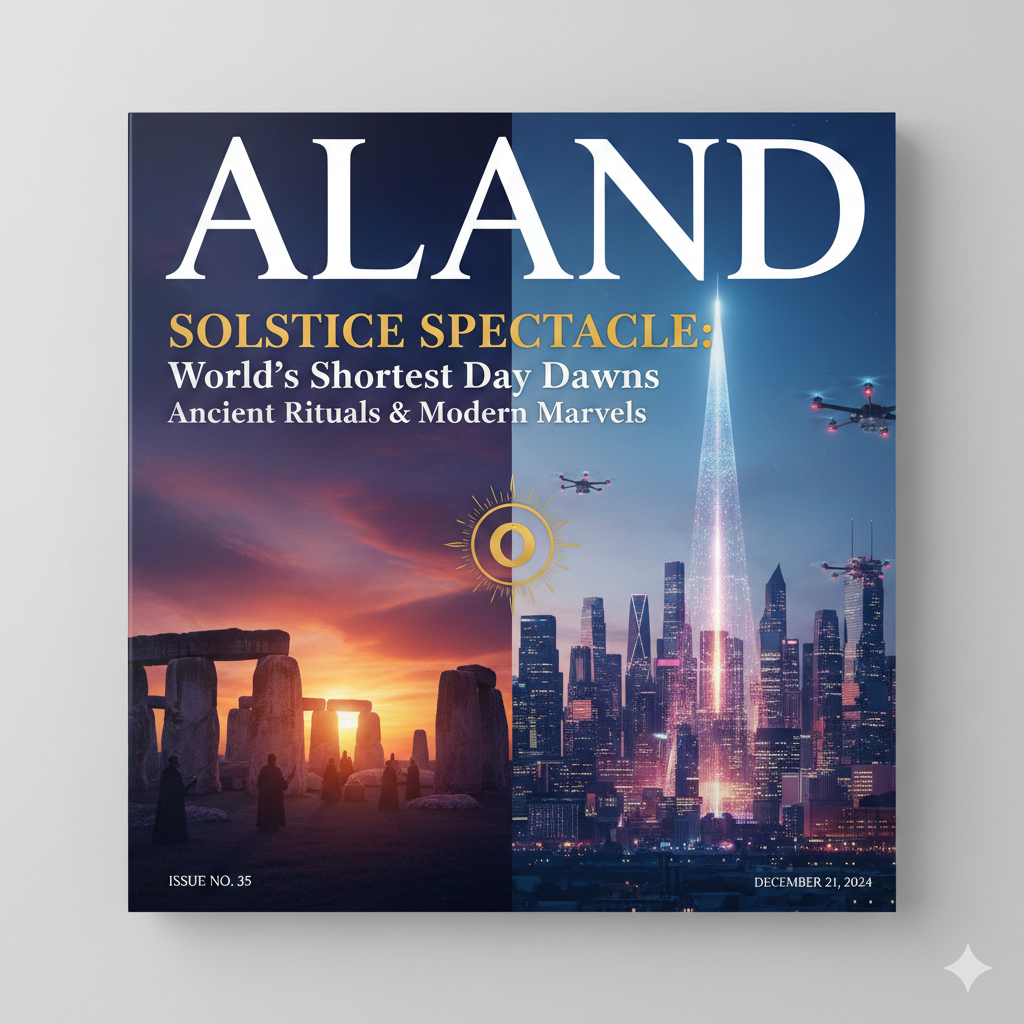
On December 21, 2025, at exactly 10:03 UTC, the Northern Hemisphere welcomed the winter solstice—the astronomical instant when Earth's tilt reaches its maximum away from the Sun, delivering the year's shortest day and longest night. From the Arctic Circle's polar twilight to the Antarctic's midnight sun, the solstice marks a pivotal turning: the Sun's apparent standstill before its northward return, promising lengthening days and the gradual retreat of winter's chill. Celebrated across cultures as a beacon of renewal, this year's solstice drew millions to ancient sites, lantern-lit festivals, and starry vigils, blending timeless traditions with contemporary reflections on light's triumph over darkness.
Celestial Mechanics: The Sun's Standstill and Seasonal Symphony
The solstice—Latin for "sun stands still"—arises from Earth's 23.44° axial tilt. At this moment, the North Pole tilts farthest from solar rays, yielding mere hours of daylight in high latitudes: London's 7 hours 49 minutes, New York's 9 hours 16 minutes, and zero above 66.5°N. Conversely, the South Pole basks in perpetual sun, the Antarctic Circle enjoying 24-hour daylight. The Tropic of Capricorn receives direct overhead rays, the Sun's southernmost reach.
NASA's visualizations captured the tilt: Earth's northern face shrouded, southern aglow—a reminder of our planet's delicate dance. Astronomers like Dr. Michelle Thaller of Goddard Space Flight Center noted: "It's not the Sun moving—it's us, tilting toward or away, painting seasons on our world."
Ancient Alignments: Stonehenge Sunrise and Global Gatherings
Stonehenge, England's 5,000-year-old enigma, hosted 10,000 at dawn despite drizzle—druids in robes chanting as the Sun aligned with the Heel Stone, a ritual echoing Neolithic reverence. Sweden's Saint Lucia parades lit cities with candle-crowned processions; Iran's Yalda Night feasted on pomegranates and poetry under starry skies.
China's Dongzhi Festival savored tangyuan dumplings for family unity; Japan's Toshikoshi cleansed homes for renewal. Native American Hopi marked Soyal with kachina dances; Mexico's Chichén Itzá saw the serpent shadow descend the pyramid steps.
Modern twists abounded: Taiwan's Pingxi released 50,000 sky lanterns inscribed with wishes; Alaska's Fairbanks, in polar night, hosted aurora parties; Copenhagen's bike parade promoted green winters.
Light in the Darkness: Festivals and First Rays
Urban celebrations glowed: Toronto's Kensington Market fused solstice with multicultural feasts; New York's Times Square projected sunrise simulations. Virtual events—NASA's live streams, BBC's Stonehenge feed—drew millions online.
In the Southern Hemisphere, summer solstice revelers flocked to Sydney's beaches and Buenos Aires' parks, the longest day a carnival of barbecues and fireworks.
Renewal's Ritual: From Myth to Modern Meaning
The solstice's symbolism endures: rebirth after darkness, hope amid hardship. Wiccans' Yule logs burned for returning light; Christians note its proximity to Christmas, ancient Saturnalia's gift-giving influencing traditions.
In 2025's tumult—from geopolitical thaws to celestial wonders—the solstice offered pause: "The darkest day passes; light returns," reflected a Stonehenge attendee. As Earth tilts anew, humanity mirrors: gathering in gloom, awaiting dawn.
Winter's here—but the wheel turns. The longest night yields; tomorrow, days grow. Solstice 2025: darkness' depth, light's promise. The Sun stands still—then strides north.
Date: 21 Dec, 2025