Saudi Arabia and Syria Finalize Landmark $4 Billion Economic Partnership Deal
Published Date: 8th Feb, 2026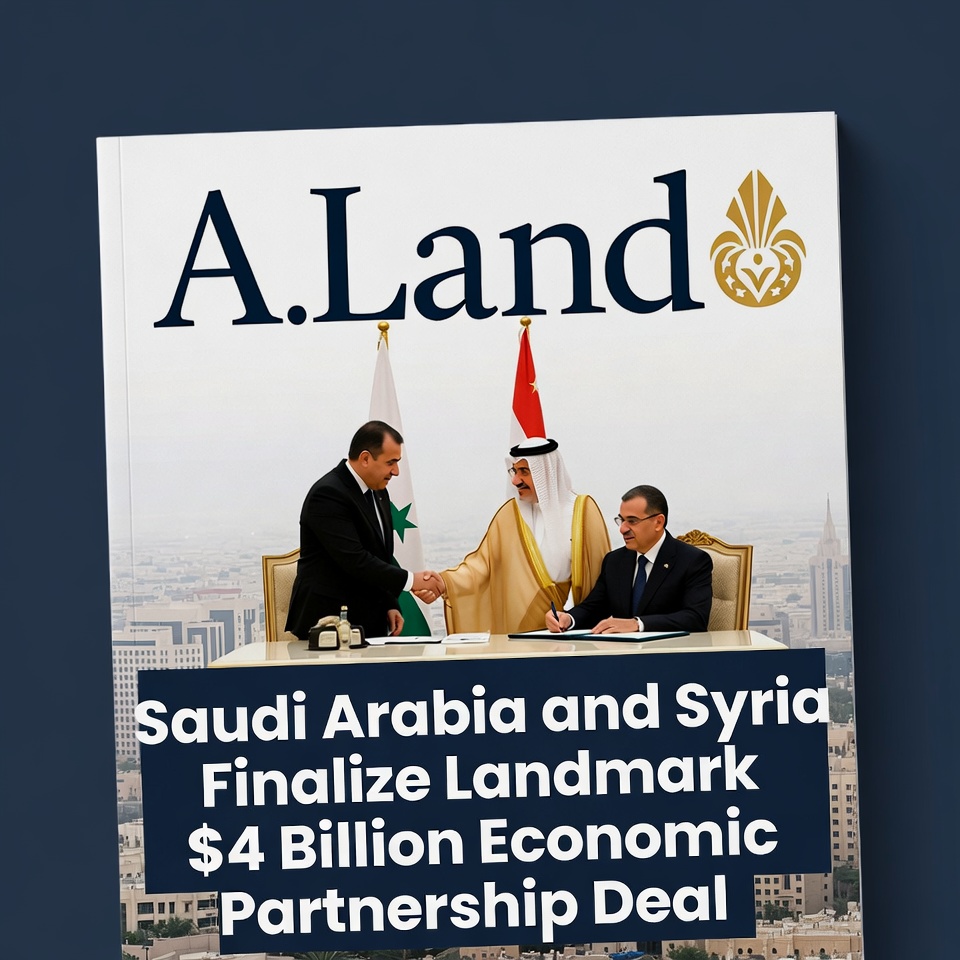
February 08, 2026
Saudi Foreign Minister Prince Faisal bin Farhan Al Saud concluded a historic visit to Damascus on Sunday by signing a comprehensive economic cooperation agreement with Syria's transitional President Ahmed al-Sharaa, committing billions in energy supplies, reconstruction funding, and private-sector investment. The deal represents Saudi Arabia's most substantial engagement with post-Assad Syria to date and signals accelerating Arab Gulf support for the country's stabilization and recovery.
The memorandum of understanding, finalized after several months of preparatory talks, establishes a broad framework for bilateral economic relations with immediate and long-term commitments valued at more than $4 billion in the initial phase.
Major Elements of the Agreement
The pact includes:
- Saudi Arabia will supply Syria with up to 1.2 million barrels per month of crude oil and refined petroleum products on concessional terms for a minimum of 24 months, addressing acute fuel shortages that have crippled transportation, electricity generation, and industrial activity.
- Creation of a $2 billion Saudi-Syrian Reconstruction and Development Fund targeting priority infrastructure projects in major cities including Damascus, Aleppo, Homs, and Latakia, with focus on power generation, water and sanitation systems, hospitals, schools, and road networks.
- Substantial tariff reductions and simplified customs procedures to facilitate Syrian agricultural exports (wheat, cotton, olives, fruits) and phosphates to the Saudi market, while opening doors for Saudi companies in Syrian construction, telecommunications, renewable energy, and agribusiness.
- Joint initiatives on financial sector normalization, including technical assistance for banking regulation, anti-money laundering compliance, and gradual reconnection to international payment systems.
- Training programs and capacity-building support for Syrian government institutions and private enterprises to improve governance, transparency, and investment attractiveness.
Both governments emphasized the agreement as a foundational step toward full diplomatic normalization and deeper strategic alignment.
Strategic Context and Regional Impact
The deal reflects Riyadh's strategic decision to become a leading external supporter of Syria's transitional authorities following the collapse of the Assad regime in late 2024. Saudi Arabia has coordinated closely with Turkey and Qatar in backing the new Damascus leadership while seeking to counterbalance Iranian and Russian influence.
For Syria, the pact provides critical short-term energy relief and long-term reconstruction financing, helping the country stabilize its economy after more than a decade of conflict and isolation. Syrian officials highlighted the agreement as evidence of growing international legitimacy and a shift away from reliance on limited revenue sources.
The signing follows quiet diplomatic engagement in Amman, Ankara, and Doha throughout 2025, building on Syria's readmission to the Arab League and the phased lifting of regional sanctions.
Market and International Reactions
Oil markets showed limited immediate movement, with Brent crude futures rising less than 0.6 percent as traders weighed incremental Syrian demand against global supply dynamics. The Saudi riyal and Syrian pound (in informal markets) both strengthened modestly against the U.S. dollar in regional trading.
The United States welcomed the agreement as "a constructive development supporting Syrian economic recovery and regional stability," while urging continued progress on political transition and human rights commitments. The European Union and United Nations expressed hope that increased economic engagement would accelerate humanitarian aid delivery and reconstruction efforts.
Iranian state media criticized the deal as an attempt to weaken traditional alliances, though Tehran has issued no formal statement.
Next Steps and Implementation
Bilateral technical committees will meet within 30 days to finalize project pipelines, disbursement schedules, and monitoring mechanisms. Saudi Arabia indicated readiness to scale up financial commitments contingent on continued governance reforms and transparency improvements.
The Saudi-Syrian economic partnership marks a turning point in Syria's post-conflict trajectory and the broader reconfiguration of Middle East alliances. As reconstruction accelerates and foreign investment begins to flow, the success of this agreement could serve as a model for other Gulf states and influence Syria's long-term economic and geopolitical orientation.
Date: 8th Feb, 2026