Poland Bans Chinese Electric Vehicles from All Public Sector Fleets in Security Move
Published Date: 18th Feb, 2026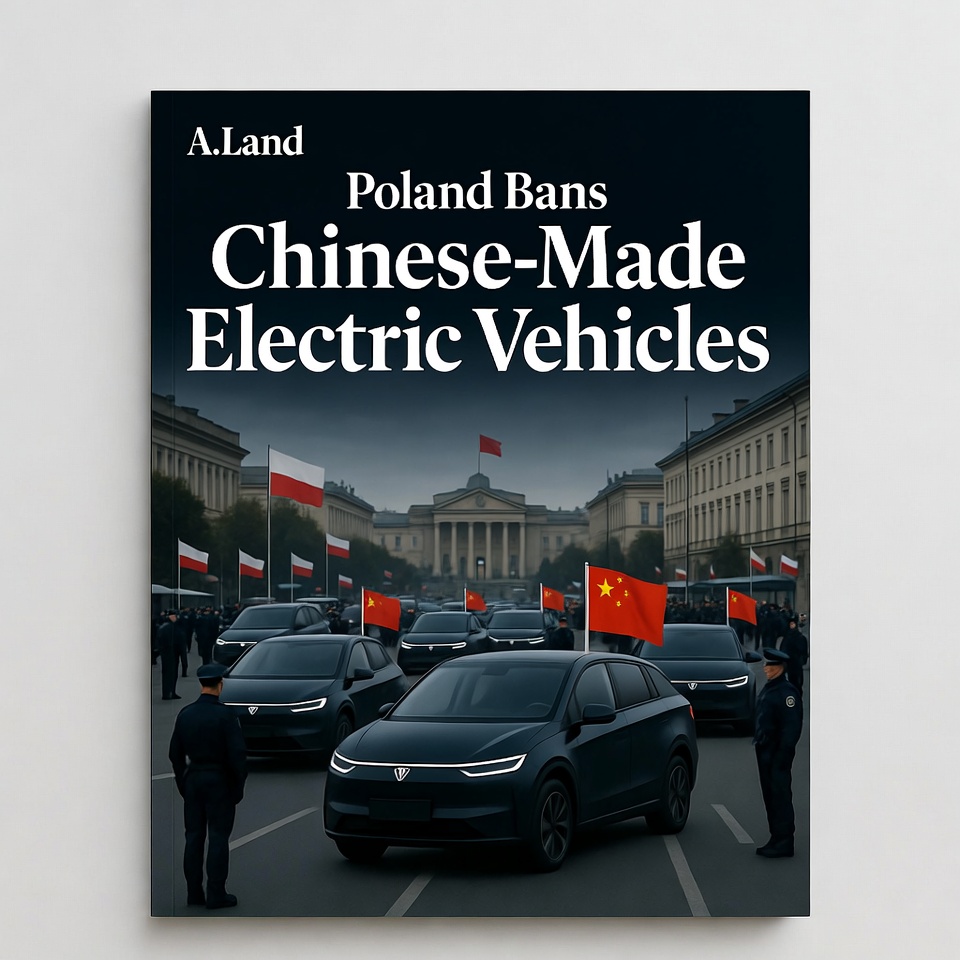
February 18, 2026
Poland has become the first European Union country to enact a comprehensive ban on Chinese-made electric vehicles in government and public sector procurement, with the policy taking immediate effect following a cabinet decision announced today. The prohibition covers all new purchases, leases, and replacements of passenger cars, light commercial vehicles, and buses by central government ministries, state agencies, local authorities, state-owned enterprises, police, fire services, ambulances, and military non-combat fleets.
Prime Minister Donald Tusk justified the measure on national security grounds, citing classified assessments from the Internal Security Agency (ABW) that identified risks of data harvesting, remote access capabilities, and potential backdoors in connected vehicle systems manufactured in China. “We will not expose sensitive government operations, critical infrastructure, or citizen data to technology from a country that does not share our security standards and values,” Tusk said in a televised statement.
Scope of the Ban
The policy applies to:
- All vehicles of Chinese origin or containing Chinese-made core components (battery pack, telematics unit, autonomous driving hardware/software, connectivity modules)
- Future procurement, leasing, and fleet replacement contracts
- Existing Chinese EVs already in public service, which must be phased out or disconnected from networked features by the end of 2028
Limited exemptions exist for diplomatic vehicles and emergency humanitarian transport. The ban does not apply to private citizens, private companies, or commercial sales in the open market.
Implementation and Timeline
The Ministry of Digital Affairs will publish detailed technical guidelines next month specifying which components trigger the ban and outlining acceptable alternatives. Procurement officers have been instructed to reject bids involving Chinese-origin vehicles or high-risk components starting immediately.
Existing fleets will undergo security audits. Vehicles deemed high-risk must either be retrofitted to disable connectivity features or replaced over a two-year transition period ending December 31, 2028.
Industry and Diplomatic Fallout
Chinese Embassy in Warsaw issued a strong protest, calling the ban “discriminatory, protectionist, and politically motivated.” Beijing warned that the decision “damages bilateral economic relations and sets a dangerous precedent within the EU.” BYD, NIO, and other Chinese EV brands active in Poland condemned the move as “unfair trade practice” and vowed to continue serving the private market.
European Commission officials noted that while member states may set security-based criteria for public procurement, a country-specific blanket ban must comply with single market rules and WTO commitments. Brussels has requested detailed justification from Warsaw and is reviewing potential infringement proceedings.
European automakers, including Volkswagen, Stellantis, and BMW, welcomed the policy as a move to “level the playing field” against heavily subsidized Chinese competition. Poland’s domestic EV market share remains small (around 3% of new registrations in 2025), with Chinese brands holding roughly 12% of that segment.
Broader European and NATO Context
Poland’s decision aligns with growing concerns across NATO capitals about connected vehicle cybersecurity risks, including data flows to foreign servers, remote disablement capabilities, and mapping intelligence gathering. Similar restrictions already apply to Chinese telecom equipment (Huawei, ZTE) in critical infrastructure across much of the alliance.
The United States, Canada, and several other NATO members have already banned or severely restricted Chinese EVs in government and military fleets. EU-level discussions on connected vehicle security standards are ongoing, but no Union-wide procurement ban has been proposed.
Poland’s move is expected to influence other Central and Eastern European states and could accelerate EU-wide conversations on strategic dependencies in emerging technologies. The Ministry of Digital Affairs has indicated that additional guidelines for “secure vehicle procurement” across public and critical sectors will follow in March.
With the ban now active, Poland positions itself as a leader in efforts to reduce strategic reliance on Chinese technology in sensitive applications, even as private consumers retain full access to Chinese EVs in the open market. The policy underscores rising security concerns surrounding connected and autonomous vehicles in an era of great-power competition.
Date: 18th Feb, 2026