Pakistan Unleashes Massive Airstrikes Deep Inside Afghanistan, Defense Chief Calls It Full-Scale War
Published Date: 28th Feb, 2026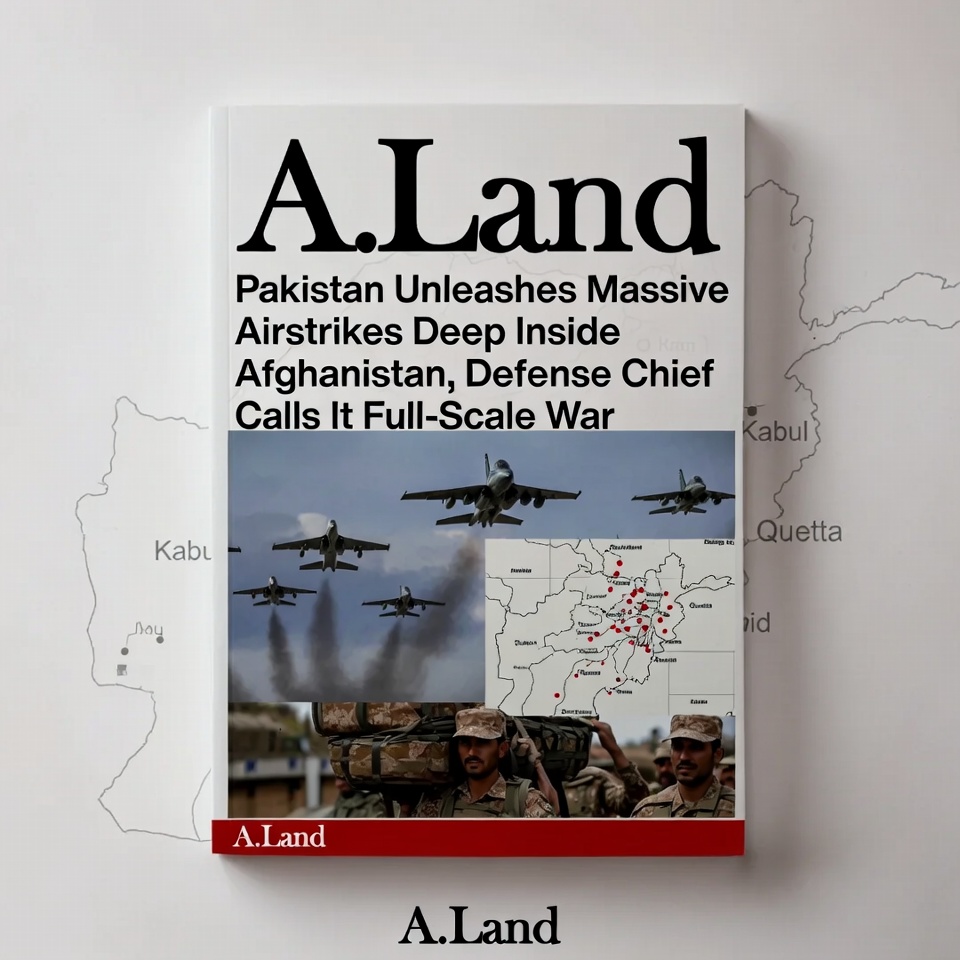
Pakistani fighter jets pounded Taliban strongholds across Afghanistan in the early hours of Friday, hitting targets as far as Kabul and the southern city of Kandahar in what Islamabad described as a decisive and unavoidable military response to repeated Afghan aggression. The defense minister labeled the escalating border conflict an "open war," signaling that Pakistan no longer views the situation as a series of limited skirmishes.
The operation unfolded after Afghan forces launched coordinated attacks Thursday evening against Pakistani border outposts in North Waziristan and Kurram districts. Those assaults, involving heavy machine guns, mortars, and drones, killed several Pakistani soldiers and damaged military infrastructure, according to officials in Islamabad. Within hours, the Pakistan Air Force scrambled multiple squadrons for a large-scale retaliatory campaign that stretched across eastern and southeastern Afghanistan.
Targets Span Capital to Taliban Heartland
Reports from Afghan sources confirmed explosions in residential neighborhoods near military facilities in Kabul, where thick black smoke rose over parts of the city shortly after midnight local time. Witnesses recounted the roar of low-flying aircraft followed by bright flashes and thunderous blasts that shook windows miles away. Kandahar, the birthplace of the Taliban movement and longtime base of its leadership, also came under direct attack, with strikes reportedly aimed at command centers and weapons depots.
Pakistani military statements asserted that more than two dozen sites were successfully engaged, including training camps, ammunition stores, and Taliban command posts linked to cross-border terrorism. Authorities claimed the strikes neutralized hundreds of militants, many identified as members of the Tehreek-e-Taliban Pakistan who had taken refuge on Afghan soil. Afghan Taliban officials acknowledged damage to several locations but insisted civilian infrastructure suffered heavily and put the death toll in the dozens, mostly non-combatants.
Cycle of Retaliation Accelerates Rapidly
The latest violence follows a pattern that has intensified since early February. Pakistani airstrikes on February 22 targeted suspected militant hideouts in Paktika, Khost, and Nangarhar provinces, prompting fierce condemnation from Kabul and vows of revenge. Those earlier raids killed at least 18 people according to Afghan counts, though Pakistan maintained the targets were exclusively terrorist infrastructure.
Thursday's Afghan-initiated border clashes marked the most serious ground engagement in recent months, with both sides exchanging fire across multiple frontier sectors. Pakistani reinforcements rushed to the line, while Afghan Taliban units reportedly massed near key crossing points. The swift transition to aerial bombardment of urban areas represented a clear broadening of the conflict, moving beyond remote tribal regions into politically sensitive territory.
Border Sealed, Civilians Caught in Crossfire
All major border crossings between Pakistan and Afghanistan remained closed Friday, halting trade and stranding thousands of travelers. Families in frontier villages fled shelling and airstrikes, creating fresh waves of internal displacement on both sides of the Durand Line. Humanitarian organizations expressed growing alarm over the potential for a wider humanitarian crisis in already vulnerable border communities.
Diplomatic Channels Strain Under Pressure
Despite the ferocity of the exchanges, Taliban representatives indicated they remained willing to discuss de-escalation through intermediaries. Pakistani officials, however, emphasized that any talks must address the core grievance: the continued presence of anti-Pakistan militant groups inside Afghanistan. The defense minister stated that Islamabad would sustain military pressure until credible steps were taken to dismantle those networks.
Regional observers warned that the inclusion of Kabul and Kandahar in the target list crossed a dangerous threshold, raising the specter of prolonged confrontation. With both governments facing domestic pressure to appear strong, finding an off-ramp appeared increasingly difficult. The coming week will reveal whether sustained military action forces concessions or locks the two neighbors into a deeper and more destructive cycle of violence that neither side can easily contain.
Date: 28th Feb, 2026