Moscow Mirage: Putin Slams Door on US-Ukraine Peace Plan, Blames "Warmongering" Europe
Published Date: 3 Dec, 2025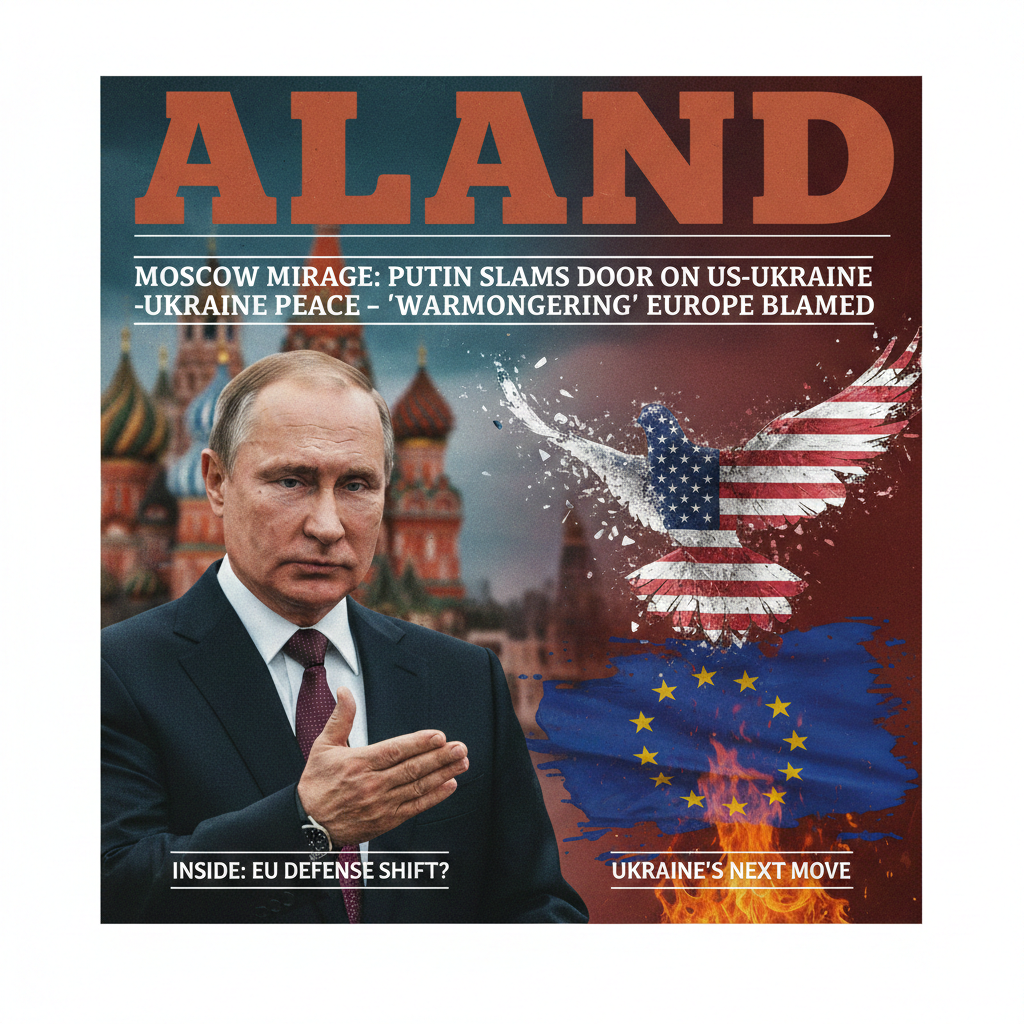
The Kremlin's opulent chambers, heavy with the scent of polished oak and unspoken ultimatums, bore witness to a diplomatic dud on December 2, 2025, as Russian President Vladimir Putin rebuffed a revised US-Ukraine peace proposal after a grueling five-hour parley with American envoys Steve Witkoff and Jared Kushner. Emerging past midnight, Putin's top aide Yuri Ushakov declared "no compromises found," pinning the impasse on "unacceptable" European demands that he claimed were sabotaging Trump's mediation. With Ukraine's Volodymyr Zelenskyy decrying any deals cut "behind our backs," the stalled talks—now a 19-point framework honed in Florida—expose deepening rifts, battlefield momentum tilting Moscow's way, and a holiday season shadowed by the specter of prolonged carnage in Europe's bloodiest war since 1945.
Kremlin's Hardline Halt: Five Hours, Zero Ground Gained
The marathon session, kicking off after a symbolic Red Square promenade past Lenin's mausoleum, dissected a slimmed-down iteration of the November 28-point draft—now 19 tenets blending US-Ukraine tweaks like UN-monitored de-escalation zones, softened military caps, and a 70-30 split favoring Kyiv from €300 billion in frozen Russian assets. Witkoff, the billionaire fixer, and Kushner, the deal-savvy son-in-law, pitched the revisions as a "fair path forward," but Ushakov's post-meeting verdict was curt: "Constructive, yes—but no agreement on essentials."
Territory remains the unyielding rock: Russia demands full Donetsk and Luhansk sovereignty, plus Zaporizhzhia and Kherson chunks—red lines Kyiv rejects outright. Economic carrots, like joint ventures on seized oligarch fortunes, elicited murmurs of interest, but Putin, hours before, torched Europe as the true villain. At a VTB forum, he snarled: "Europe prevents the US from achieving peace—their demands are absolutely unacceptable." "Russia doesn't seek war with Europe," he added with chilling nonchalance, "but if they start, we're ready right now." The veiled threat—echoed by Duma deputies like Alexei Chepa, who decried Europe's "militarization"—casts Brussels as bogeyman, deflecting from Moscow's intransigence.
Peskov, the Kremlin's mouthpiece, teased opening footage but zipped lips on details, agreeing to a media blackout that reeks of stalling. Analysts like ex-speechwriter Abbas Gallyamov see Putin's ploy: "If Trump presses, he'll end the fighting"—but only on maximalist terms, buying time for winter gains.
Zelenskyy's Steadfast Stand: "Fair and Open, No Backroom Games"
Kyiv's response was a blend of guarded optimism and granite resolve. "We take these talks with utmost seriousness," Zelenskyy posted after a Rustem Umerov debrief, crediting Florida's revisions for easing NATO bans to a "European security architecture" and permitting Western peacekeepers. Yet caveats cut sharp: "Everything must be fair and open—no games behind Ukraine's back." Umerov, the defense minister, flew to Florida November 30 for the huddle, emerging with a blueprint that scraps outright cessions for "phased zones" under UN eyes— a concession Moscow scorns as "temporary illusions."
European bulwarks rallied. Germany's Friedrich Merz dubbed the tweaks a "Munich-proof modification," vowing troops for any truce. Britain's Keir Starmer recommitted "boots on the ground," while France's Emmanuel Macron invoked "destructive actions" by unnamed foes—code for Putin. NATO's Mark Rutte stressed Ukraine's "strongest position" in parleys, as Brussels forges a rights-anchored counter. Hungary's Viktor Orbán, the outlier, gloats at the schism, vetoing asset loans in a tantrum.
Putin's Battlefield Bluff: Gains in Donbas, Blame on the West
Putin's pre-talk bravado betrayed battlefield bets. At VTB, he boasted "overexaggerated" Ukrainian claims on Pokrovsk losses, threatening Black Sea ports' "navigation." "Without just peace, hatred endures," he intoned, yet framed Europe as warmonger—their "side of war" blocking Trump's hand. Duma hawk Viktor Sobolev echoed: Europe protracts until "Russia-Europe war erupts." Milbloggers undermine imminence, but Putin deflects sanctions: "They won't force compromises," he claimed, flaunting resilience amid 7,000 weekly casualties.
ISW assessments peg the Kremlin exploiting vagueness to mask rejection: the 28-point leak's iterations fail maximalism—full Donbas, demilitarized Ukraine. Insider leaks frame Russia as "flexible" on "secondary" assets, obfuscating extremes like Zaporizhzhia grabs.
Frontline Flashpoints: No Lull Amid Diplomatic Drought
As envoys supped in splendor, Ukraine's east endured. Russian drones gutted Odesa's grid overnight, killing 12 and stalling grain; Ukrainian shells pummel Donetsk's mire. Zelenskyy's "victory plan"—long-range hits, NATO trail—wanes against US weariness, Rubio musing "end war, ensure safety forever." Trump's "no deadline"—per November 30—hints patience, or ploy.
Amnesty demands rights tether, war crimes trials intact; ex-NATO's Stoltenberg floats interim cessions for air. For Bucha's ghosts, Mariupol's moms, the stall is sabotage: "Russia winters in wins," fumed MP Oleksiy Goncharenko.
Diplomatic Dead-End: From Geneva Glimmer to Moscow Murk
December's diplomacy—from Geneva's polishes to Moscow's rebuff—tests Trump's broker badge. Zelenskyy eyes White House "soon," but Russia's hush screams doubt. As alpine dreams sour to Siberian frost, talks teeter: thaw or trench? Putin eyes, Europe murmurs, Kyiv persists. In December's dead ends—from MH370's blue to Tehran's gray—Ukraine's parley dangles threadbare. Moscow yield, or naught? Clock ticks; lines blaze.
Date: 3 Dec, 2025