Massive 'ICE Out' Walkouts Paralyze U.S. Cities in Fury Over Fatal Immigration Raids
Published Date: 31 Jan, 2026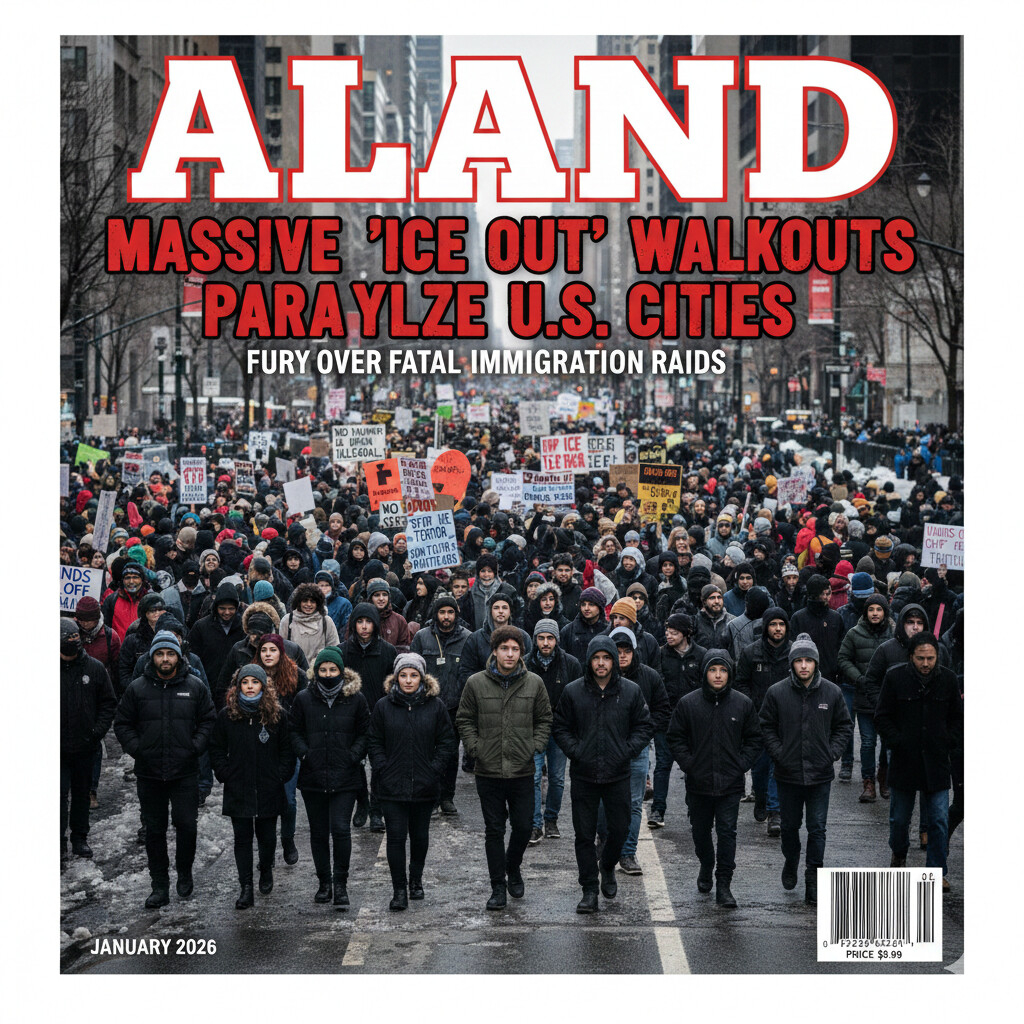
January 31, 2026
Hundreds of thousands of Americans joined a sweeping "National Shutdown" protest Friday, shutting down schools, businesses, and transit corridors in dozens of cities to demand an immediate end to aggressive ICE operations and accountability for the deaths of two U.S. citizens killed during recent federal immigration enforcement actions in Minneapolis. The coordinated strike, billed as the largest day of civil resistance against immigration policy since the administration's return to power, brought traffic to a standstill in Los Angeles, filled downtown Minneapolis with marchers braving sub-zero wind chills, and saw widespread school walkouts from coast to coast.
Organizers from immigrant rights coalitions, labor unions, student groups, and faith-based networks framed the action as a direct response to what they call a campaign of terror targeting immigrant communities, with particular outrage centered on Minneapolis where two separate fatal encounters with federal agents have ignited nationwide fury.
Deadly Minneapolis Incidents Spark National Outrage
The protests trace directly to two high-profile killings in Minneapolis this month. On January 7, ICE Special Agent Jonathan Ross shot and killed 37-year-old Renee Good, a U.S. citizen and mother of three, after she allegedly failed to comply during a vehicle stop tied to an immigration enforcement sweep. On January 24, U.S. Border Patrol agents fatally shot 37-year-old Alex Pretti, an intensive care nurse and U.S. citizen, while he filmed their activities on his phone outside a workplace.
Both deaths have prompted Department of Justice civil rights investigations, but protesters argue the incidents reflect a pattern of excessive force and indiscriminate tactics under the revived "Operation Metro Surge," which has deployed thousands of ICE, Border Patrol, and local law enforcement personnel to sanctuary jurisdictions. President Trump has defended the operations as necessary to fulfill campaign pledges, while Border Czar Tom Homan indicated a possible scaling back in Minneapolis but stopped short of promising a full withdrawal.
Economic Disruption and Street Actions Dominate
Friday's "no work, no school, no shopping" call produced visible economic impact. Universities in California, Texas, New York, and Illinois reported thousands of students absent or participating in campus rallies. High school walkouts disrupted classes in Phoenix, Denver, Boston, and Seattle. Independent restaurants, coffee shops, and small businesses in Portland, Chicago, and Philadelphia closed for the day or redirected profits to legal defense funds for affected families.
In Los Angeles, demonstrators blocked major freeways during morning rush hour, leading to arrests and tense standoffs with police. Minneapolis saw one of the largest turnouts, with marchers converging on the federal courthouse and ICE field office while musicians Bruce Springsteen and Tom Morello headlined a solidarity concert later in the evening. Similar scenes played out in Atlanta, Houston, Miami, and Washington DC, where protesters gathered outside the Department of Homeland Security headquarters.
Growing Calls for Policy Reversal
Speakers and organizers demanded several concrete steps: immediate withdrawal of ICE and Border Patrol from Minneapolis neighborhoods, prosecution of agents involved in the fatal shootings, a moratorium on raids in schools and hospitals, expanded protections for DACA recipients and immigrant students, and defunding of ICE operations lacking judicial oversight.
Democratic lawmakers amplified the message, with several introducing resolutions condemning the use of lethal force in immigration enforcement and calling for congressional hearings. Immigrant advocacy organizations reported a surge in hotline calls from frightened families and predicted Saturday's follow-up "ICE Out of Everywhere" actions—planned at over 300 locations nationwide—would maintain momentum.
Administration Holds Firm Amid Rising Pressure
White House officials characterized the protests as disruptive but insisted the enforcement surge targets criminal aliens and fulfills voter mandates. Trump reiterated in remarks Friday that border security remains a top priority and suggested the demonstrations were politically motivated rather than reflective of broad public sentiment.
As the weekend approaches, attention turns to whether Saturday's targeted demonstrations at detention centers and ICE facilities will escalate confrontations or channel energy into sustained organizing. With economic boycotts, school absences, and street actions combining to create significant visibility, the "National Shutdown" has firmly placed immigration enforcement back at the center of national debate.
For now, the streets and shuttered storefronts serve as powerful symbols of a deeply divided nation grappling with the human cost of its border policies.
Date: 31 Jan, 2026