Mass Protests Shake France Over Proposed Budget Cuts—New PM Under Pressure
Published Date: 22 Sep, 2025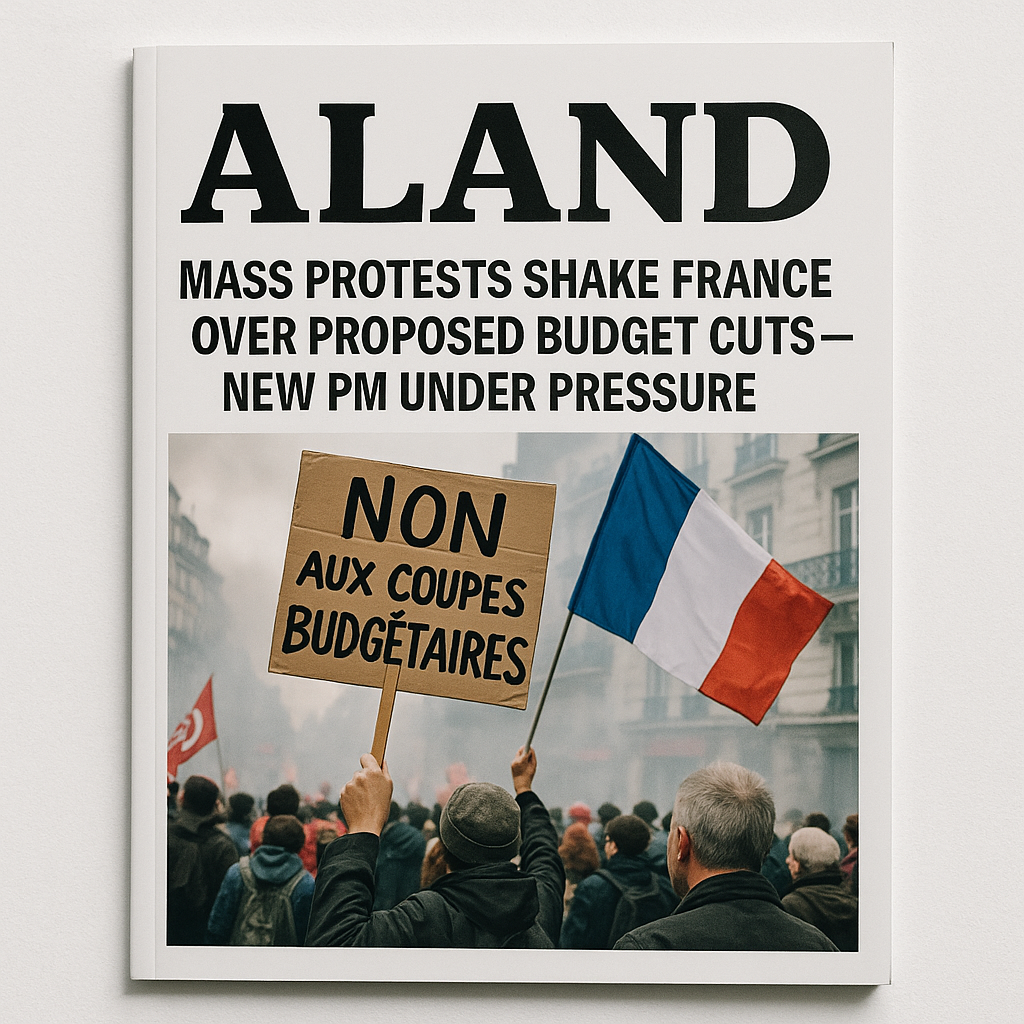
Paris, September 18, 2025 — France was swept by large-scale strikes and protests today, as hundreds of thousands of citizens, backed by major trade unions, mobilised against government-proposed budget cuts. Discontent with austerity measures, growing inflation, and perceived erosion of public services has morphed into a showdown with Prime Minister Sébastien Lecornu and President Emmanuel Macron.
What’s Going On
The unrest was triggered by the government’s draft budget for 2026, which includes sweeping cuts to public spending, potentially reducing services in transport, education, healthcare, and pensions.
On 18 September, unions including the CGT and CFDT led strikes and demonstrations across all major cities—from Paris to Lyon, Nantes, and Marseille—reportedly involving more than 250 protest actions nationwide.
Key sectors were hit: public transport, schools, hospitals, and pharmacies. Many schools and pharmacies shut as staff joined walkouts, while transport networks suffered significant disruption.
Scale of Participation & Fallout
Union organisers claimed around one million people took part in the protests. Official government figures suggested lower participation, in the several hundred thousands, but still among the largest mobilisations in recent years.
Security forces were heavily deployed across French cities. Police reported some arrests and limited clashes, with tear gas and barricades marking isolated moments of violence amid otherwise peaceful demonstrations.
Political Consequences
The protests pose an early test for Prime Minister Sébastien Lecornu, newly appointed following previous government instability over fiscal policy disagreements. He faces mounting pressure to soften or withdraw unpopular elements of the budget.
The government is walking a political tightrope: attempting to reduce France’s budget deficit to meet EU fiscal rules and reassure markets, while avoiding alienating voters and public sector workers.
Opposition parties and unions are demanding more progressive taxation, restoration of public spending, and reversal of pension reform proposals.
What Comes Next
Unions have already signalled readiness for further strikes if the government does not revise its proposals. Nationwide mobilisations could intensify in the coming weeks.
Negotiations are expected between Lecornu, union leaders, and parliamentary stakeholders, with the budget likely to be shaped by compromise—or risk triggering deeper political instability.
Public opinion remains a decisive factor: prolonged disruption could either strengthen support for the movement or cause backlash if daily life becomes too difficult.
Context: Why Now?
The government has floated proposals for €40–€44 billion in spending cuts as part of efforts to shrink the budget deficit and satisfy international credit rating agencies.
The austerity measures are broadly unpopular, particularly among public sector workers, pensioners, and those reliant on social services, who see them as disproportionately hitting lower and middle-income groups.
France stands at a critical juncture. The widespread protests against proposed budget cuts are more than a labor dispute—they reflect deeper public frustration with economic policy and governance. How Prime Minister Lecornu responds will likely shape not only the 2026 budget but also the government’s stability and credibility in the months ahead.
Date: 22 Sep, 2025