Kevin Warsh Tapped by Trump to Lead Federal Reserve in Bold Move Toward Lower Rates
Published Date: 30th Jan, 2026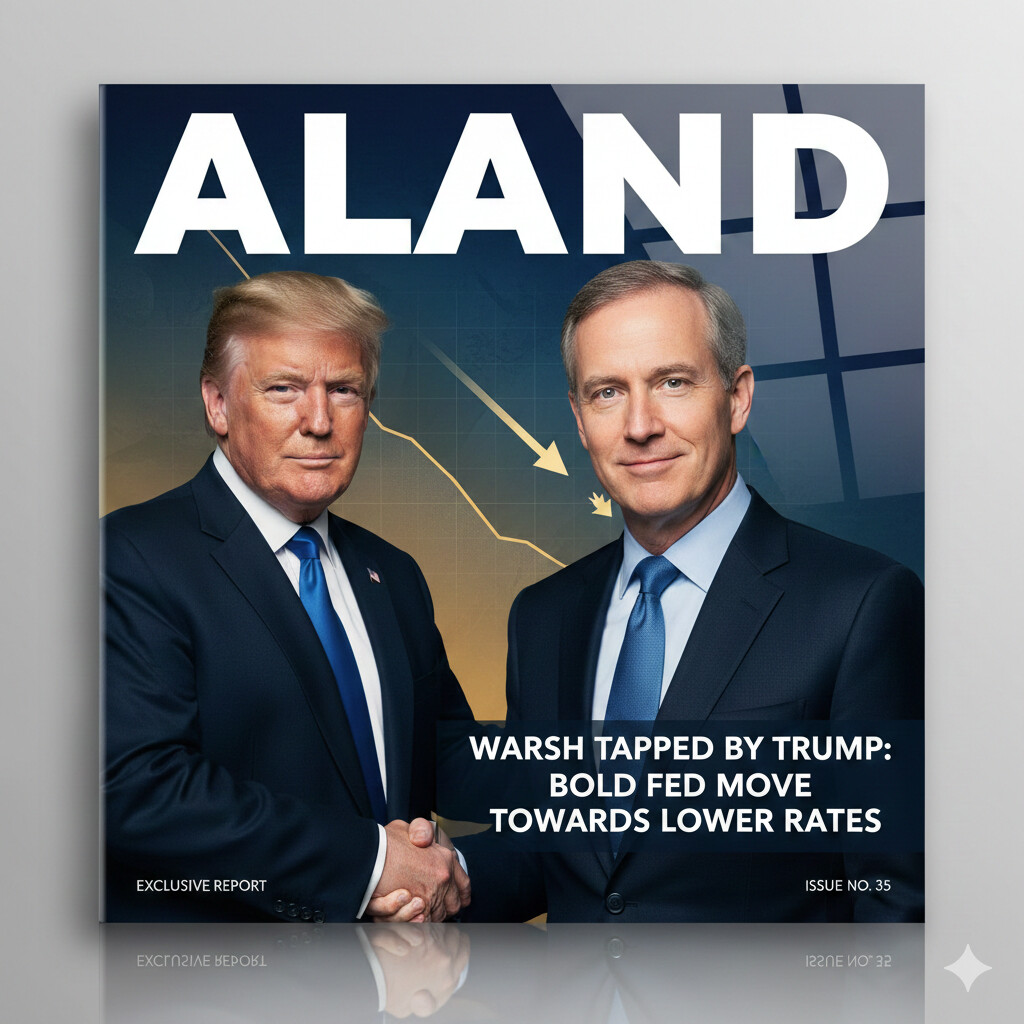
January 30, 2026
President Donald Trump has selected Kevin Warsh, a former Federal Reserve governor known for his sharp critiques of recent central bank policies, to become the next chair of the Federal Reserve. The announcement, made late Friday, positions Warsh to succeed Jerome Powell when his chair term expires in May, pending Senate confirmation.
The choice signals the administration's intent to steer monetary policy toward more growth-oriented settings, with Trump long arguing that elevated interest rates have unnecessarily constrained the economy.
President Highlights Warsh's Potential for Historic Leadership
In a statement posted on social media, Trump called Warsh a brilliant economist and longtime acquaintance who would deliver some of the strongest leadership the Federal Reserve has ever seen. The president has frequently blamed Powell's rate decisions for slowing job growth and investment, and he framed the nomination as a step toward unleashing faster economic expansion.
The decision followed an intensive review process coordinated by Treasury Secretary Scott Bessent, who evaluated multiple candidates before presenting a shortlist to the president. Warsh had been under consideration during Trump's first administration but did not receive the nomination at that time.
Warsh Brings Crisis Experience and Reformist Views
Kevin Warsh joined the Federal Reserve Board of Governors in 2006 and served through 2011, playing a key role during the depths of the global financial crisis. Before his Fed tenure he worked in investment banking at Morgan Stanley, giving him deep private-sector perspective on markets and risk.
Since leaving the central bank, Warsh has been a prominent voice in economic policy debates. He has repeatedly warned against what he describes as the Fed's overreach into non-monetary areas and has called for a narrower focus on achieving stable prices. Warsh has also expressed support for reducing borrowing costs in the current cycle when conditions warrant, a position that aligns closely with the administration's public stance.
He maintains that the Fed must preserve its operational independence while remaining accountable to legitimate public and political scrutiny.
Markets Greet Nomination with Measured Optimism
Initial market reactions showed a firmer U.S. dollar, slightly lower Treasury yields, and modest gains in equity futures. Investors appeared to interpret Warsh's selection as reducing uncertainty around Fed leadership while suggesting a potential pivot toward easier policy without immediate aggressive easing that might reignite inflation fears.
The news arrived amid recent turbulence in risk assets, including steep declines in technology stocks, precious metals, and digital currencies, partly linked to earlier speculation over who would replace Powell and how monetary policy might evolve.
Confirmation Process Set to Test Political Waters
Warsh's path to confirmation will likely prove challenging in the Senate, where Democrats may question whether his alignment with administration priorities threatens the Fed's long-standing independence. Republicans are expected to back the nominee strongly, citing his credentials and experience managing crisis-era policy.
The confirmation will cover both his return to the Board of Governors and his designation as chair. Hearings are anticipated to focus heavily on his views about the Fed's mandate, recent inflation dynamics, and the appropriate balance between growth and price stability.
Shaping the Future of U.S. Monetary Policy
If confirmed, Warsh would take the helm at a critical juncture, with inflation still above target in some measures, labor markets showing resilience, and fiscal pressures mounting from large deficits. His leadership could influence rate decisions through late 2026 and into future years, affecting everything from mortgage rates to corporate borrowing costs and global capital flows.
The nomination underscores Trump's determination to reshape key economic institutions in line with his growth-first agenda. Supporters see Warsh as the right figure to restore discipline to the Fed while delivering the lower rates the president has demanded. Critics worry about potential erosion of central bank autonomy at a time when credibility remains essential for anchoring expectations.
As the Senate prepares to weigh the pick, the choice of Kevin Warsh has already set the stage for one of the most consequential economic debates of the year, with far-reaching implications for markets, businesses, and households across the country.
Date: 30th Jan, 2026