Iran U.S. Nuclear Negotiations Stall in Geneva as Deadlock Persists on Enrichment and Sanctions
Published Date: 28th Feb, 2026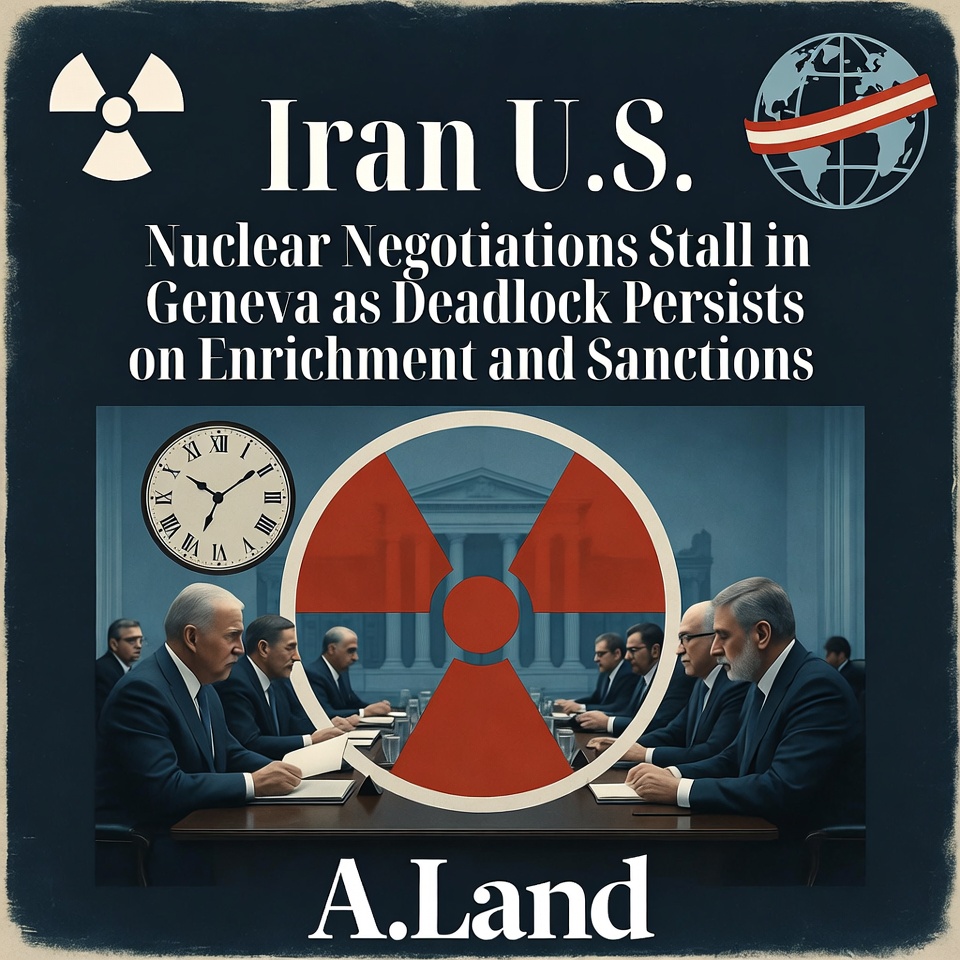
Talks aimed at reviving limits on Iran's nuclear program ended in stalemate Thursday in Geneva, with neither side willing to budge on the core issues that have blocked progress for months. The latest round of indirect discussions, occasionally shifting to direct exchanges, concluded without an interim deal or even a joint statement, deepening uncertainty over whether diplomacy can still avert a sharper confrontation in the Middle East.
Iranian negotiators, led by Foreign Minister Abbas Araghchi, characterized the three days of intensive meetings as serious and sometimes constructive, particularly in technical areas, yet ultimately insufficient to overcome fundamental disagreements. They reiterated Tehran's non-negotiable stance on preserving domestic uranium enrichment capabilities and securing full sanctions relief in return for verifiable restraints. Omani mediators, who shuttled proposals between the delegations, described meaningful advances on verification protocols and sequencing but acknowledged the political red lines remained firmly in place.
U.S. Pushes for Permanent Restrictions
The American team, including special envoy Steve Witkoff, pressed for an agreement that would effectively eliminate Iran's breakout potential to a nuclear weapon indefinitely. Key demands included the irreversible shutdown or conversion of major enrichment sites at Natanz and Fordow, the export of Iran's stockpile of near-weapons-grade uranium, and the installation of intrusive, long-term monitoring without expiration dates. Washington signaled limited willingness to permit very low-level enrichment for civilian research and medical isotope production, provided stringent safeguards and international oversight were locked in.
Iran rejected these conditions outright, labeling them an attempt to strip away sovereign rights under the Nuclear Non-Proliferation Treaty. Senior officials in Tehran stressed that any accord must allow continued enrichment on Iranian soil at levels suitable for peaceful purposes, coupled with the immediate and comprehensive removal of U.S. financial, oil, and banking sanctions that have crippled the economy.
Trump Administration Weighs Next Moves
President Donald Trump reacted to the impasse with measured frustration, noting he had hoped for faster results but remained open to additional rounds of talks. He emphasized that the United States prefers a negotiated outcome yet warned that failure to reach terms acceptable to Washington would force consideration of stronger measures. The administration has maintained a robust military posture in the region, including carrier strike groups and advanced air assets, as a visible backstop to the diplomatic effort.
The current negotiations follow a turbulent 2025 marked by U.S. airstrikes on Iranian nuclear infrastructure in June, which set back certain capabilities but hardened Tehran's resolve and briefly halted earlier dialogue. The revival of talks late last year stemmed from mutual interest in avoiding further escalation, yet the gap between positions appears as wide as ever.
Technical Experts to Pick Up the Thread
With senior political discussions paused, both sides agreed to shift focus to expert-level meetings scheduled to begin next week in Vienna under International Atomic Energy Agency coordination. These sessions will examine detailed technical parameters, including possible enrichment ceilings, centrifuge limits, stockpile caps, and inspection regimes. Mediators expressed cautious optimism that narrowing differences on implementation details could create momentum, even if the overarching political framework stays elusive.
Regional Stakes Grow Higher
The breakdown leaves Iran continuing to accumulate enriched uranium beyond previous limits while facing intensifying economic pressure from sanctions. For the United States and its allies, the lack of progress heightens concerns about proliferation risks and the potential for miscalculation. Gulf states and Israel have watched the Geneva process closely, with some voices advocating preemptive action if diplomacy collapses completely.
As delegations depart for consultations in their capitals, the immediate future hinges on whether technical progress can soften political rigidity or if entrenched demands push the standoff toward a more volatile phase. The absence of even a modest confidence-building step underscores how fragile the diplomatic track has become, with the consequences of failure potentially reshaping security across the region for years to come.
Date: 28th Feb, 2026