Hurricane Melissa Ravages Caribbean: Jamaica Reels from Category 5 Strike, Cuba Prepares for Impact
Published Date: 29th Oct, 2025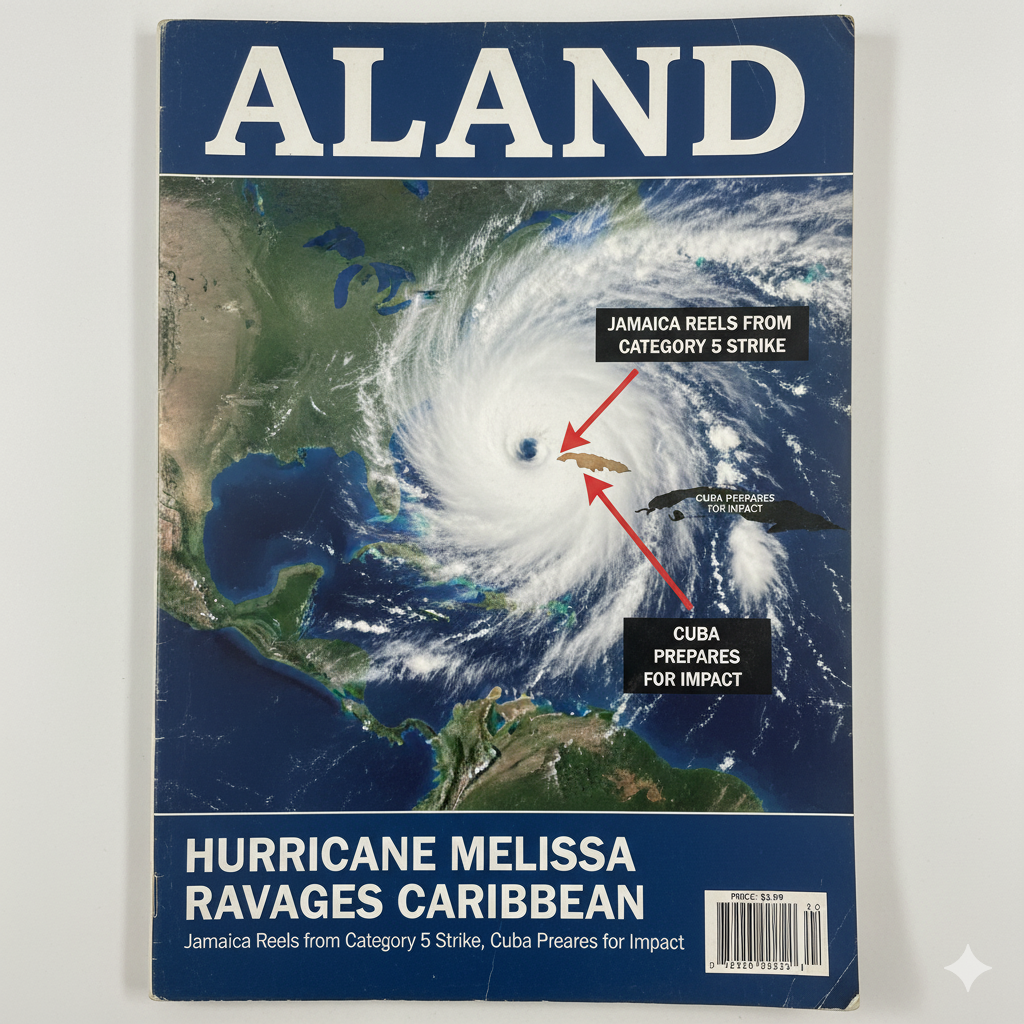
Historic Storm Makes Landfall, Leaving Trail of Destruction
Kingston, Jamaica, October 29, 2025 – Hurricane Melissa, the most powerful storm ever recorded in the Atlantic basin, slammed into Jamaica early Tuesday as a Category 5 monster, unleashing 175-mph winds and torrential rains that have killed at least three and left the island in tatters. Now churning northwest as a still-dangerous Category 4, the hurricane is bearing down on eastern Cuba, where mass evacuations are underway ahead of an expected strike tonight.
Melissa made landfall near Black River on Jamaica’s south coast just after 4 a.m., its eye wall obliterating coastal communities in minutes. Satellite imagery showed a perfectly symmetrical storm with a 15-mile-wide eye—an ominous beacon of the destruction to come. Winds ripped roofs from concrete homes, uprooted centuries-old mahogany trees, and turned coastal roads into impassable rivers of mud and debris. By mid-morning, more than 80 percent of the island was without power, and cellular networks collapsed under the strain.
Human Toll Rises as Rescue Efforts Begin
The confirmed death toll stands at three: a 62-year-old fisherman lost at sea off Portland Parish, and a mother and child crushed when their cinder-block home collapsed in St. Elizabeth. Dozens more are injured, and hundreds remain unaccounted for in remote mountain villages cut off by landslides. In the capital, Kingston General Hospital is operating on generator power, treating patients in hallways as floodwaters lap at the emergency room doors.
Prime Minister Andrew Holness declared a nationwide state of emergency and appealed for international assistance. “Jamaica has never faced a storm of this magnitude,” he said in a voice hoarse from shouting over the wind. “We are mobilizing every resource, but the scale of devastation is beyond anything in living memory.”
Cuba on High Alert
Cuba’s eastern provinces are racing against the clock. Over 735,000 residents have been moved from flood-prone areas in Santiago de Cuba, Guantánamo, and Granma provinces. State television broadcast nonstop evacuation updates, showing convoys of buses ferrying families to schools and government buildings reinforced as shelters. In Baracoa, residents stacked sandbags along the Malecón as 12-foot waves already battered the seawall.
Forecasters predict Melissa will regain Category 5 strength over the warm waters between Jamaica and Cuba before making landfall near Guantánamo Bay late Tuesday. Rainfall totals of 15–25 inches are expected, with isolated areas in the Sierra Maestra mountains potentially seeing 40 inches—enough to trigger catastrophic flash flooding and mudslides.
Climate Fingerprint on a Supercharged Storm
Melissa’s rapid intensification from tropical storm to record-breaking Category 5 in under 48 hours has stunned meteorologists. Ocean heat content in the Caribbean was at all-time highs, providing the fuel for explosive strengthening. “This is what climate change looks like in real time,” said Dr. Elena Ramírez, a hurricane specialist at the University of Miami. “Warmer oceans mean stronger, wetter, faster-intensifying storms. Melissa is the new normal.”
Regional Ripples and Global Response
The storm’s outer bands have already dumped heavy rain on Haiti and the Dominican Republic, where fragile hillsides gave way in several landslides. In Port-au-Prince, tent camps housing earthquake survivors were inundated, forcing another wave of displacement.
International aid is mobilizing. The U.S. Coast Guard has repositioned cutters for search-and-rescue operations, while the European Union pledged €25 million in immediate relief. Venezuela offered to send oil for generators, and Mexico dispatched a field hospital to Jamaica. The Red Cross launched its largest Caribbean emergency appeal in a decade.
A Region Braced for the Long Night
As night falls, Jamaica digs out from under the rubble while Cuba steels itself for impact. In the fishing village of Treasure Beach, survivors sift through the remains of their homes by flashlight, salvaging photographs and pots amid the wreckage. In Santiago de Cuba, a grandmother clutches her grandchildren in a crowded shelter, singing softly to drown out the wind.
Melissa will weaken as it crosses Cuba’s rugged terrain, but its remnants are expected to bring heavy rain and gusty winds to the Bahamas by Thursday and potentially brush South Florida this weekend. For now, the Caribbean endures—a region forged in fire and flood, where survival is measured not in days, but in the strength to rise when the storm finally passes.
Date: 29th Oct, 2025