Historic Milestone: India and EU Seal 'Mother of All Deals' in Landmark Free Trade Agreement
Published Date: 28th Jan, 2026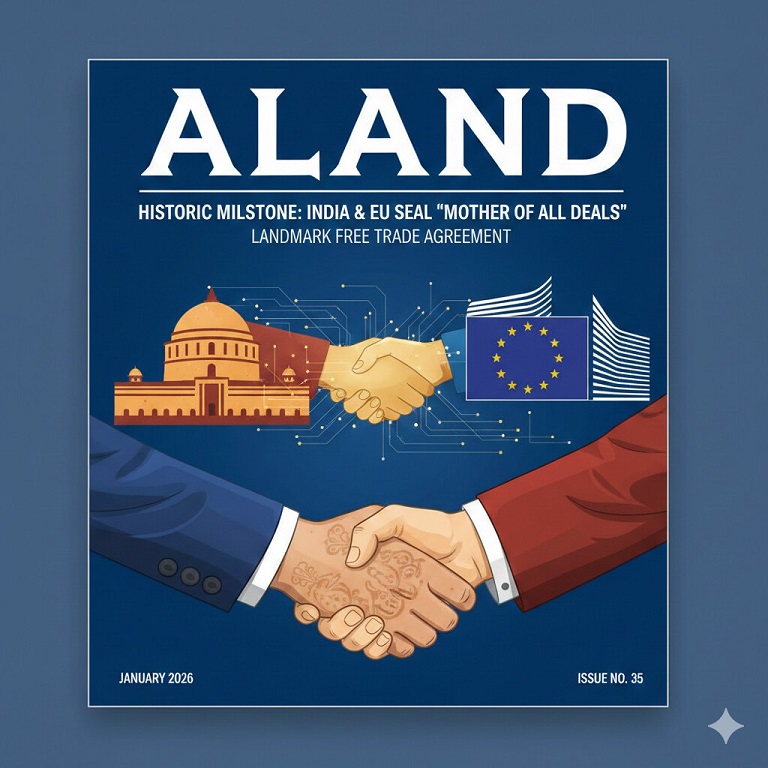
January 28, 2026
India and the European Union yesterday finalized negotiations on a massive free trade agreement hailed by leaders as the "mother of all deals," creating a vast economic zone spanning nearly two billion people and roughly a quarter of global GDP in a move seen as a strategic counterweight to rising protectionism and trade disruptions.
Breakthrough at Summit: Negotiations Conclude After Decades
The announcement came during the 16th India-EU Summit in New Delhi on January 27, where Prime Minister Narendra Modi hosted European Commission President Ursula von der Leyen and European Council President Antonio Costa. After nearly 20 years of on-and-off talks relaunched in 2022, the two sides declared the comprehensive pact complete, covering goods, services, investments, and key trade rules.
Von der Leyen described the accord as historic, stating Europe and India were "making history today" by forging a free trade zone of two billion people. Modi called it India's largest free trade agreement ever, emphasizing it as "not just a trade agreement" but a "blueprint for shared prosperity" that would boost investment, innovation partnerships, and global supply chains.
Sweeping Market Access and Sectoral Wins
The deal promises unprecedented concessions, with India gaining zero or reduced duties on over 99 percent of its exports by value to the EU market. Key Indian sectors set to benefit include textiles, gems and jewellery, leather goods, pharmaceuticals, processed foods, tea, coffee, spices, and fresh produce. Commerce Minister Piyush Goyal highlighted potential for textile exports to surge from 7 billion dollars to 30-40 billion dollars, potentially creating 6-7 million jobs in labor-intensive industries.
For the EU, the agreement opens India's protected market with tariff cuts on automobiles, wines, spirits, machinery, and services. Bilateral trade is expected to double in coming years, with European companies gaining first-mover advantages in India's fast-growing economy.
Sensitive areas such as dairy, cereals, poultry, and certain agricultural products remain safeguarded for India, balancing export ambitions with domestic priorities.
Geopolitical Backdrop: Response to Global Trade Pressures
The pact arrives amid heightened tariff threats from the United States and broader trade fragmentation. Leaders framed the agreement as a step toward stability in a turbulent global order, strengthening rules-based trade and reducing over-reliance on single markets. It complements India's existing deals with Britain and the European Free Trade Association while hedging against unpredictable policies elsewhere.
Additional agreements signed at the summit include deeper defense and security cooperation, counter-terrorism collaboration, Indo-Pacific engagement, and joint military hardware development.
Next Steps: Ratification and Implementation
The text now enters legal scrubbing and ratification processes in both the EU and India. Formal signing is anticipated after five to six months, with potential entry into force by late 2026 or early 2027 pending approvals from the European Parliament, EU member states, and India's cabinet.
Business groups on both sides welcomed the breakthrough, with Indian traders calling it a historic opportunity to reshape supply chains and European ambassadors expressing optimism for reduced barriers benefiting consumers and producers alike.
A New Chapter in Strategic Partnership
As details continue to emerge, the India-EU FTA stands as one of the most ambitious trade pacts ever negotiated, uniting two major democracies in pursuit of economic resilience and shared growth. With global trade facing headwinds, this "mother of all deals" signals a bold pivot toward deeper integration and mutual opportunity in an uncertain era.
The agreement's success will hinge on swift ratification and effective implementation, but leaders expressed strong confidence it will deliver lasting benefits for businesses, workers, and citizens across continents.
Date: 28th Jan, 2026