Gaza's Rafah Crossing Reopens After 20-Month Closure, First Aid Trucks Enter Amid Fragile Ceasefire
Published Date: 1 Feb, 2026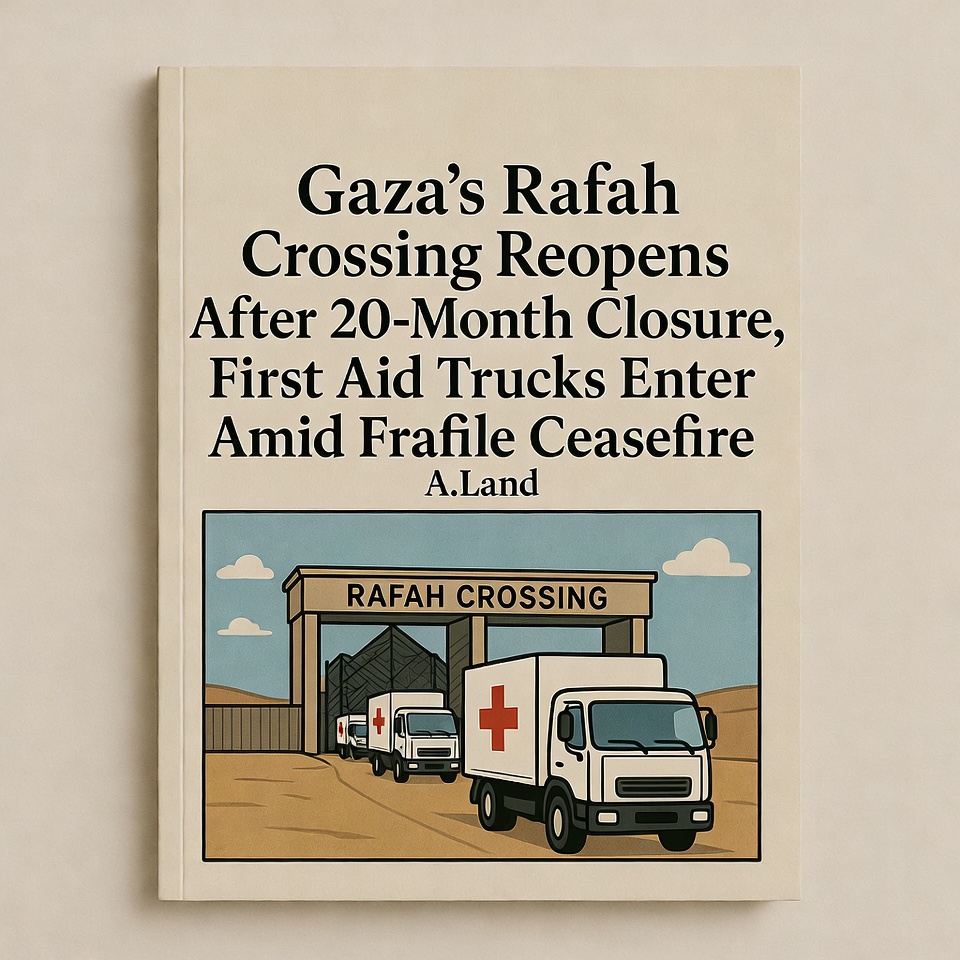
February 01, 2026
The Rafah border crossing between Gaza and Egypt reopened Sunday for the first time since May 2024, allowing a limited but symbolically significant flow of humanitarian aid into the war-battered enclave. Dozens of trucks carrying food, medical supplies, fuel, and other essentials crossed into Gaza under the terms of the U.S.-brokered ceasefire agreement, marking a key milestone in the truce's implementation despite fresh violence the previous day.
The reopening follows the recovery and return of the final Israeli hostage remains, fulfilling a major precondition set by Israel. Egyptian authorities confirmed the crossing would operate daily for humanitarian goods and limited civilian movement, though strict quotas and security screenings remain in place.
Aid Convoy Crosses as Gazans Await Relief
Early Sunday morning, the first convoy of approximately 120 trucks entered Gaza through Rafah after thorough inspections on the Egyptian side. Supplies included flour, rice, baby formula, antibiotics, surgical kits, water purification tablets, and generator fuel critical for hospitals and desalination plants.
United Nations agencies and the International Committee of the Red Cross coordinated the operation, describing the reopening as a vital lifeline after nearly two years of near-total blockade that exacerbated an already catastrophic humanitarian situation. Gaza health officials reported severe shortages of insulin, dialysis materials, and trauma care supplies, while winter temperatures have intensified needs for blankets, heaters, and warm clothing among displaced families.
Palestinian officials welcomed the development but stressed that the volume remains far below pre-war levels and insufficient to address widespread malnutrition, disease outbreaks, and infrastructure collapse.
Ceasefire Implementation Faces Ongoing Tests
The Rafah reopening comes one day after Israeli airstrikes killed at least 25 Palestinians in Gaza City and Khan Younis, incidents Hamas labeled as direct violations of the truce. Israel maintained the operations targeted militant infrastructure in response to alleged ceasefire breaches by Palestinian groups.
Despite the violence, both sides proceeded with the border activation, suggesting a determination to preserve core elements of the agreement. The ceasefire framework, advanced through U.S. mediation involving President Donald Trump and special envoy Steve Witkoff, includes phased Israeli withdrawals, hostage-prisoner exchanges, increased aid access, and preparations for a second phase involving deeper de-escalation and governance arrangements.
Hamas reiterated its commitment to the truce while accusing Israel of undermining progress through continued military actions. Israeli officials emphasized that Rafah's operation depends on sustained compliance and the prevention of weapons smuggling.
Long Road to Normalcy Remains
Rafah had served as Gaza's primary commercial and humanitarian gateway before Israel seized control of the Palestinian side in May 2024 during an earlier phase of operations. The crossing's closure forced reliance on Israeli-controlled Kerem Shalom, where aid volumes dropped dramatically due to security restrictions and damaged infrastructure.
Sunday's reopening allows Egypt to resume its traditional role as a major conduit for Gaza-bound assistance, potentially easing bottlenecks at other entry points. However, analysts caution that sustained access will require consistent adherence to the ceasefire terms, unimpeded inspections, and reconstruction of damaged border facilities.
International donors and aid organizations have pledged increased funding contingent on secure and predictable access. The United Nations estimates that more than 1.9 million Gazans remain displaced, with acute food insecurity affecting over 90 percent of the population.
Symbolic Step Forward in Precarious Truce
While the reopening represents tangible progress in humanitarian terms, it occurs against a backdrop of deep mistrust and intermittent violence. Mediators continue pressing both parties to avoid actions that could unravel the agreement as negotiations advance toward Phase Two.
For ordinary Gazans, the sight of aid trucks rolling through Rafah offered a rare moment of hope amid prolonged hardship. Whether the crossing can operate consistently and at sufficient scale will serve as an early indicator of the ceasefire's durability and the broader prospects for stabilization in one of the world's most devastated conflict zones.
Date: 1 Feb, 2026