EU Mercosur Trade Agreement Advances to Provisional Status Despite Fierce Opposition from France
Published Date: 28th Feb, 2026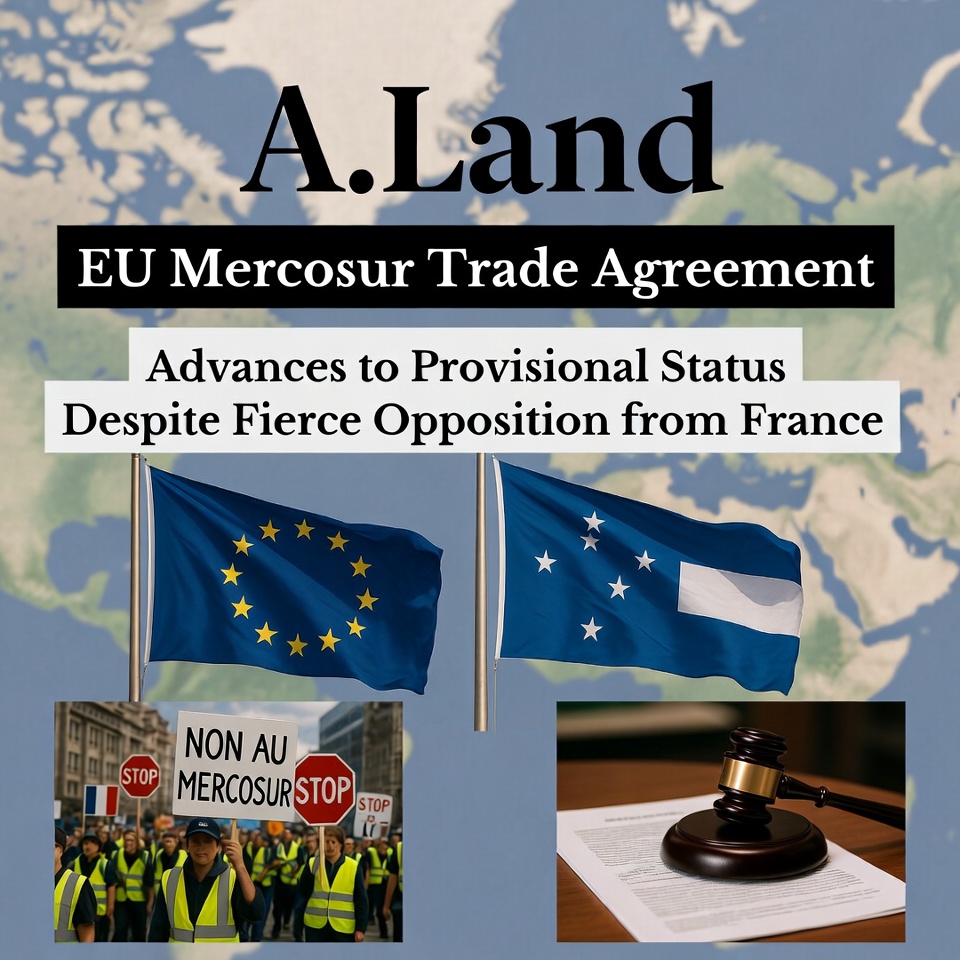
The European Union took a major step forward Friday by launching provisional application of its comprehensive free trade deal with the Mercosur bloc, securing early market access for European exporters even as France mounts intense resistance and a legal review hangs over the agreement. European Commission President Ursula von der Leyen confirmed the move after Argentina and Uruguay finalized their domestic ratifications Thursday, allowing the EU to activate key tariff cuts and trade facilitations without waiting for full bloc wide approval.
The pact, concluded after twenty five years of often contentious talks and formally inked in January, unites the EU's four hundred fifty million consumers with Mercosur's three hundred million in South America. It stands to eliminate or sharply reduce tariffs on ninety one percent of EU goods shipped to the region, potentially saving European companies billions in duties annually while opening doors for agricultural, industrial, and service exports.
Provisional Rollout Begins Swiftly
Von der Leyen described the timing as strategic, noting that provisional application can start once the European Commission receives formal notifications from ratifying Mercosur members. With Argentina and Uruguay already on board, and Brazil plus Paraguay expected to complete procedures soon, businesses could see reduced tariffs within weeks rather than years. The Commission highlighted immediate advantages for sectors like machinery, chemicals, textiles, automobiles, and alcoholic beverages facing high barriers today.
Provisional status applies only to those parts of the agreement falling under EU exclusive competence, meaning tariff reductions and most trade rules take effect quickly while politically sensitive areas await full ratification by the European Parliament and national parliaments.
France Vows Continued Fight Over Farming Risks
France reacted with sharp criticism, with President Emmanuel Macron calling the provisional push unacceptable and a direct affront to European farmers. Paris has led opposition since the deal's outline emerged, arguing that increased imports of beef, poultry, sugar, ethanol, and soy from Brazil, Argentina, Paraguay, and Uruguay would flood markets and undercut producers bound by stricter EU environmental, animal welfare, and labor standards.
French agricultural unions organized fresh protests this week, with farmers warning of irreversible damage to rural economies already strained by inflation, energy costs, and regulatory burdens. Macron insisted the safeguards negotiated, including tariff quotas and sustainability clauses, fall short of genuine protection and demanded the Commission halt provisional steps until the European Court of Justice rules on the agreement's legality.
Court Referral Adds Layer of Uncertainty
In January the European Parliament, responding to pressure from France and several other member states, asked the EU's highest court to assess whether the deal complies with Union law and international obligations, particularly on climate and biodiversity commitments. That review could take one to two years, potentially blocking permanent implementation, yet it does not legally prevent provisional application in the meantime.
Supporters, led by Germany, Spain, and several Central European countries, view the provisional phase as essential to lock in economic gains amid global trade fragmentation and competition from other blocs. They argue the agreement strengthens Europe's strategic autonomy by diversifying supply chains away from Asia.
Broader Implications for Sustainability and Global Trade
The deal includes binding chapters on sustainable development, deforestation free supply chains, labor rights, and climate action, which proponents say set new benchmarks for trade agreements. Critics, including environmental organizations and some MEPs, contend enforcement mechanisms remain weak and could inadvertently accelerate Amazon deforestation or undermine EU Green Deal goals.
As provisional tariffs begin to phase down for early ratifiers, exporters and importers on both sides of the Atlantic prepare logistics and contracts to seize new opportunities. The Commission's determination to move ahead signals confidence that economic benefits will outweigh political costs over time.
Outlook Remains Contested
With Brazil's ratification process underway and court proceedings in motion, the coming period will reveal whether provisional implementation builds irreversible momentum or intensifies backlash strong enough to derail the deal entirely. The EU faces a delicate balancing act: delivering promised trade wins to businesses while addressing legitimate concerns from farmers, environmentalists, and skeptical member states in an era of heightened protectionist pressures worldwide.
Date: 28th Feb, 2026