Estonia Demands NATO Consultation After Russian Airspace Breach
Published Date: 20th Sep, 2025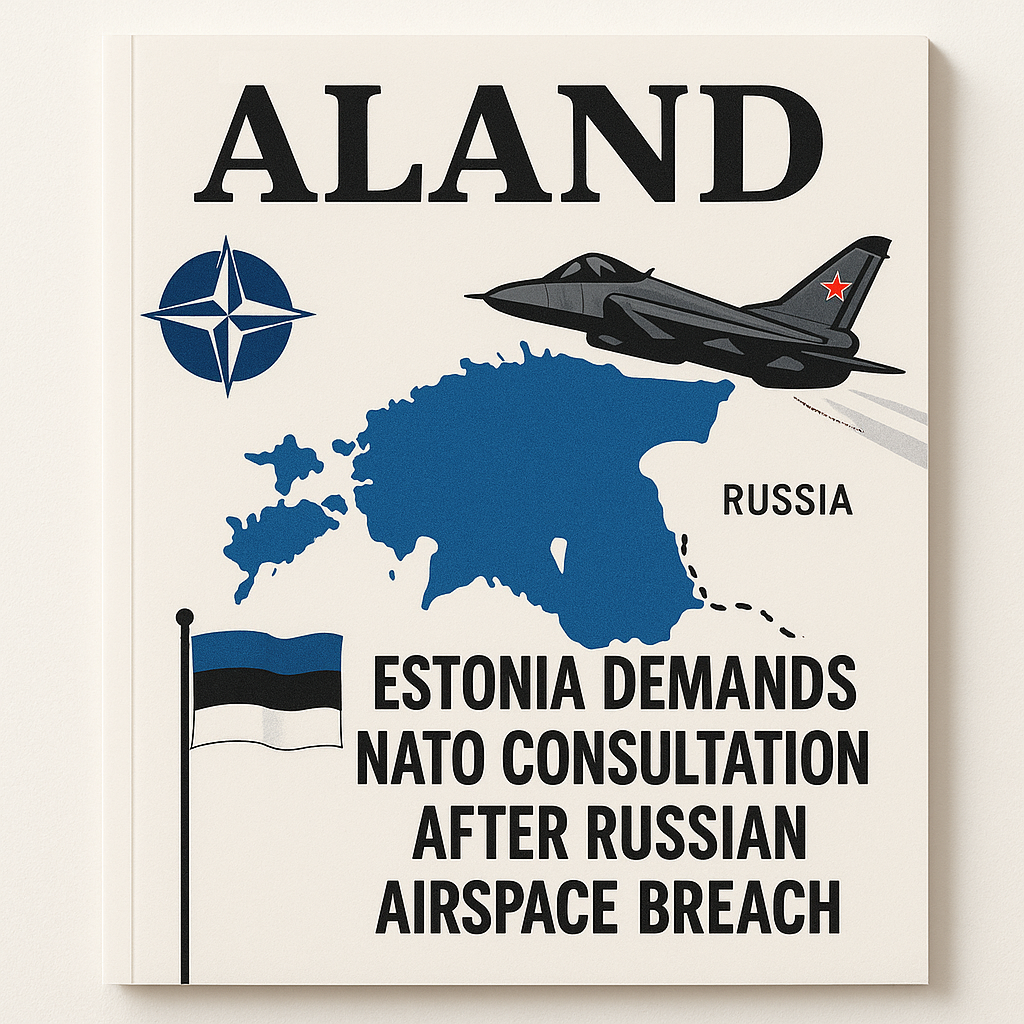
Tallinn, September 20, 2025 — Estonia has formally asked its NATO allies to convene under Article 4 of the North Atlantic Treaty after three Russian MiG-31 fighter jets violated its airspace near Vaindloo Island in the Gulf of Finland. The jets entered Estonian airspace without filing flight plans, using transponders, or communicating with local air traffic control, remaining inside for approximately 12 minutes.
What Happened
-
The Russian aircraft penetrated Estonian airspace near Vaindloo Island, staying about 5 nautical miles into Estonia.
-
They did so without flight plans, with transponders off, and no communication with Estonian air traffic control.
-
NATO responded by scrambling Italian F-35 jets under its Baltic Air Policing mission, which intercepted the Russian jets and forced them to withdraw.
Estonia’s Response
-
Estonian Prime Minister Kristen Michal called the incident “unacceptable,” noting its seriousness and saying that such provocations require a united and strong response from NATO.
-
Foreign Minister Margus Tsahkna described the violation as a “grave and unacceptable provocation” and emphasized that Tallinn will not face such challenges alone.
-
Estonia has officially requested Article 4 consultations, a provision in the NATO treaty that allows member states to convene with allies when they believe their security, territorial integrity, or political independence is under threat.
Context & Pattern
-
This marks the fourth confirmed incursion by Russian military aircraft into Estonian airspace in 2025. Previous violations included both fighter jets and a helicopter near the same area.
-
The Vaindloo Island region has been repeatedly used in such incidents.
-
Related incidents are also part of a broader uptick in tensions across NATO’s eastern flank. Similar breaches have occurred in Poland and Romania, involving both drones and Russian-operated aircraft.
Reactions and Stakes
-
NATO has condemned the action as reckless and dangerous. Estonia’s invocation of Article 4 signals it seeks both diplomatic support and a discussion of what collective measures are appropriate.
-
Russia denies having violated Estonian airspace, maintaining that the flights were over international waters and within legal flight paths.
-
For Estonia (and NATO more broadly), these violations test the alliance’s readiness, air defense capacity, and the strength of its response mechanisms under treaty obligations.
What Article 4 Means
-
Invoking Article 4 does not automatically lead to military retaliation. It triggers formal consultations among NATO members when one member believes its security is threatened.
-
Such consultations can lead to diplomatic, political, or military measures, depending on what allies agree upon. Estonia is expected to push for increased coordinated defense efforts, stronger air surveillance, and enhanced deterrence along its borders.
Looking Ahead
-
NATO is expected to meet early next week to review the incident and consider possible steps.
-
Estonia will likely emphasize that this breach is part of a recurring pattern and call for bolstering the air policing mission in the Baltic Sea region.
-
How NATO responds could influence Moscow’s calculus: whether these violations will continue or be constrained by diplomatic costs and military readiness.
Estonia’s request for NATO consultation under Article 4 underscores the seriousness with which it views the latest violation. While no direct military response has been declared, the incident exacerbates regional insecurity and pressures NATO to evaluate and possibly strengthen its eastern defenses. For now, allied response options remain under discussion, with emphasis on deterrence, surveillance, and maintaining alliance cohesion.
Date: 20th Sep, 2025