COP30 Opens in Belém: The Amazon’s Last Stand or the World’s Turning Point?
Published Date: 9th Nov, 2025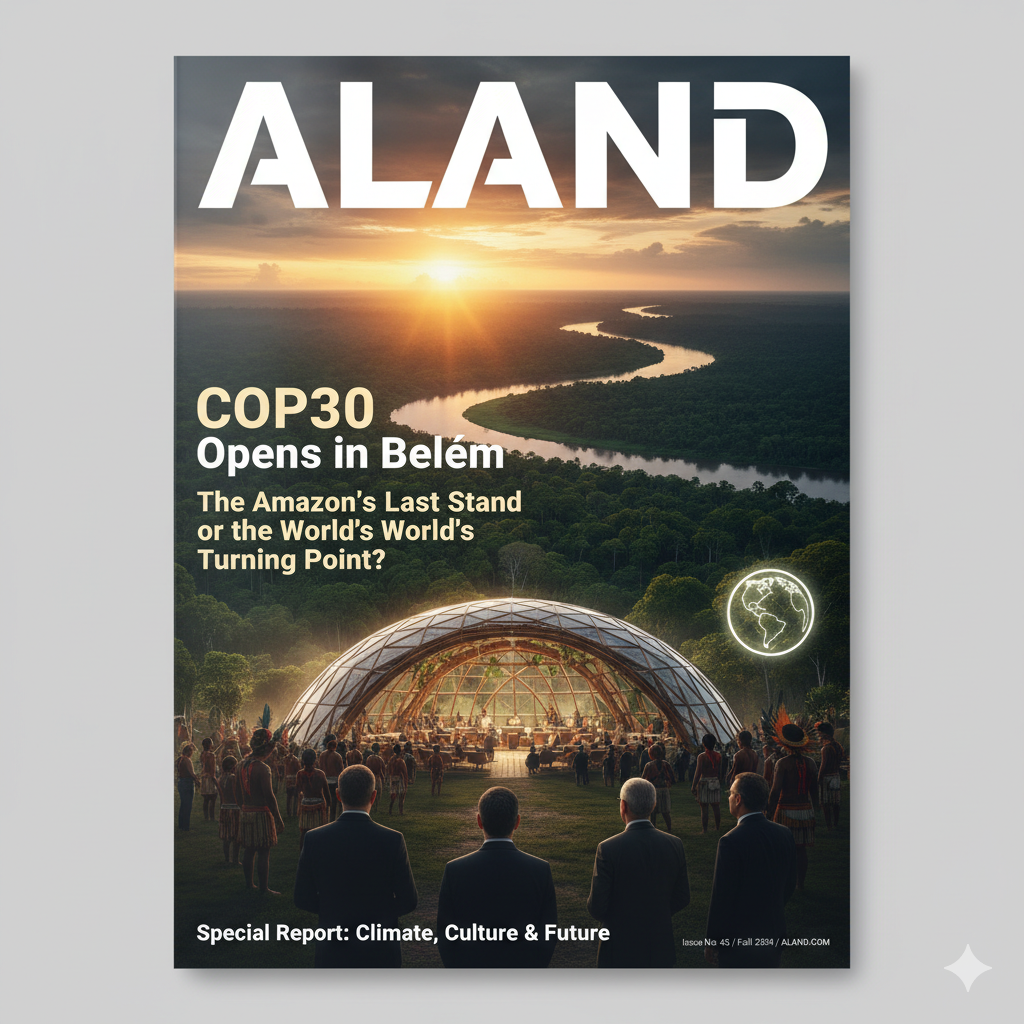
Why Belém? A Host City That Embodies the Crisis
Brazil did not choose Belém by accident. The capital of Pará state sits at the mouth of the Amazon, where freshwater meets the Atlantic and illegal logging roads snake into protected lands. President Luiz Inácio Lula da Silva has staked his legacy on restoring the forest after years of record clearance. Local indigenous leaders, however, plan daily marches to remind negotiators that promises without land titles are paper shields against chainsaws. The city’s sweltering streets will host not only diplomats in air-conditioned halls but activists in the open air, turning every sidewalk into a negotiation zone.
The Trillion-Dollar Question: Who Pays to Keep the Planet Livable?
The 2009 pledge of $100 billion a year from rich to poor nations expires this year—widely acknowledged as a rounding error against actual needs. COP30 must agree on a new goal, with developing countries demanding at least $1 trillion annually by 2030 for adaptation, renewables, and compensation for climate damage already locked in. Island nations arrive with photos of submerged villages; African delegations carry drought maps. Wealthier blocs counter with proposals for private capital and carbon markets. The math is brutal, the politics brutal-er.
Zero-Deforestation Deadline: From Pledge to Proof
A single agenda cluster dominates side events: halting forest loss by 2030. Satellite data show the Amazon tipping toward savanna in swaths larger than Belgium. New trade rules under discussion would ban imports linked to recent clearing—targeting soy, beef, and timber. Brazil’s own zero-deforestation law takes effect in 2025, but enforcement budgets remain skeletal. Indigenous territories, where deforestation rates are a fraction of the regional average, are pitched as the cheapest carbon sink on Earth—if governments finally grant legal titles.
The Big Emitters’ Tightrope
The United States pushes hydrogen and nuclear scale-up; China showcases its wind-and-solar juggernaut; the European Union brandishes carbon border taxes. Meanwhile, oil states quietly lobby to keep fossil-fuel subsidies off the agenda. Methane leaks, shipping emissions, and cooling the food chain sit in parallel tracks, each with billion-dollar implications. Youth delegations—coordinated across continents—stage flash mobs at dawn, demanding that updated national plans (due in 2025) align with a 1.5 °C pathway instead of the current 2.7 °C trajectory.
Beyond the Headlines: Deals in the Shadows
While plenary speeches grab cameras, the real movement happens in corridors. Expect late-night announcements on:
- A coalition of Amazonian governors pledging 80 % forest cover by 2030.
- A $20 billion reforestation fund seeded by Norway, Germany, and private banks.
- A breakthrough agreement on carbon-credit integrity to stop double-counting.
Verdict Pending
COP30 ends November 21. Success will be measured not in applause but in gigatons avoided, dollars mobilized, and hectares secured. The Amazon’s ancient canopy looms over every session—silent, immense, and increasingly fragile. History will record whether Belém marked the moment the world finally listened.
Date: 9th Nov, 2025