Amazon on Fire: COP30 Shatters Under Indigenous Fury
Published Date: 13th Nov, 2025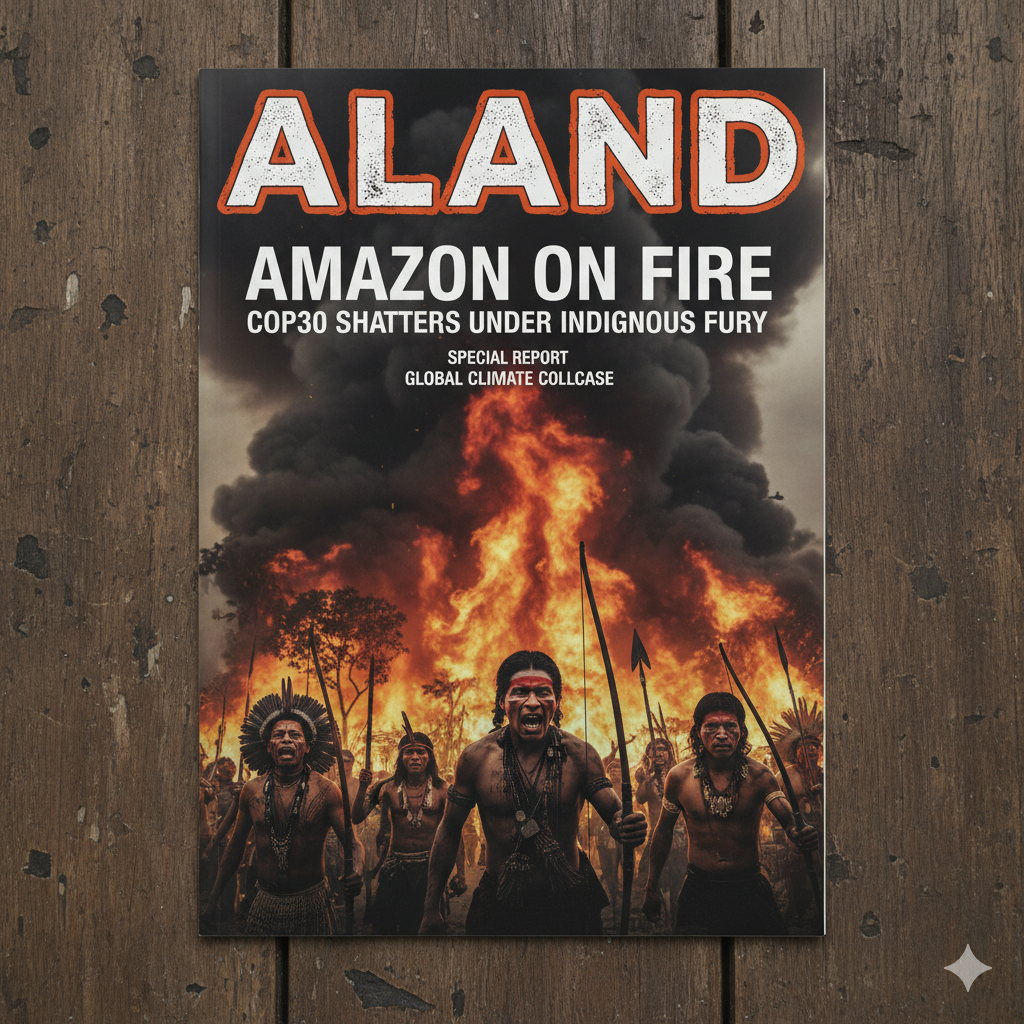
Belém, Brazil – November 13, 2025 – The rainforest city of Belém awoke to the acrid scent of tear gas and the drumbeat of defiance. COP30, the UN’s grand climate carnival, staggered into its fourth day after Indigenous activists turned the summit’s steel walls into a battleground Tuesday night. What began as a march ended in a breach, a raw eruption of rage that exposed the chasm between polished pledges and the scorched earth outside.
Siege of the Summit: Warriors Storm the Gates
Under a moon sliced by floodlights, hundreds of Indigenous protesters—faces streaked with urucum red, feathers trembling in the wind—surged against the COP30 perimeter. Barricades buckled. A woman in a headdress of macaw plumes hurled her body at the fence, screaming, “This is our blood, not your bargaining chip!” Riot police answered with batons and pepper spray, but not before dozens slipped through, sprinting across manicured lawns toward the plenary halls where delegates sipped chilled coconut water.
The invasion lasted seven electric minutes. Activists unfurled banners inside the compound—“NO MORE GENOCIDE FOR GREEN PROFIT”—before being dragged out, some bloodied, all unbowed. By dawn, the United Nations had quietly tripled security, erecting a second ring of steel that glinted like a scar across the jungle’s edge.
Lula’s Tightrope: Embrace the Chaos or Crush It?
President Luiz Inácio Lula da Silva, sweat beading beneath his signature smile, faced the cameras at noon. “These are not vandals,” he declared, voice gravelly with exhaustion. “They are the conscience of the Earth.” Yet behind the rhetoric, federal troops fanned out across Belém’s ports, a silent warning to the thousands massing for the People’s Summit. Lula walks a razor’s edge: court the Indigenous vote that swept him back to power, or appease investors who see the Amazon as a carbon credit vault.
The Health Pact: A Band-Aid on a Hemorrhage
Inside the air-conditioned bubble, delegates celebrated a different kind of breakthrough. The Belém Declaration on Climate and Health—signed amid applause and flashbulbs—promises to bulletproof hospitals against heatwaves, floods, and vector-borne plagues. Brazil’s health minister beamed as she announced a $2 billion seed fund, but the fine print revealed a grim truth: 40% of the money is “contingent on future appropriations.” Outside, a child with dengue fever lay on a cot in a makeshift clinic, IV drip swaying like a pendulum.
Money Talks, Forests Burn
Finance talks limped forward in a side room reeking of instant coffee. A draft report floated the need for $4.3 trillion annually by 2030 to decarbonize the Global South. The U.S. delegation, conspicuously mute, offered only a vague nod to “private-sector innovation.” China and the EU filled the silence with rival proposals—one tied to Belt and Road loans, the other to carbon tariffs that would kneecap Brazilian beef exports. As negotiators bickered over commas, satellite data showed 1,200 new fire alerts in the Amazon that morning alone.
The Night Watch: Embers in the Dark
As dusk bled into the Mangueira neighborhood, protesters regrouped beneath kapok trees. A circle of elders passed a gourd of cauim, their songs low and ancient. One teenager, eyes fierce with kohl, spray-painted a fresh mural on a concrete wall: a jaguar devouring a suited man clutching a briefcase labeled “COP30.” Across the river, the summit’s floodlights hummed, casting long shadows over a planet on life support.
Tomorrow, the talks resume. The fences stand taller. The fires burn hotter. And the Amazon, lungs of the world, waits to see if its scream will finally be heard—or silenced once more.
Date: 13th Nov, 2025