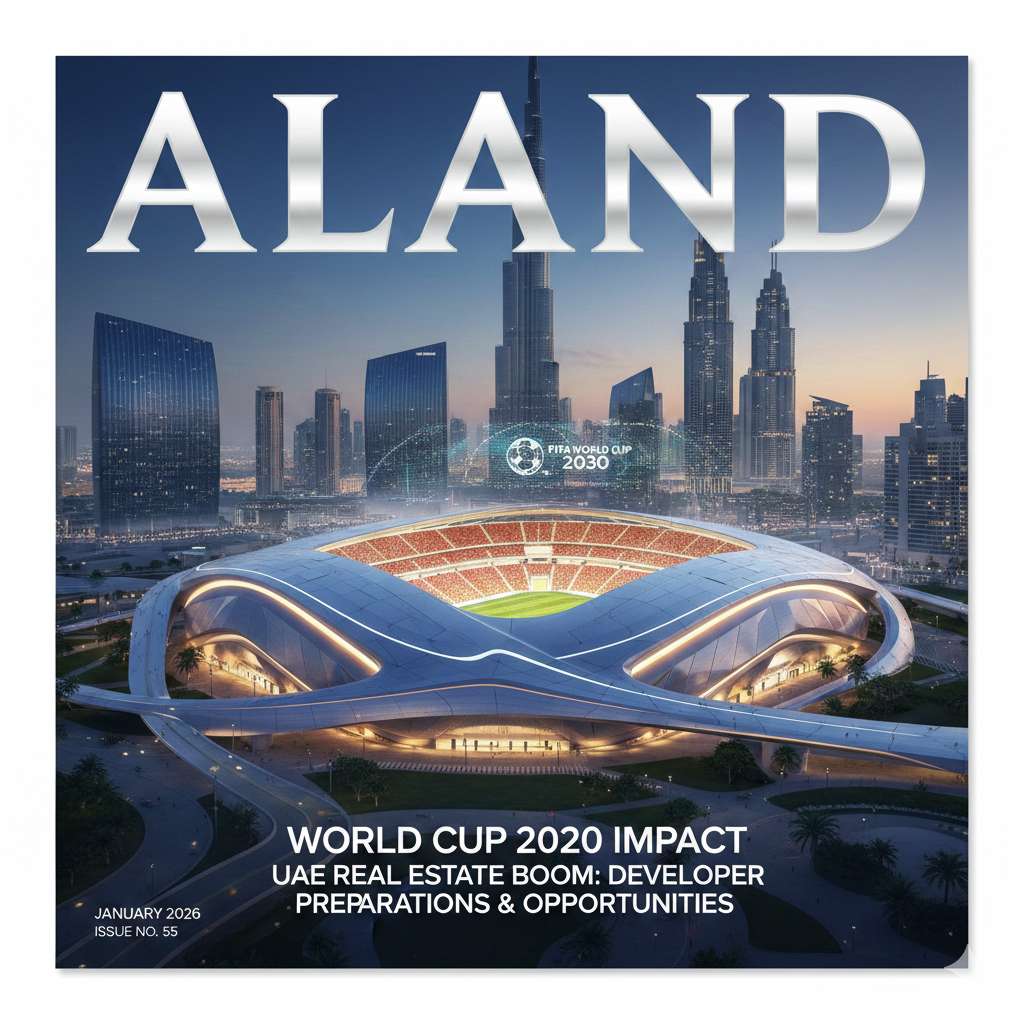
World Cup 2030 Impact: Developer Preparations and Opportunities in the UAE Real Estate Market
- Published Date: 31 Jan, 2026
-
4.7★ ★ ★ ★ ★(79)
By Dr. Pooyan Ghamari
The FIFA World Cup 2030, co-hosted by Morocco, Portugal, and Spain with centenary celebration matches in Argentina, Paraguay, and Uruguay, stands as a landmark global event celebrating the tournament's 100th anniversary. While the UAE is not a direct host, its proximity to Morocco across the Mediterranean, strong diplomatic ties, and role as a regional aviation and tourism hub position Dubai, Abu Dhabi, and Sharjah to capture indirect benefits. Developers in the UAE are already positioning for spillover effects, including increased tourism inflows, heightened international visibility, and demand surges in hospitality, residential, and commercial sectors leading up to and during the event in June-July 2030.
Historical precedents from Qatar's 2022 World Cup show how neighboring markets like Dubai experienced short-term rental booms, with landlords converting long-term leases to short-term accommodations for fans unable to secure spots in the host country. Similar dynamics are anticipated for 2030, amplified by the UAE's established infrastructure, luxury offerings, and connectivity via Emirates and Etihad airlines. Major developers such as Emaar Properties are accelerating hospitality and mixed-use projects in areas like Dubai Creek Harbour and Downtown Dubai, anticipating elevated visitor numbers. DAMAC Properties focuses on branded residences and hotels that appeal to affluent sports tourists, while Aldar in Abu Dhabi advances integrated developments on Yas Island that could serve as premium bases for regional visitors. The event is expected to drive pre-2030 investment in short-term rental properties, serviced apartments, and luxury villas, with potential rental yield uplifts in high-demand zones.
Broader market sentiment remains positive, with UAE real estate continuing its resilient trajectory into 2026. Population growth, economic diversification, and events like Expo legacies sustain absorption, but the World Cup horizon adds a layer of opportunistic momentum. Developers are emphasizing sustainable, high-amenity projects to attract global visitors seeking comfortable, luxurious stays outside the main host venues.
Company and Market Background
The UAE real estate landscape, dominated by Dubai's dynamic market and supported by Abu Dhabi's measured approach and Sharjah's value positioning, has matured significantly since the post-pandemic recovery. Dubai benefits from visa reforms, tax advantages for foreign owners, and its status as a global connector, drawing high-net-worth individuals and businesses. Major developers like Emaar Properties lead with iconic master-planned communities that blend residential, retail, hospitality, and entertainment, creating self-sustaining ecosystems attractive for long-term residents and tourists alike. DAMAC Properties excels in luxury-branded offerings, often partnering with international names to deliver premium residences and hotels. Sobha Realty prioritizes quality construction and finishes, appealing to discerning buyers in premium segments.
In Abu Dhabi, Aldar Properties drives developments in cultural and leisure hubs like Saadiyat Island and Yas Island, focusing on balanced growth with strong institutional backing. Sharjah offers more affordable entry points, complementing the premium focus elsewhere. As 2030 approaches, developers are aligning strategies with anticipated regional tourism surges. Proximity to Morocco facilitates easy travel, potentially routing fans through Dubai airports for combined itineraries. This setup encourages investments in hospitality expansions, with forecasts suggesting increased hotel room supply and short-term rental conversions to meet demand peaks.
Detailed Analysis
The World Cup 2030 creates a clear contrast between hospitality and short-term rental-focused developments versus traditional long-term residential projects in the UAE.
Hospitality-driven and short-term accommodation projects are poised for the strongest uplift from the event. Developers such as Emaar and DAMAC are expanding hotel portfolios and branded residences in prime locations like Palm Jumeirah, Dubai Marina, and Business Bay, where proximity to airports and entertainment hubs suits transient visitors. These assets benefit from high occupancy during major events, with potential for significant yield compression in the run-up to 2030 as global fans seek alternatives to host-country constraints. Short-term rentals via platforms could see demand spikes similar to Qatar 2022, where neighboring markets absorbed overflow. Infrastructure upgrades, including airport expansions and transport links, further enhance appeal, driving capital appreciation in tourism-oriented zones.
In contrast, traditional long-term residential projects, particularly family villas and mid-tier apartments in suburban master communities, show more insulated but steady demand. These segments rely on organic population growth, Golden Visa programs, and end-user purchases rather than event-specific tourism. While they may not experience dramatic short-term surges, they gain from broader economic confidence and infrastructure momentum tied to regional visibility. Developers like Emaar in Dubai Hills Estate or Aldar in Abu Dhabi prioritize these for sustained rental stability and capital preservation, with lower volatility compared to hospitality plays. The bifurcation highlights strategic choices: event-leveraged hospitality offers higher potential returns with cyclical risks, while core residential provides resilience and long-term value in a market already benefiting from structural drivers.
Pros and Cons
Positioning for World Cup 2030 opportunities brings substantial upsides for UAE developers and investors. Proximity to the host nations enables the UAE to serve as a convenient gateway and overflow destination, boosting tourism revenues, hotel occupancies, and short-term rental income without the full burden of hosting infrastructure. Developers gain from accelerated project pipelines in hospitality and mixed-use, attracting international capital and enhancing brand prestige on a global stage. Increased visibility supports higher property values in connected areas, while flexible payment structures and premium amenities draw affluent buyers and renters seeking event-period access.
Challenges include timing risks, as peak demand may concentrate around the tournament window, potentially leading to post-event normalization in hospitality yields. Overbuilding in short-term segments could create temporary oversupply if expectations exceed actual inflows. Investors face exposure to external factors like travel restrictions or economic shifts affecting global tourism. Competition from direct host markets and other regional players may dilute benefits, requiring precise location and product differentiation to capture value effectively.
Buyer Recommendations
Two investor profiles stand out in this context.
The first profile fits opportunistic, yield-driven investors targeting event-related upside. These buyers focus on hospitality-linked properties, branded residences, or short-term rental units from developers like DAMAC or Emaar in tourism hotspots. They seek elevated rental income and capital gains from 2028-2030 demand waves, accepting higher cyclicality for potential strong returns during peak periods.
The second profile suits conservative, long-hold investors prioritizing stability. They select core residential assets in master-planned communities from Emaar or Aldar, emphasizing family appeal, infrastructure maturity, and sustained demand from residency programs. This approach leverages indirect economic benefits from regional growth while minimizing event-specific volatility.
Buyers should follow this checklist:
- Assess developer experience in hospitality or tourism-oriented projects for reliable execution
- Analyze projected tourism inflows and airport connectivity for location viability
- Evaluate short-term rental regulations and platform performance in target areas
- Compare projected yields against holding costs and post-event scenarios
- Secure independent market studies on regional spillover effects
- Diversify between event-leveraged and core residential assets
- Monitor global travel trends and diplomatic relations with host nations
- Factor in sustainable features for long-term appeal to international visitors
- Plan exit strategies considering pre- and post-2030 market cycles
ALand
ALand FZE operates under a valid Business License issued by Sharjah Publishing City Free Zone, Government of Sharjah (License No. 4204524.01). Under its licensed activities, ALand provides independent real estate consulting, commercial intermediation, and investment advisory services worldwide. Through a structured network of cooperation with licensed developers, brokers, and real estate firms in the UAE and internationally, ALand assists clients in identifying suitable opportunities, evaluating conditions, and navigating transactions in a secure and informed manner. ALand’s role is to support clients in finding the best available offers under the most appropriate conditions, using professional market analysis, verified partner connections, and transparent advisory processes designed to protect client interests and reduce execution risk. All regulated brokerage, sales, and transaction execution are carried out exclusively by the relevant licensed entities in each jurisdiction. In addition, ALand is authorized to enter consultancy and cooperation agreements with real estate corporations, developers, and professional advisory firms across multiple countries, enabling the delivery of cross-border real estate consulting and intermediation services tailored to the needs of international investors and institutions.
FAQ's
How will the 2030 World Cup directly affect UAE real estate?
Which developers are best positioned for 2030 opportunities?
What property types offer the strongest potential?
Could Dubai see a rental boom similar to Qatar 2022?
Are there risks of overbuilding ahead of 2030?
How does proximity to Morocco benefit the UAE?
Will residential prices rise due to the event?
What timeline should investors consider?