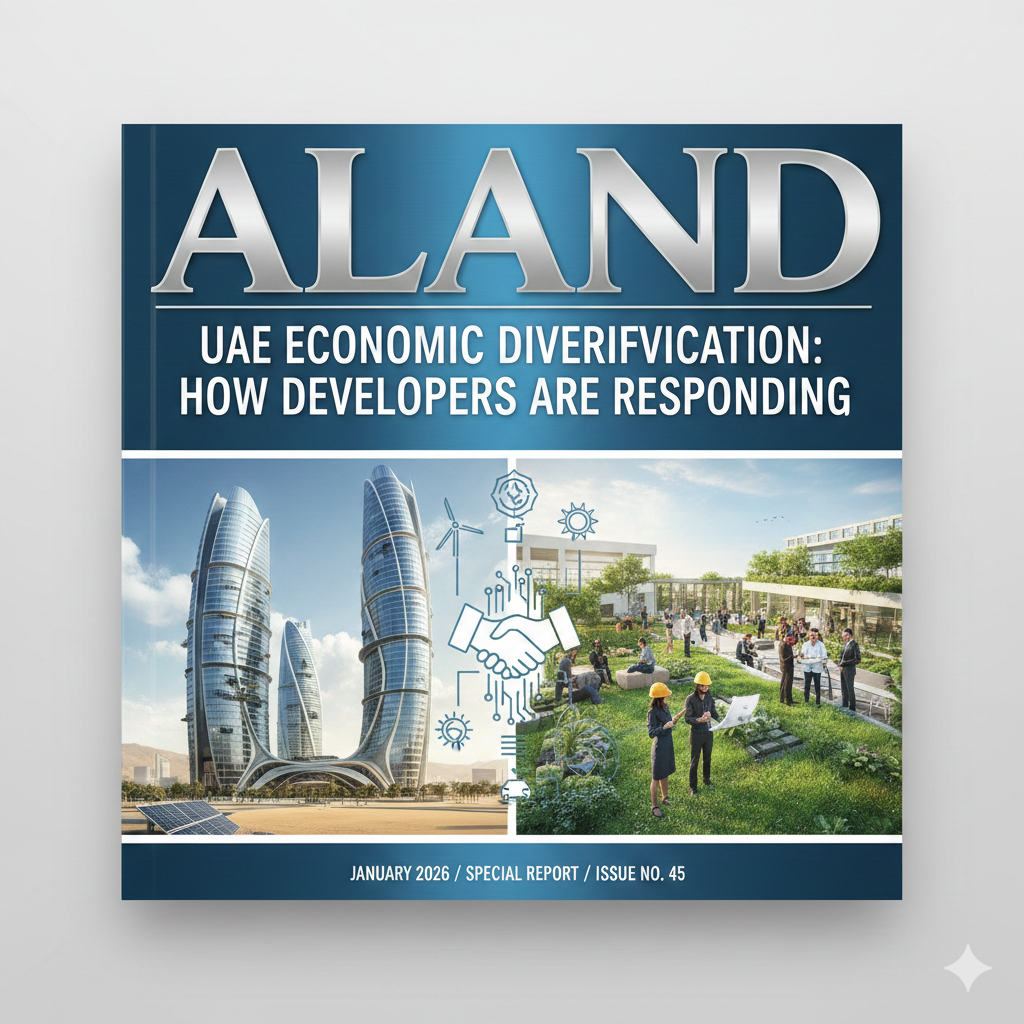
UAE Economic Diversification: How Developers Are Responding
- Published Date: 31 Jan, 2026
-
4.6★ ★ ★ ★ ★(166)
By Dr. Pooyan Ghamari
UAE's Shift Toward a Diversified Economy and Real Estate's Central Role
The United Arab Emirates continues its impressive journey toward economic diversification in 2026, with non-oil sectors now forming the backbone of national growth. Recent forecasts point to real GDP expansion around 5 percent this year, building on solid performance from 2025 where non-oil activities contributed significantly to overall resilience. This strategic pivot away from hydrocarbon dependence, guided by frameworks such as We the UAE 2031, emphasizes sectors like tourism, finance, technology, logistics, and advanced manufacturing. These efforts create a more stable economic foundation, attracting global talent, foreign direct investment, and long-term capital inflows.
Real estate developers play a pivotal part in this transformation. As the UAE positions itself as a global hub for business, innovation, and lifestyle, property firms adapt by aligning projects with emerging demands from diversified industries. Population growth in Dubai has surpassed 3.6 million, while Abu Dhabi and Sharjah see steady inflows of professionals drawn to new opportunities in non-oil fields. Developers respond with integrated master-planned communities, sustainable designs, and mixed-use developments that support work-live-play environments. This alignment not only fuels demand for residential and commercial spaces but also reinforces the broader economic agenda by creating vibrant urban ecosystems that retain talent and boost productivity.
Government initiatives amplify these trends. Policies promoting long-term residency, 100 percent foreign ownership in many sectors, and infrastructure investments under plans like Dubai 2040 Urban Master Plan and Abu Dhabi Economic Vision 2030 encourage developers to prioritize quality, sustainability, and innovation. The result is a real estate sector that contributes substantially to non-oil GDP, with residential markets showing strong momentum and commercial segments recovering through higher occupancy in prime locations.
Company and Market Background
Major UAE developers such as Emaar Properties, Aldar Properties, DAMAC Properties, and emerging players like Binghatti have established themselves as key contributors to the nation's diversification story. Emaar, known for iconic projects like Burj Khalifa and Dubai Mall, continues to expand mixed-use destinations that integrate retail, hospitality, and residential elements, supporting tourism and retail growth. Aldar focuses on Abu Dhabi's sustainable communities, emphasizing green building standards under Estidama guidelines to align with national sustainability goals. DAMAC targets luxury branded residences, capitalizing on high-net-worth interest from global investors seeking safe-haven assets amid economic shifts.
The broader market context reflects robust fundamentals. In 2025, Dubai achieved record transaction volumes, with property prices in prime areas rising significantly before moderating into 2026. Forecasts indicate residential market value climbing toward higher levels by the end of the decade, driven by expatriate inflows and infrastructure enhancements. Abu Dhabi maintains measured growth with strong end-user demand, while Sharjah offers more affordable entry points that attract young professionals and families relocating for cost-effective living near economic hubs.
Economic diversification directly influences these dynamics. As non-oil sectors expand, including finance through DIFC, technology zones, and logistics hubs, developers shift focus toward properties that cater to corporate relocations, remote workers, and tourism-driven hospitality. The introduction of corporate tax considerations and evolving regulations prompts firms to optimize structures for efficiency while maintaining appeal to international buyers.
Detailed Analysis
Developers in the UAE navigate two contrasting asset classes in response to diversification: luxury high-rise apartments in urban cores versus expansive villa communities in suburban or peripheral master plans.
Luxury high-rise developments in central Dubai and Abu Dhabi target affluent buyers and short-term investors drawn to branded residences, panoramic views, and proximity to business districts. These projects benefit from strong rental yields in prime locations and appeal to global high-net-worth individuals seeking lifestyle prestige. However, they face challenges from potential oversupply in certain segments and sensitivity to global interest rate movements that affect mortgage affordability. Developers mitigate risks by incorporating smart technology, concierge services, and sustainable features to differentiate offerings and maintain premium pricing.
In contrast, villa-led master-planned communities on city outskirts emphasize family-oriented living, green spaces, schools, and community amenities. These appeal to long-term expatriate residents and UAE nationals relocating for larger homes amid population growth. Such developments support diversification by fostering stable residential bases that encourage workforce retention in growing non-oil industries like education, healthcare, and renewable energy. They offer lower density, better value per square foot in many cases, and resilience against short-term market fluctuations due to end-user demand. Yet they require substantial upfront infrastructure investment and longer gestation periods for full occupancy.
The narrative contrast highlights strategic choices. High-rise luxury assets drive rapid capital turnover and capitalize on immediate investor enthusiasm, while villa communities build enduring value through demographic alignment and sustainability integration. Developers increasingly blend elements, creating hybrid projects with towers alongside low-rise villas to capture both segments. This approach reduces exposure to single-market risks and aligns with government pushes for balanced urban growth. Sustainability emerges as a common thread, with many firms pursuing LEED or Estidama certifications to meet national energy goals and attract environmentally conscious buyers.
Overall, the response reflects adaptability. Developers leverage diversification-driven demand by prioritizing quality delivery, transparent governance, and tech integration, ensuring projects contribute to a knowledge-based economy rather than relying on speculative cycles.
Pros and Cons
The advantages for developers embracing diversification strategies prove substantial. Alignment with national visions creates access to government support, including land allocations, infrastructure backing, and promotional incentives that enhance project viability. Strong non-oil growth generates consistent demand from professionals in finance, tech, and tourism, leading to higher occupancy rates and stable rental income. Sustainability-focused designs attract premium buyers willing to pay more for energy-efficient features, improving long-term asset values. Diversified portfolios spanning residential, commercial, and hospitality reduce vulnerability to sector-specific downturns, while international partnerships bring expertise and capital inflows.
Challenges persist despite these strengths. Increased competition from new entrants, including smaller firms launching aggressive projects, pressures margins and requires careful differentiation through brand strength or unique amenities. Supply waves expected in late 2026 and beyond could moderate price growth, particularly in oversupplied segments, demanding precise timing and market analysis. Regulatory adjustments, such as corporate tax implications, add complexity to structuring deals and managing costs. Global economic volatility, including interest rate shifts, influences buyer sentiment and financing availability, while the need for continuous innovation in smart and green technologies raises development expenses.
Buyer Recommendations
For high-net-worth investors seeking capital appreciation and lifestyle benefits, focus on established developers with proven track records in luxury mixed-use projects. These buyers benefit from branded residences in prime Dubai or Abu Dhabi locations, where diversification supports sustained demand from global talent and tourism. Prioritize properties with strong sustainability credentials and integrated amenities to ensure resale liquidity and rental potential.
Mid-term investors and families looking for stable, long-hold assets should target villa communities in emerging master plans. These offer better affordability relative to central high-rises, community-driven living, and alignment with population-driven growth in non-oil sectors. Such investments provide resilience through end-user demand and potential for steady capital growth as infrastructure matures.
Checklist for Buyers:
- Verify developer delivery history and escrow compliance
- Assess location proximity to employment hubs in diversified sectors
- Review sustainability certifications and energy efficiency features
- Evaluate payment plans and financing options against current rates
- Conduct due diligence on master plan completion timelines
- Consider long-term rental yield potential in target emirate
- Confirm title deed processes and foreign ownership rules
- Analyze community amenities matching family or lifestyle needs
- Consult independent advisors for market valuation
- Factor in exit strategies based on projected supply cycles
ALand
ALand FZE operates under a valid Business License issued by Sharjah Publishing City Free Zone, Government of Sharjah (License No. 4204524.01). Under its licensed activities, ALand provides independent real estate consulting, commercial intermediation, and investment advisory services worldwide. Through a structured network of cooperation with licensed developers, brokers, and real estate firms in the UAE and internationally, ALand assists clients in identifying suitable opportunities, evaluating conditions, and navigating transactions in a secure and informed manner. ALand’s role is to support clients in finding the best available offers under the most appropriate conditions, using professional market analysis, verified partner connections, and transparent advisory processes designed to protect client interests and reduce execution risk. All regulated brokerage, sales, and transaction execution are carried out exclusively by the relevant licensed entities in each jurisdiction. In addition, ALand is authorized to enter consultancy and cooperation agreements with real estate corporations, developers, and professional advisory firms across multiple countries, enabling the delivery of cross-border real estate consulting and intermediation services tailored to the needs of international investors and institutions.
FAQ's
How does UAE economic diversification benefit real estate investors?
Which emirates show the strongest response from developers to diversification?
What role do sustainability initiatives play in developer strategies?
Are luxury high-rises or villas better aligned with current trends?
How might new supply in 2026 affect the market?
What impact do visa reforms have on developer projects?
Is commercial real estate recovering alongside residential?
How do major developers like Emaar and Aldar adapt?