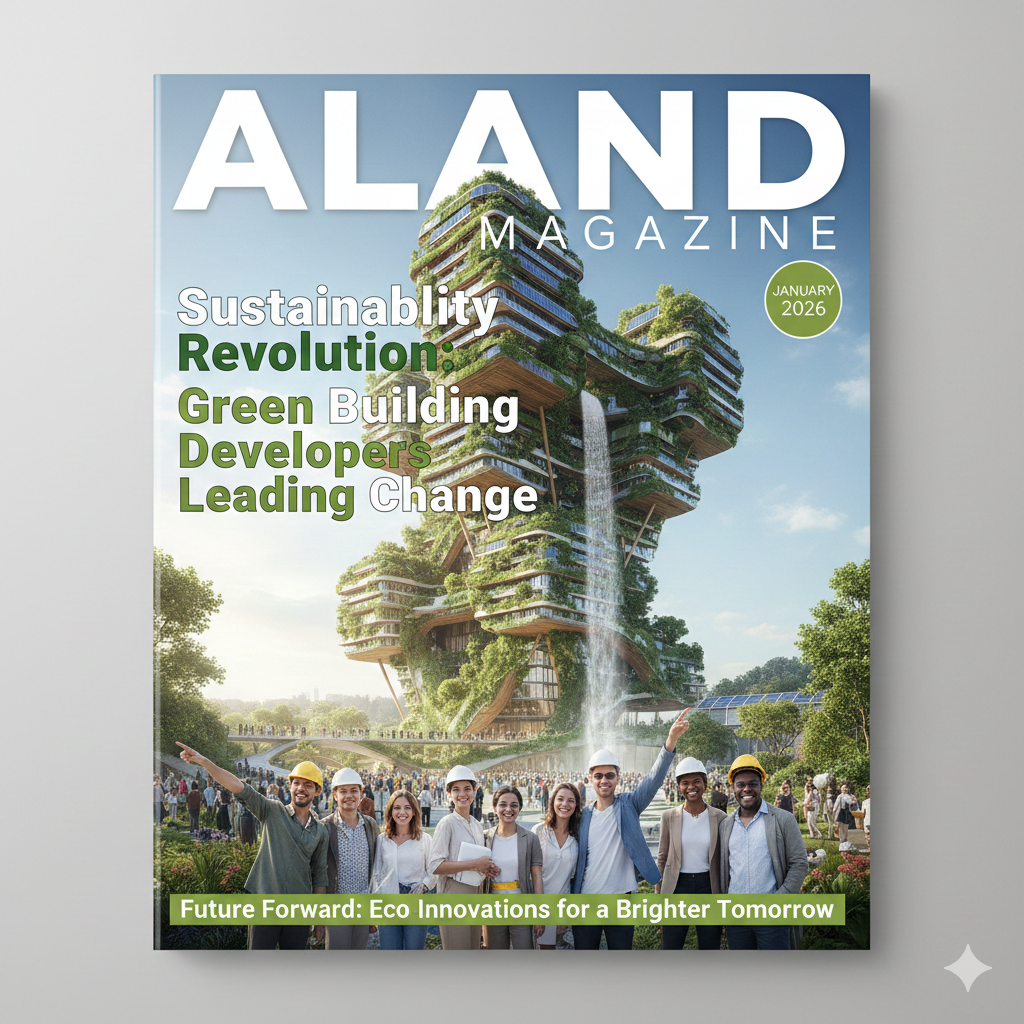
Sustainability Revolution: Green Building Developers Leading Change
- Published Date: 31 Jan, 2026
-
4.8★ ★ ★ ★ ★(90)
By Dr. Pooyan Ghamari
Green Building Momentum Reshaping UAE Real Estate in 2026
The United Arab Emirates advances its sustainability agenda with determination in 2026, positioning green building practices at the core of real estate development. National targets under frameworks like the UAE Energy Strategy 2050 and Net Zero by 2050 drive developers to prioritize energy efficiency, water conservation, renewable integration, and low-carbon materials. This shift responds to growing environmental awareness among buyers, stricter regulations, and economic incentives that reward sustainable performance.
Dubai and Abu Dhabi lead implementation through mandatory green building codes, Estidama Pearl Rating in the capital, and Dubai's Al Sa'fat green building system. These standards encourage certifications such as LEED, WELL, and EDGE, influencing project design from master plans to individual towers. Sharjah complements with cost-effective sustainable options appealing to mid-market buyers. Developers integrate solar panels, passive cooling, greywater recycling, smart energy management, and extensive landscaping to reduce operational carbon footprints while enhancing resident comfort and long-term asset value.
Population growth and expatriate inflows amplify demand for healthier, eco-conscious living environments. Buyers increasingly favor properties demonstrating measurable sustainability benefits, including lower utility costs and improved indoor air quality. This trend aligns with broader diversification goals, attracting international talent and investment to a forward-looking, resilient built environment.
Company and Market Background
Leading developers set benchmarks in the sustainability transition. Aldar Properties stands out in Abu Dhabi with extensive use of Estidama ratings across communities like Al Raha Beach and Yas Island projects, incorporating renewable energy, water-efficient landscaping, and biodiversity features. Emaar Properties applies green principles in Dubai through initiatives in Dubai Hills Estate and The Sustainable City, featuring solar-powered infrastructure, electric vehicle charging networks, and zero-waste ambitions. DAMAC Properties integrates sustainability in luxury offerings, adopting energy-efficient designs and green certifications in select branded residences and master developments.
Market response shows clear momentum. In 2025, sustainable-certified properties achieved premium pricing and faster absorption compared to conventional counterparts, a pattern strengthening into 2026. Demand rises for homes with verified low-energy consumption, reflecting buyer priorities shaped by climate awareness and cost savings. Transaction data indicates higher interest in projects showcasing tangible green features, supported by government mandates and incentives that lower development barriers for certified builds.
Detailed Analysis
Developers navigate two contrasting asset classes in the sustainability revolution: high-density urban towers with advanced green technologies versus low-density villa communities emphasizing natural integration and passive design.
High-density towers in central business districts focus on vertical greening, high-performance glazing, renewable energy systems, and intelligent building management to achieve high certification levels like LEED Platinum or Estidama 5 Pearl. These projects target professionals and investors valuing urban connectivity alongside reduced environmental impact. Advanced features include rooftop solar arrays, district cooling, rainwater harvesting, and IoT-enabled energy optimization, delivering significant operational savings and appealing to corporate tenants seeking ESG-compliant spaces. Challenges involve higher upfront costs for specialized materials and systems, along with the need for precise execution to meet stringent performance thresholds.
Low-density villa communities contrast by leveraging site-specific natural advantages, extensive green belts, native landscaping, solar orientation, and passive ventilation strategies. These developments prioritize biodiversity, water-efficient irrigation, and community-scale renewables, creating self-sustaining micro-environments suited to families and long-term residents. They achieve strong sustainability outcomes through lower embodied carbon, enhanced outdoor living, and resilience to heat extremes, aligning with demographic preferences for spacious, nature-connected homes. Drawbacks include larger land requirements and extended timelines for full ecological maturation, though they offer enduring value through lifestyle appeal and lower maintenance demands.
The strategic contrast highlights complementary approaches. Towers deliver scalable, high-impact urban sustainability that addresses density pressures in growing cities, while villa communities foster holistic, human-centered eco-living that supports talent retention in diversified economies. Many developers adopt hybrid models within master plans, combining certified towers with green low-rise clusters to broaden market reach. Common threads include rigorous lifecycle assessments, third-party verifications, and transparent reporting that build buyer trust and differentiate projects in a maturing sustainable segment.
Pros and Cons
Advantages for developers championing green building prove compelling. Certified projects command price premiums, often 10 to 20 percent higher in prime locations, driven by buyer willingness to pay for energy savings, health benefits, and future-proofing. Government incentives, including faster approvals and land grants for sustainable initiatives, improve feasibility and returns. Stronger tenant and buyer retention results from lower running costs and enhanced well-being, supporting stable occupancy and rental performance. Alignment with national and international ESG standards attracts institutional capital and global high-net-worth interest, diversifying funding sources.
Challenges remain significant. Initial capital expenditure rises substantially for green technologies, materials, and certifications, compressing margins during construction phases. Technical complexity demands specialized expertise and supply chain reliability for items like high-efficiency glazing or renewable components. Market education continues as some buyers weigh upfront costs against long-term gains, requiring clear communication of payback periods. Regulatory evolution and certification processes add administrative layers, while competition intensifies among firms vying for leadership in the green space.
Buyer Recommendations
Environmentally conscious investors and end-users prioritizing long-term savings and health benefits should target high-rated sustainable towers in established urban areas. These offer strong capital appreciation potential, lower operational expenses, and alignment with corporate ESG requirements, particularly appealing in Dubai and Abu Dhabi business districts.
Families and those seeking balanced, nature-integrated living benefit most from green villa communities in master-planned developments. These provide superior lifestyle quality, resilience to climate conditions, and sustained value growth as sustainability becomes a mainstream expectation.
Checklist for Buyers:
- Review specific green certifications and rating levels achieved
- Assess energy and water performance data from developer disclosures
- Evaluate renewable energy integration and smart management systems
- Confirm use of sustainable materials and low-VOC interiors
- Check landscaping and biodiversity features for outdoor quality
- Analyze projected utility savings based on independent benchmarks
- Verify proximity to public transport and walkable amenities
- Examine developer track record in delivering certified projects
- Obtain third-party validation of sustainability claims
- Factor long-term resale appeal in evolving green market standards
ALand
ALand FZE operates under a valid Business License issued by Sharjah Publishing City Free Zone, Government of Sharjah (License No. 4204524.01). Under its licensed activities, ALand provides independent real estate consulting, commercial intermediation, and investment advisory services worldwide. Through a structured network of cooperation with licensed developers, brokers, and real estate firms in the UAE and internationally, ALand assists clients in identifying suitable opportunities, evaluating conditions, and navigating transactions in a secure and informed manner. ALand’s role is to support clients in finding the best available offers under the most appropriate conditions, using professional market analysis, verified partner connections, and transparent advisory processes designed to protect client interests and reduce execution risk. All regulated brokerage, sales, and transaction execution are carried out exclusively by the relevant licensed entities in each jurisdiction. In addition, ALand is authorized to enter consultancy and cooperation agreements with real estate corporations, developers, and professional advisory firms across multiple countries, enabling the delivery of cross-border real estate consulting and intermediation services tailored to the needs of international investors and institutions.
FAQ's
What drives the sustainability focus in UAE real estate in 2026?
Which certifications dominate sustainable projects?
How do green buildings benefit owners financially?
Are sustainable features more common in towers or villas?
Which developers lead green innovation?
Do green projects cost more to buy?
How does sustainability support UAE economic goals?
What challenges face green building adoption?