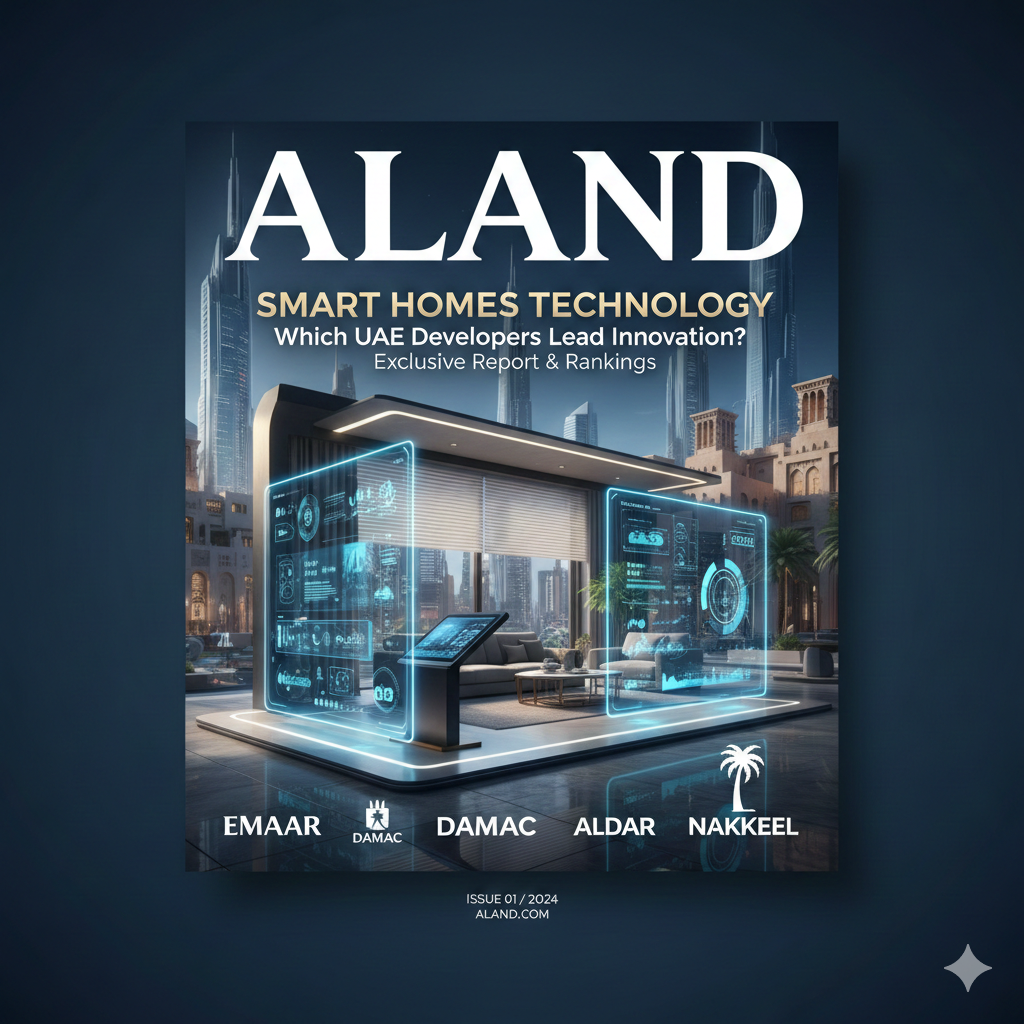
Smart Homes Technology: Which UAE Developers Lead Innovation?
- Published Date: 29th Dec, 2025
-
4.7★ ★ ★ ★ ★(146)
By Dr. Pooyan Ghamari
Executive Summary
The integration of smart home technology has become a defining feature of premium real estate in the UAE by late 2025, aligning with national initiatives like Smart Dubai and Abu Dhabi’s smart city programs. Features such as AI-driven automation, IoT connectivity, energy management systems, voice-controlled environments, and enhanced security protocols elevate resident convenience, sustainability, and property values. Leading developers embed these technologies as standard in new projects, contributing to price premiums of 12 to 15 percent and stronger resale appeal.
Emaar Properties, Aldar Properties, DAMAC Properties, Sobha Realty, and Nakheel stand at the forefront, each bringing distinct strengths to smart living. Emaar excels in widespread AI and energy-efficient integrations across master communities. Aldar focuses on AI-enhanced sustainability in Abu Dhabi. DAMAC emphasizes luxury automation in villas. Sobha prioritizes seamless smart systems in high-end residences. Nakheel incorporates smart city principles in waterfront developments. These innovations support projected market growth, with smart homes enhancing yields through lower utility costs and attracting tech-savvy international buyers in a tax-free environment.
Company and Market Background
The UAE smart homes sector thrives in 2025, fueled by government-backed digital transformation and a affluent, expatriate-heavy population seeking efficiency and luxury. Dubai’s Smart Dubai initiative and Abu Dhabi’s ranking as MENA’s smartest city drive adoption, with household penetration approaching 23 percent and the market valued in the hundreds of millions. New developments increasingly feature pre-installed IoT devices, AI assistants, automated climate control, smart security, and energy monitoring, often compliant with green building regulations like Estidama and Dubai Green Building standards.
Major developers respond by embedding these technologies into flagship projects, from urban apartments to waterfront villas. This shift reflects broader PropTech growth, with over 189 companies operating in the UAE and innovations like predictive maintenance and blockchain integration gaining ground. Demand stems from high-net-worth individuals, young professionals, and families prioritizing sustainability amid rising energy awareness. Prime locations such as Dubai Hills Estate, Saadiyat Island, Palm Jumeirah, and emerging communities see the strongest uptake, positioning smart homes as a resilient asset class with enhanced long-term appreciation.
Detailed Analysis
Smart home implementations in the UAE contrast sharply between developer-led luxury integrations in high-rise apartments and comprehensive community-wide systems in villa-dominated master plans, each offering different scales of innovation and user experience.
High-rise apartment projects, prevalent in dense urban settings like Downtown Dubai and Dubai Marina, focus on compact, individualized smart features. Developers integrate app-controlled lighting, thermostats, security cameras, and voice assistants into units, enabling seamless personal customization. These systems prioritize convenience for busy professionals, with AI optimizing energy use in smaller footprints. Emaar and DAMAC exemplify this approach, delivering plug-and-play automation that enhances daily efficiency without requiring extensive infrastructure. Occupancy benefits from quick setup, appealing to renters and short-term residents, while resale values rise due to perceived modernity.
In contrast, villa and master-community developments emphasize holistic, interconnected ecosystems spanning entire neighborhoods. Projects in Dubai Hills Estate, Sobha Hartland, Yas Island, and Palm Jebel Ali incorporate community-level smart grids, EV charging networks, centralized monitoring, and sustainable automation tied to landscaping or amenities. Aldar, Sobha, and Nakheel lead here, deploying IoT for irrigation, waste management, and security across larger plots. This model fosters a fully immersive environment, reducing operational costs community-wide and aligning with sustainability goals. Villas offer greater scope for bespoke expansions like private pools with automated controls or home theaters, attracting families seeking long-term integration. While apartment-focused smart tech delivers immediate personal benefits, community-scale implementations provide superior scalability, energy savings, and future-proofing in expansive settings.
Pros and Cons
Smart home integrations from leading UAE developers offer substantial benefits in convenience and efficiency. Residents gain remote control over lighting, climate, security, and appliances via intuitive apps or voice commands, streamlining daily routines. Energy management systems reduce utility bills significantly, supporting national sustainability targets while lowering ownership costs. Enhanced security through AI cameras and smart locks provides peace of mind, particularly valuable in expatriate communities.
Property values appreciate faster, with tech-equipped homes commanding premiums and attracting premium tenants for higher yields. Developers like Emaar and Aldar ensure reliable, warrantied installations, minimizing setup hassles.
Challenges include initial dependency on stable internet and power, where outages could disrupt functionality. Privacy concerns arise from connected devices, though reputable developers implement robust encryption. Upfront costs remain embedded in purchase prices, potentially deterring budget-conscious buyers despite long-term savings.
Maintenance requires technical familiarity or service contracts, and rapid tech evolution risks obsolescence without upgrade paths. Interoperability between brands can vary, complicating expansions.
Overall, advantages in lifestyle enhancement and investment returns outweigh drawbacks for most premium buyers in the UAE context.
Buyer Recommendations
Tech-savvy international executives and high-net-worth individuals relocating for business or lifestyle suit smart-integrated apartments in urban towers best. These buyers value seamless automation, AI personalization, and proximity to hubs like Downtown Dubai or Dubai Marina, prioritizing convenience alongside strong appreciation potential.
Families and long-term residents seeking expansive, sustainable living align better with smart villas in master communities. This profile appreciates community-wide systems, private customization, and green features in areas like Dubai Hills or Saadiyat Island, balancing innovation with space for personal use.
To select wisely, follow this checklist:
- Assess developer expertise in smart integrations and post-handover support
- Verify compatibility with preferred ecosystems like Google Home or Alexa
- Evaluate energy savings projections and sustainability certifications
- Confirm security protocols and data privacy measures
- Compare location connectivity for reliable IoT performance
- Review customization options for lighting, climate, and entertainment
- Analyze historical appreciation for tech-equipped properties
- Check service contracts and warranty durations
- Test demo units for user interface intuitiveness
- Consult PropTech specialists for future upgrade potential
ALand
ALand FZE operates under a valid Business License issued by Sharjah Publishing City Free Zone, Government of Sharjah (License No. 4204524.01).
Under its licensed activities, ALand provides independent real estate consulting, commercial intermediation, and investment advisory services worldwide. Through a structured network of cooperation with licensed developers, brokers, and real estate firms in the UAE and internationally, ALand assists clients in identifying suitable opportunities, evaluating conditions, and navigating transactions in a secure and informed manner.
ALand’s role is to support clients in finding the best available offers under the most appropriate conditions, using professional market analysis, verified partner connections, and transparent advisory processes designed to protect client interests and reduce execution risk. All regulated brokerage, sales, and transaction execution are carried out exclusively by the relevant licensed entities in each jurisdiction.
In addition, ALand is authorized to enter consultancy and cooperation agreements with real estate corporations, developers, and professional advisory firms across multiple countries, enabling the delivery of cross border real estate consulting and intermediation services tailored to the needs of international investors and institutions.
FAQ's
What core features define smart homes in UAE developments?
Which developers lead in smart home integration?
How do smart homes impact property values in 2025?
Are smart features standard in new UAE projects?
What energy benefits do these homes offer?
Can existing properties be retrofitted?
How does location affect smart home performance?
What privacy measures are in place?