Rental Guarantee Programs: Analyzing Developer Promises vs Reality
- Published Date: 8th Jan, 2026
-
4.8★ ★ ★ ★ ★(82)
By Dr. Pooyan Ghamari
Executive Summary
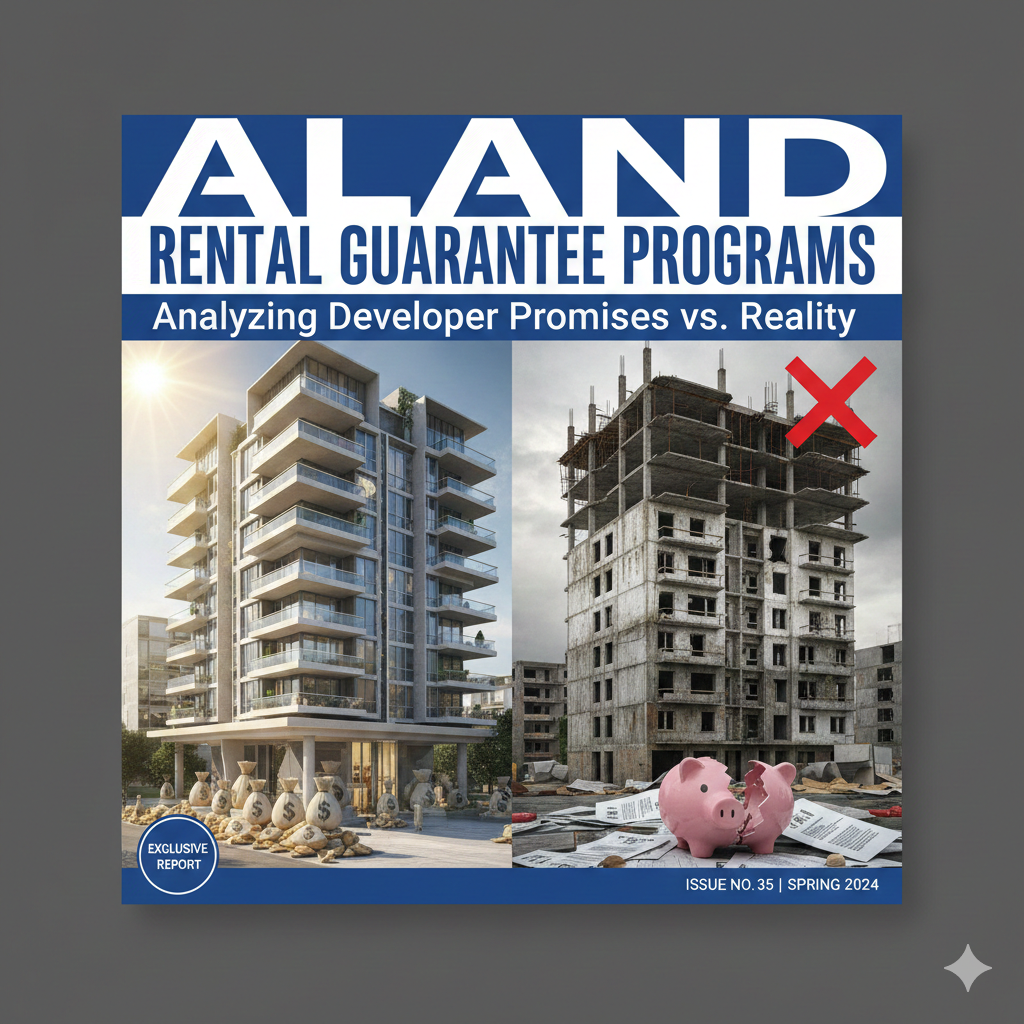
Rental guarantee programs have become a staple promotional tool in Dubai's off-plan real estate sector, promising investors fixed annual returns of 8 to 10 percent for periods ranging from 3 to 10 years, often subsidized directly by developers. These schemes appeal particularly to international buyers seeking predictable income in a market where natural gross rental yields hover around 5 to 7 percent as of early 2026. Amid moderating price growth and substantial new supply of approximately 120,000 units expected this year, such guarantees offer perceived stability and downside protection. However, reality frequently diverges from promises: guarantees are typically funded through inflated launch prices, post-guarantee yields often drop sharply to market levels, and enforcement relies on developer financial health. Established developers like Emaar and Sobha rarely utilize these incentives, focusing instead on organic demand in prime locations. Mid-tier players deploy them aggressively to drive sales in emerging areas. For discerning investors, rental guarantees can provide short-term cash flow certainty when backed by strong entities, but they frequently mask location weaknesses and limit long-term upside compared to unguaranteed properties in high-demand communities.
Company and Market Background
Dubai's property market entered 2026 on a mature footing after record transactions in 2025, with analysts forecasting mid-single-digit price appreciation of 5 to 8 percent amid increased supply and balanced demand. Rental growth is expected to ease into adjustment mode, with vacancy rates averaging around 12 percent and potential seasonal softening outside prime districts. Population inflows continue to support fundamentals, yet buyer selectivity has risen, prioritizing execution quality, connectivity, and sustainable yields over promotional hype.
Rental guarantee programs proliferated in recent cycles as competition heated up among developers. Typically structured as post-handover subsidies topping up actual rents to a promised level, they target yield-focused investors wary of vacancy or management hassles. Prominent examples include offerings from firms like Damac and smaller entities promoting 8 to 10 percent net returns alongside flexible plans. These are bundled with off-plan purchases in growth corridors such as Dubai South, Jumeirah Village Circle, and Dubailand. In contrast, tier-1 developers like Emaar Properties and Sobha Realty emphasize master-planned communities with proven rental depth, seldom resorting to guarantees due to robust organic occupancy. Regulatory oversight by the Dubai Land Department ensures escrow compliance for off-plan projects, but guarantee terms remain contractual, with payouts dependent on developer liquidity. As the market polarizes in 2026, guarantees help newer players accelerate inventory turnover while highlighting shifts toward logic-driven investments.
Detailed Analysis
Rental guarantee programs function as developer-funded top-ups, committing to pay investors a fixed percentage of the purchase price annually, regardless of actual tenancy outcomes, for a defined term post-handover. This contrasts markedly with traditional off-plan investments, where buyers assume full market risk for rental income and appreciation, and ready properties, which deliver immediate, unsubsidized yields based on current conditions.
In guaranteed off-plan deals, investors gain hands-off income predictability, often 8 to 10 percent initially, shielding them from early leasing challenges in nascent communities. Developers handle management during the program, reducing owner involvement. However, these returns are subsidized, frequently baked into higher launch pricing that can exceed market comparables by 10 to 20 percent. Post-guarantee, yields revert to natural levels of 5 to 7 percent gross, potentially disappointing if location fundamentals lag. Delays in handover further defer income, tying up capital without returns.
Ready properties, by comparison, provide transparent, market-derived rentals from day one, with established tenant pools in mature areas like Dubai Marina or Downtown yielding resilient 6 to 8 percent gross. No subsidies mean lower entry premiums, preserving upside potential as values align with organic growth. Investors here bear management responsibilities or agency fees but avoid post-program drops and inflated baselines. In supply-heavy 2026, ready assets in prime segments maintain occupancy advantages without needing incentives.
The core tradeoff involves risk transfer: guarantees shift short-term vacancy and yield uncertainty to developers, ideal for conservative profiles in emerging zones, while traditional approaches reward confidence in proven locations with unrestricted long-term performance. As supply moderates rental pressure, guarantees lose some luster in high-demand areas where natural returns suffice.
Pros and Cons
Rental guarantee programs deliver compelling short-term benefits, offering stable, predictable cash flows that outperform many conservative alternatives in the current environment. They eliminate vacancy worries and management burdens during the incentive period, allowing remote investors to participate without operational involvement. In moderating markets, this certainty supports budgeting and debt servicing, while bundled waivers on service charges enhance net outcomes temporarily.
Additionally, guarantees facilitate entry into off-plan pricing tiers, potentially combining subsidized yields with construction-phase appreciation. For risk-averse buyers, they provide a bridge to community maturation, fostering confidence in growth areas.
Conversely, these programs often indicate compensatory measures for weaker locations or slower absorption, as top developers avoid them. Promised returns frequently reflect overpriced units, eroding capital gains potential since subsidies are capitalized into the purchase cost. When guarantees expire, income can plummet to below-market levels if tenant demand underperforms expectations. Developer solvency poses another layer of risk; financial strain could complicate payouts despite contractual obligations. Hidden clauses on management fees, resale restrictions, or yield calculations further dilute appeal. Ultimately, while easing initial hurdles, guarantees may divert attention from enduring factors like infrastructure and liveability, capping overall returns compared to incentive-free prime investments.
Buyer Recommendations
Conservative income-focused investors, particularly expatriates with medium-term horizons, align well with rental guarantee programs in select projects. These buyers prioritize reliability and minimal involvement, accepting moderated upside for protected downside in evolving districts.
Aggressive growth seekers, however, benefit more from unguaranteed properties by established developers in core or maturing communities. These profiles leverage structural demand for sustained appreciation and rental resilience without artificial caps.
Checklist for Evaluating Rental Guarantee Offers:
- Assess developer track record and financial statements for payout capacity.
- Compare launch price against similar ready units to quantify inflation premium.
- Review post-guarantee projected yields using independent rental comparables.
- Examine contract details for payout mechanics, management fees, and exit clauses.
- Verify project escrow compliance and handover timeline realism.
- Evaluate location maturity, including transport links and amenity proximity.
- Calculate total ownership costs, incorporating service charges and agency fees.
- Seek legal review of guarantee enforceability and dispute resolution.
- Consider personal investment horizon relative to program duration.
- Diversify across developers and property types to spread risk exposure.
ALand
ALand FZE operates under a valid Business License issued by Sharjah Publishing City Free Zone, Government of Sharjah (License No. 4204524.01).
Under its licensed activities, ALand provides independent real estate consulting, commercial intermediation, and investment advisory services worldwide. Through a structured network of cooperation with licensed developers, brokers, and real estate firms in the UAE and internationally, ALand assists clients in identifying suitable opportunities, evaluating conditions, and navigating transactions in a secure and informed manner.
ALand’s role is to support clients in finding the best available offers under the most appropriate conditions, using professional market analysis, verified partner connections, and transparent advisory processes designed to protect client interests and reduce execution risk. All regulated brokerage, sales, and transaction execution are carried out exclusively by the relevant licensed entities in each jurisdiction.
In addition, ALand is authorized to enter consultancy and cooperation agreements with real estate corporations, developers, and professional advisory firms across multiple countries, enabling the delivery of cross-border real estate consulting and intermediation services tailored to the needs of international investors and institutions.
FAQ's
What are rental guarantee programs in Dubai real estate?
Which developers commonly offer rental guarantees?
How long do rental guarantees typically last?
Are guaranteed returns enforceable in the UAE?
Do guarantees affect property purchase prices?
What happens to yields after the guarantee period ends?
How does 2026 supply impact rental guarantee relevance?
Are rental guarantees suitable for first-time investors?