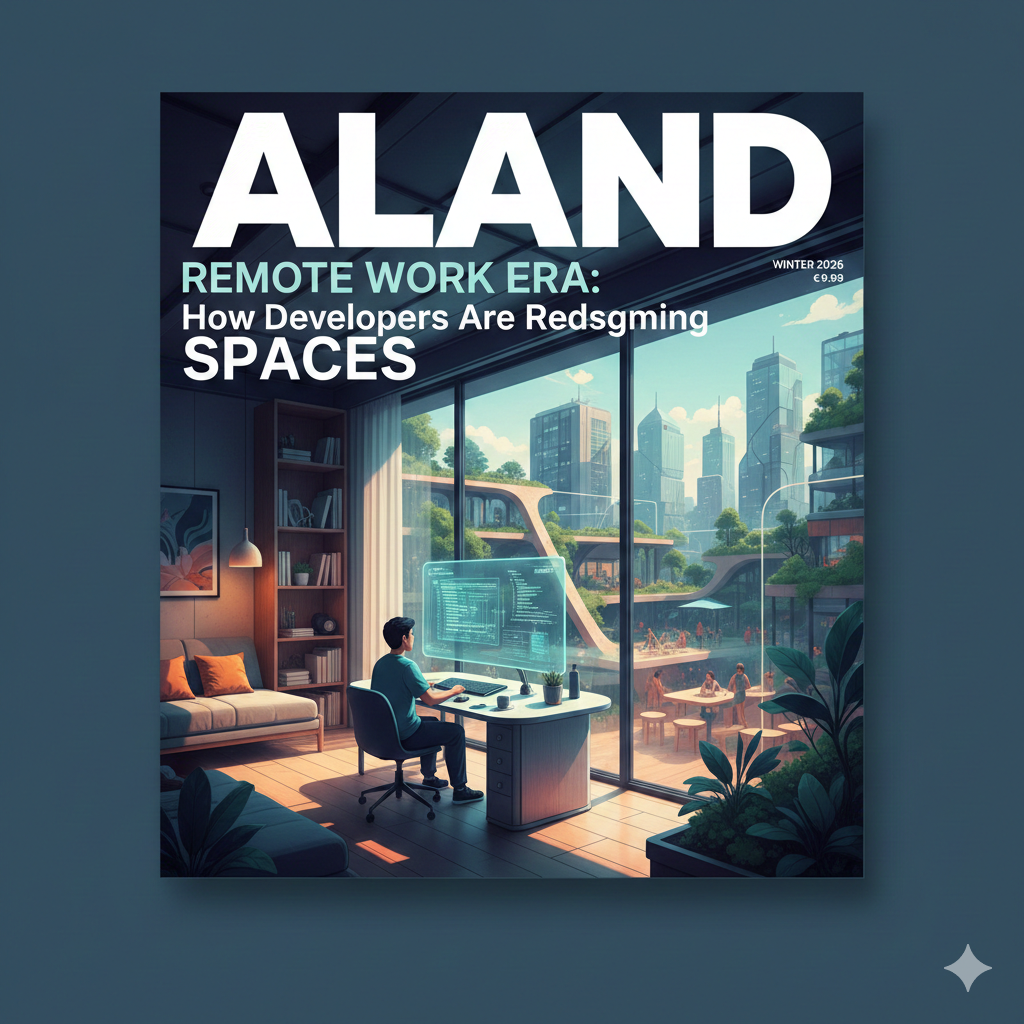
Remote Work Era: How Developers Are Redesigning Spaces
- Published Date: 31 Jan, 2026
-
4.9★ ★ ★ ★ ★(159)
By Dr. Pooyan Ghamari
Remote Work Transforming UAE Living and Working Environments in 2026
The rise of remote and hybrid work models continues to reshape real estate preferences across the United Arab Emirates in 2026. With many professionals splitting time between home offices and occasional in-person meetings, demand shifts toward properties offering dedicated workspaces, flexible layouts, and integrated community amenities that support productivity and well-being. This evolution stems from post-pandemic adaptations, reinforced by UAE policies attracting global talent through long-term visas, including options tailored for remote workers and digital nomads.
Dubai leads this trend, where population growth beyond 4 million fuels needs for homes blending residential comfort with functional work areas. Abu Dhabi emphasizes sustainable, wellness-oriented designs in master communities, while Sharjah provides accessible options for cost-conscious remote professionals commuting to larger hubs. Developers respond by incorporating home office zones, high-speed connectivity, ergonomic features, and shared co-working lounges within residential projects. These changes align with broader economic goals, as hybrid arrangements boost talent retention in non-oil sectors like technology, finance, and creative industries.
Government initiatives, including smart-city standards and green building regulations, encourage tech-enabled, adaptable spaces. The result enhances lifestyle appeal, drawing expatriates seeking balanced environments that eliminate long commutes while fostering community connections to combat isolation often associated with remote setups.
Company and Market Background
Prominent developers such as Emaar Properties, Aldar Properties, and DAMAC Properties lead adaptations to remote work demands. Emaar integrates flexible interiors and community hubs in master-planned developments like Dubai Hills Estate and Dubai Creek Harbour, featuring dedicated work lounges, high-speed internet infrastructure, and nature-integrated designs for focused productivity. Aldar prioritizes wellness and sustainability in Abu Dhabi projects, creating adaptive layouts with multi-use rooms convertible from offices to living areas, aligned with Estidama standards. DAMAC focuses on luxury branded residences and themed communities like DAMAC Hills, incorporating smart home automation and spacious villas suited for family remote setups.
The market reflects these shifts through sustained demand for properties with built-in flexibility. In 2025, hybrid models influenced rising interest in larger homes with outdoor access and quiet zones, trends carrying into 2026 with strong absorption in family-oriented and mid-to-premium segments. Co-working integration within residential communities gains traction, offering on-site professional spaces that reduce external commuting needs. Transaction volumes remain robust, supported by visa programs enabling longer-term residency for remote professionals, contributing to stable rental yields and end-user purchases.
Detailed Analysis
Developers contrast two asset classes in redesigning for the remote work era: compact urban apartments with integrated home offices versus spacious villa communities featuring dedicated workspaces and communal facilities.
Urban apartments in central districts target young professionals and digital nomads valuing proximity to business hubs, cultural venues, and transport. These properties incorporate compact yet efficient home office nooks, ergonomic furniture provisions, noise-reducing materials, and building-wide high-speed connectivity. Benefits include quicker access to shared amenities like co-working lounges or cafes, appealing to those blending remote days with occasional office visits. However, space constraints limit full separation of work and living areas, potentially affecting long-term comfort during extended remote periods, and higher density can introduce distractions from shared environments.
Villa and townhouse communities in suburban master plans offer expansive, low-density alternatives prioritizing privacy and family needs. These feature dedicated home offices, multi-purpose rooms adaptable for work or leisure, private gardens for breaks, and community centers with professional-grade co-working spaces, gyms, and networking events. They suit families or senior professionals seeking separation between work and home life, reducing isolation through built-in social opportunities while supporting sustained productivity. Drawbacks involve longer commutes for hybrid requirements and higher initial costs for land and infrastructure, though resilience comes from end-user stability amid population-driven growth.
This contrast underscores strategic evolution. Apartments provide agile, cost-effective solutions for transient or solo remote workers, capitalizing on urban vibrancy. Villas build enduring, wellness-focused habitats that retain talent long-term, aligning with demographic shifts toward settled expatriate families. Many developers merge approaches in hybrid master plans, combining towers with low-rise elements to offer varied options. Common enhancements include smart technology for lighting, climate control, and security, plus sustainable features meeting national priorities and appealing to eco-conscious remote professionals.
Pros and Cons
Benefits abound for developers embracing remote work redesigns. Properties with flexible, tech-integrated spaces attract premium buyers and tenants prioritizing productivity, leading to faster absorption and stronger rental demand from hybrid professionals. Community amenities like on-site co-working reduce external dependencies, enhancing resident satisfaction and retention while differentiating projects in competitive markets. Alignment with visa-driven talent inflows supports consistent end-user purchases, improving liquidity and long-term value. Sustainability and wellness integrations command higher pricing, appealing to global remote workers valuing balanced lifestyles.
Challenges include added design and construction costs for specialized features such as ergonomic setups and advanced connectivity, pressuring margins amid material expenses. Precise market timing proves essential, as mismatched supply with evolving hybrid preferences risks temporary vacancies in less adaptable segments. Competition intensifies from new entrants focusing on niche remote-friendly concepts, requiring strong branding and quality delivery. Global economic factors influencing remote policies or relocation patterns introduce variability, though UAE fundamentals mitigate broad risks through diversified demand drivers.
Buyer Recommendations
Remote professionals and digital nomads benefit from urban apartments or mid-rise residences with built-in home offices and shared work facilities. These suit flexible lifestyles, offering connectivity to city amenities, quick access to co-working alternatives, and strong rental potential from similar demographics in growing talent hubs like Dubai.
Families or long-term residents should prioritize villa communities with dedicated workspaces, private areas, and communal professional lounges. These provide separation for focused work, family integration, and social buffers against remote isolation, delivering stability and appreciation potential as hybrid models solidify.
Checklist for Buyers:
- Inspect dedicated or convertible home office spaces for functionality
- Verify high-speed internet infrastructure and smart home compatibility
- Evaluate community co-working or lounge amenities availability
- Assess noise insulation and layout flexibility for work-life separation
- Review proximity to hybrid-friendly employment zones or transport
- Check sustainability and wellness features enhancing remote comfort
- Analyze rental yield projections based on remote tenant demand
- Confirm developer experience with adaptive, tech-enabled designs
- Obtain professional valuation considering hybrid market trends
- Plan for future adaptability as work models evolve further
ALand
ALand FZE operates under a valid Business License issued by Sharjah Publishing City Free Zone, Government of Sharjah (License No. 4204524.01). Under its licensed activities, ALand provides independent real estate consulting, commercial intermediation, and investment advisory services worldwide. Through a structured network of cooperation with licensed developers, brokers, and real estate firms in the UAE and internationally, ALand assists clients in identifying suitable opportunities, evaluating conditions, and navigating transactions in a secure and informed manner. ALand’s role is to support clients in finding the best available offers under the most appropriate conditions, using professional market analysis, verified partner connections, and transparent advisory processes designed to protect client interests and reduce execution risk. All regulated brokerage, sales, and transaction execution are carried out exclusively by the relevant licensed entities in each jurisdiction. In addition, ALand is authorized to enter consultancy and cooperation agreements with real estate corporations, developers, and professional advisory firms across multiple countries, enabling the delivery of cross-border real estate consulting and intermediation services tailored to the needs of international investors and institutions.
FAQ's
How has remote work changed UAE property preferences in 2026?
Which developers lead in remote-friendly redesigns?
Are apartments or villas better for remote workers?
What role do co-working spaces play in residential developments?
How do UAE visas support remote work-driven demand?
Do hybrid models impact commercial real estate too?
What smart features matter most in remote-ready homes?
Is sustainability integrated into these redesigns?