Real Estate & Wealth - The Shift to Nature, Simplicity and Global Power
- Published Date: 6th Feb, 2025
-
5★ ★ ★ ★ ★(7216)
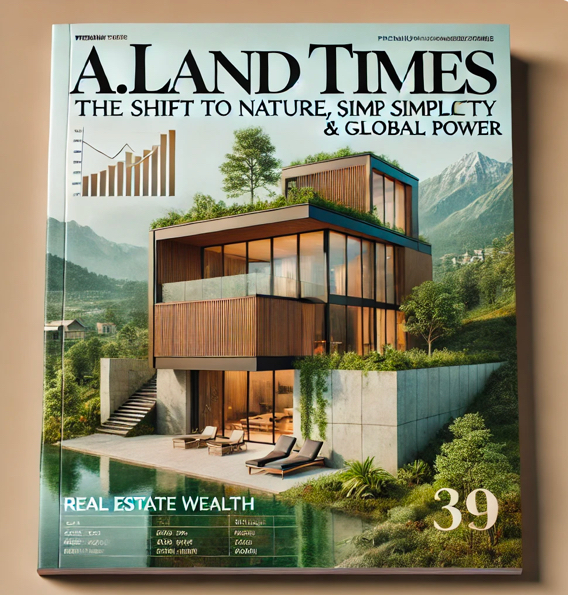
Real Estate, Wealth & the Human Dream: The Shift to Nature, Simplicity & Global Power
By Dr. Pooyan Ghamari, Swiss Economist & Founder of ALand Platform
Real Estate as the Ultimate Reflection of Human Evolution, Wealth, and Global Influence
Real estate is more than just buildings, investments, or property transactions. It is the embodiment of human ambition, a tangible representation of financial power, and a gateway to personal and collective evolution. Throughout history, civilizations have used architecture and urban design to showcase their prosperity, dominance, and cultural advancements. However, as the world becomes more interconnected through globalization and technology, real estate is undergoing a dramatic transformation.
Podcast
The Changing Definition of Luxury in Real Estate
There was a time when wealth was measured by how much land one owned, how grand their estate was, or how high their skyscrapers reached. But today, a new definition of luxury is emerging—one that is not based on excess but on balance, nature, and meaningful living. The most sought-after properties are no longer those that flaunt extravagance but those that offer:
-
Peace
-
Self-sufficiency
-
A connection to the natural world
This shift represents a profound change in the human psyche. People are questioning the purpose of relentless urbanization and material accumulation. Investors are recognizing that the future of real estate is not just about maximizing financial returns—it is about creating spaces that align with:
-
Personal well-being
-
Sustainability
-
Global mobility
Those who understand this transition and act upon it will be at the forefront of the next great real estate revolution.
The Unstoppable Force of Human Desire in Shaping Real Estate
The Deep Psychological Connection Between Real Estate and Human Aspirations
From the earliest days of civilization, land ownership has been a symbol of security, status, and power. Whether it was feudal lords controlling vast territories, industrial tycoons building real estate empires, or modern billionaires investing in global cities, real estate has always been a central pillar of wealth.
Evolving Motivations Behind Real Estate Investment
However, the underlying motivations behind real estate investment have evolved over time. Today’s investors and homeowners are driven by more than just financial gains—they seek:
-
Lifestyle enhancement
-
Health and well-being
-
Personal freedom
The Rise of Destination Real Estate
The demand for “destination real estate”—homes in tranquil, nature-surrounded environments—is surging. People are no longer looking for just a house; they are searching for a life experience. They want homes that provide:
-
Physical and mental wellness
-
Clean air
-
Sustainable energy
-
Access to untouched landscapes
For many, the dream is no longer about owning the tallest building in the city but about having a sanctuary that offers peace, space, and self-sufficiency. This is redefining what it means to be truly wealthy.
Globalization and the Borderless Real Estate Market
The Shift to International Real Estate Investments
The era of real estate being confined to local markets is over. With globalization, property has become one of the most valuable international assets, connecting economies, cultures, and investors from every corner of the world.
Citizenship-by-Investment and Real Estate
Foreign investments in real estate have skyrocketed, with high-net-worth individuals using property not just as a financial tool but as a means of securing:
-
Global mobility
-
Citizenship
-
Lifestyle upgrades
Countries such as Portugal, the UAE, and St. Kitts & Nevis have capitalized on this trend by offering citizenship-by-investment programs, allowing investors to obtain passports or residency in exchange for real estate investments.
Real Estate as a Global Asset Class
For investors, this means that real estate is no longer just a local or national game—it is a global asset class that must be approached with an international mindset.
Wealth, Power, and the New Definition of Luxury in Real Estate
Traditional Luxury vs. The New Era of Wealth-Based Living
Luxury real estate was once defined by:
-
Gold-plated interiors
-
Massive square footage
-
Urban exclusivity
Today, those who truly understand wealth are embracing a different kind of luxury—one that values:
-
Privacy
-
Sustainability
-
Balance
Emerging Real Estate Trends Among UHNWIs
Instead of purchasing high-rise penthouses in congested cities, ultra-high-net-worth individuals (UHNWIs) are investing in:
-
Eco-friendly retreats in remote, untouched locations
-
Self-sustaining homes powered by solar energy, off-grid water systems, and permaculture farming
-
Wellness-focused developments with organic food, medical-grade air filtration, and mind-body optimization
Urban Overload and the Shift Toward Simplicity
Urban real estate markets are still profitable, but they are facing serious challenges:
-
Overcrowding and pollution are making many cities less livable
-
High taxes and government regulations are discouraging property ownership in major financial hubs
-
Economic instability and inflation are pushing investors to diversify their portfolios
This is leading to a massive redirection of capital toward alternative markets—places that offer a simpler, healthier, and more secure way of life.
Real Estate, Nature, and the Human Need for Simplicity
Why Simplicity is the Ultimate Form of Wealth
The modern world is filled with noise, distractions, and an overwhelming sense of busyness. People are beginning to realize that true wealth is not just financial—it is the ability to live a:
-
Peaceful
-
Meaningful
-
Stress-free life
This is why there is a rising demand for minimalist luxury—homes that are intentionally simple, yet rich in:
-
Experience
-
Sustainability
-
Personal freedom
How Real Estate Developers Are Adapting
Developers who understand this shift are already creating the next generation of investment opportunities, including:
-
Green cities that blend modern infrastructure with nature
-
Off-grid luxury resorts that promote self-sufficiency
-
Smart communities where technology enhances simplicity, not complexity
The Future of Real Estate: Vision, Wealth, and the Power of Global Thinking
Real estate is evolving. The world is moving away from outdated models of excessive urbanization and artificial luxury. Instead, a new movement is emerging—one that embraces:
-
Nature
-
Simplicity
-
Sustainability
-
Intelligent wealth management
For those who have the insight and determination to adapt, real estate will remain the most powerful and rewarding asset class of all time.
Authored by Dr. Pooyan Ghamari, Swiss Economist & Founder of ALand Platform
FAQ's
Why is nature-based real estate becoming the new symbol of wealth?
How can real estate companies integrate nature and wellness into their developments?
. What role does simplicity play in luxury real estate?
How does sustainability increase the value of real estate investments?
Why are wealthy investors moving away from big cities?
Which regions are emerging as prime locations for nature-based luxury homes?
How does real estate reflect the changing definition of success?
How does globalization impact real estate investments?
What are the benefits of owning real estate in multiple countries?
What are the best real estate markets for wealth preservation?
How do second citizenship programs benefit real estate investors?
How are AI and blockchain transforming global real estate?
Why is self-sufficiency becoming a key feature of luxury homes?
What is the future of wellness real estate?
Why are smart eco-villages the next big trend?
What are the most recession-proof real estate sectors?
How does inflation impact real estate investment?
Should investors focus on urban or rural properties?
. How do government regulations affect foreign real estate investors?
What is the role of 3D printing in real estate?
How will climate change affect property markets?
How are developers adapting to the demand for eco-luxury?
Why are farmland and regenerative agriculture estates growing in popularity?