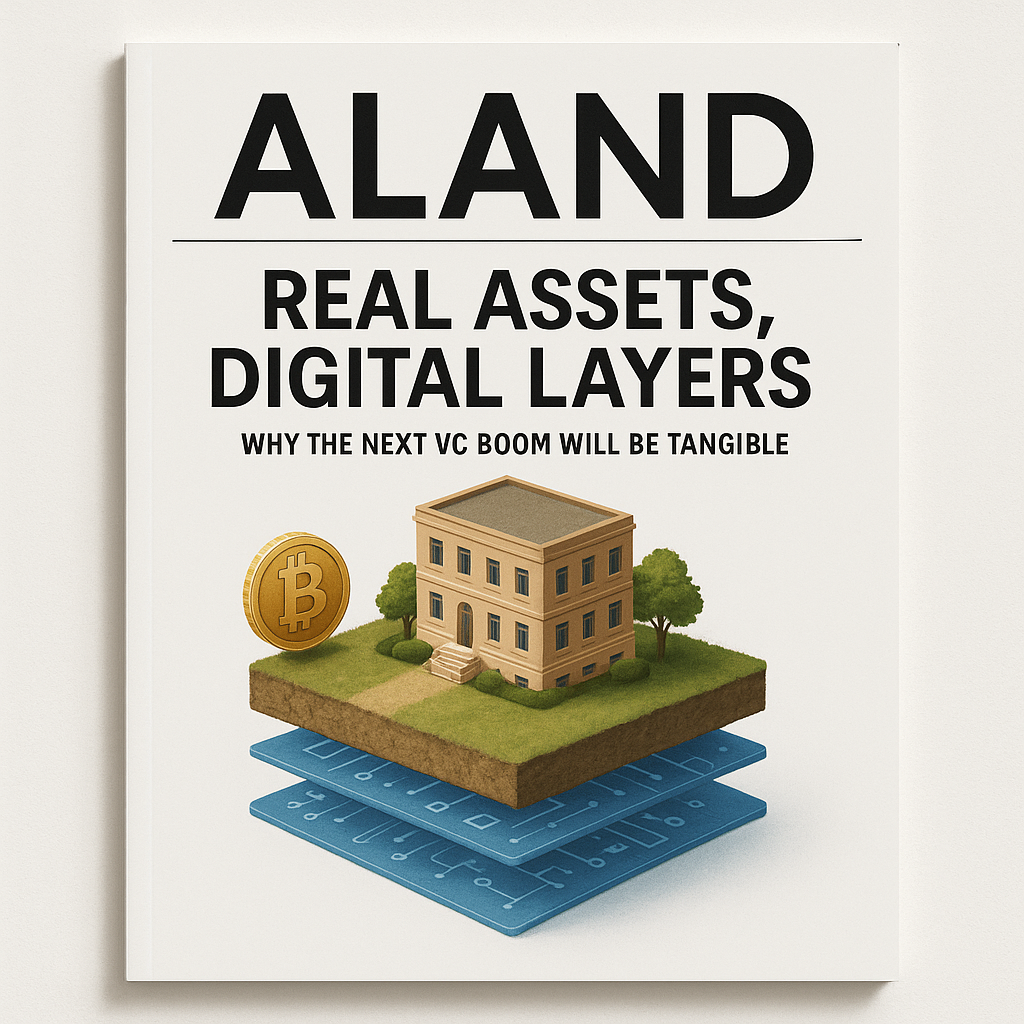
Real Assets, Digital Layers: Why the Next VC Boom Will Be Tangible
- Published Date: 4th Jun, 2025
-
4.9★ ★ ★ ★ ★(49)
Listen to the Spotify Podcast for this article
By Dr. Pooyan Ghamari, Swiss Economist and Founder of the ALand Platform
The venture capital landscape has long been captivated by the ephemeral: software, social media, and digital platforms that operate in the cloud, often detached from the physical world. Yet, as a Swiss economist who has spent decades navigating the intricate currents of global finance and real estate, I see a profound shift on the horizon. The next significant VC boom will not be purely digital; it will be a renaissance of the tangible, fueled by the strategic integration of digital layers onto real assets. This convergence represents a paradigm shift, where the solidity of gold, the stability of real estate, and the transformative power of digital innovation merge to unlock unprecedented value and redefine investment opportunities.
The Enduring Value of Gold and Its Digital Transformation
For centuries, gold has been the ultimate tangible asset, a timeless store of value impervious to geopolitical tremors and inflationary pressures. Its allure lies in its physical scarcity, its historical significance as a medium of exchange, and its inherent utility. However, the traditional gold market, often characterized by opaque transactions, logistical complexities, and limited accessibility for smaller investors, is ripe for digital disruption. The digital transformation of gold is not about replacing the physical asset but enhancing its accessibility, liquidity, and transparency.
Tokenization, for instance, allows for fractional ownership of physical gold, making it accessible to a wider pool of investors and enabling seamless, secure transactions on a blockchain. This digital layer removes geographical barriers and intermediaries, reducing costs and increasing efficiency. For high-net-worth individuals and institutional investors, this means easier portfolio diversification, enhanced auditability, and the ability to leverage gold as a truly liquid asset in a globalized financial ecosystem. The integration of AI and machine learning can further optimize gold trading, predict market movements with greater accuracy, and even streamline supply chain logistics from mining to refinement, adding layers of efficiency previously unimaginable.
Real Estate: Tangibility Meets Digital Innovation
Real estate, much like gold, possesses an intrinsic tangibility that has cemented its status as a cornerstone of wealth preservation and creation. It offers passive income through rents, hedges against inflation, and often appreciates in value over time, providing a tangible footprint in a volatile world. My work with the ALand Platform, a hub dedicated to real estate and economic development, has afforded me a front-row seat to the profound impact of digital transformation on this traditionally conservative sector. The digitization of real estate is not merely about online listings; it is about fundamentally rethinking how properties are bought, sold, managed, and developed.
Blockchain and Tokenization in Real Estate
Consider the application of blockchain technology to real estate transactions. Smart contracts can automate escrow, verify ownership, and streamline legal processes, drastically reducing the time and cost associated with property transfers. This enhanced transparency and efficiency mitigate fraud risks and create a more liquid market. Furthermore, tokenization of real estate assets, much like with gold, enables fractional ownership, democratizing access to high-value properties that were once exclusive to institutional investors. Imagine owning a fractional share of a prime commercial building in Zurich or a luxury villa in Dubai, with the ability to trade that share on a secondary market with unprecedented ease. This not only broadens the investor base but also unlocks capital that would otherwise be tied up in illiquid assets.
AI and Big Data in Real Estate Development
Beyond transactional efficiencies, digital layers are reshaping real estate development and management. Artificial intelligence and big data analytics are becoming indispensable tools for identifying emerging market opportunities, predicting property valuations, and optimizing urban planning. AI-driven models can analyze demographic shifts, economic indicators, and infrastructure developments to pinpoint areas with the highest growth potential, guiding strategic investments. For instance, predictive analytics can identify undervalued properties, assess renovation ROI, and even forecast rental yields with remarkable precision. This data-driven approach moves real estate investment from art to science, empowering developers and investors to make more informed decisions and mitigate risks.
Smart Cities and Intelligent Buildings
Moreover, the "smart city" concept, a digital layer laid over urban infrastructure, is transforming real estate functionality and attractiveness. From IoT-enabled buildings that optimize energy consumption and security to AI-powered urban management systems that alleviate traffic congestion and improve public services, these digital innovations enhance the value and livability of real estate. Buildings are no longer just physical structures; they are intelligent entities that interact with their environment and occupants, offering unparalleled comfort, efficiency, and sustainability. This technological integration naturally attracts investment, as tenants and buyers are increasingly drawn to properties that offer cutting-edge amenities and a superior living or working experience.
The Future: Hybrid Assets and New Investment Models
The synergy between tangible assets and digital layers is not merely about incremental improvements; it is about creating entirely new asset classes and investment models. We are moving towards a future where the distinction between physical and digital blurs, giving rise to hybrid assets that combine the security and intrinsic value of the tangible with the liquidity and efficiency of the digital. This convergence offers a potent antidote to the speculative bubbles that have characterized past VC booms, rooted as they often were in intangible assets with questionable underlying value. The next boom will be different. It will be grounded in assets that have always held intrinsic value, enhanced by technologies that amplify their potential and broaden their reach.
Macroeconomic and Policy Implications
Consider the macroeconomic implications. In an era of increasing geopolitical instability and inflationary pressures, the appeal of tangible assets like gold and real estate becomes even more pronounced. They serve as reliable hedges against currency debasement and market volatility. By digitizing these assets, we are not just making them more accessible; we are making them more resilient and adaptable to a rapidly changing global economy. This is particularly crucial for international investors seeking to diversify their portfolios beyond traditional equity markets and volatile digital currencies. The ability to seamlessly invest in tokenized real estate across borders, for example, opens up new avenues for capital flow and stimulates economic development in high-growth markets.
For policymakers, this convergence presents both opportunities and challenges. While digital layers promise greater transparency and efficiency, they also necessitate robust regulatory frameworks to protect investors and ensure market integrity. The development of clear legal guidelines for tokenized assets, cross-border digital transactions, and data privacy will be paramount to fostering trust and enabling the full potential of this nascent market. Countries that embrace financial innovation and adapt their regulatory landscapes will be at the forefront of this new investment era, attracting significant capital and fostering economic growth.
In conclusion, the venture capital landscape is poised for a transformative period, one that will see a powerful resurgence of tangible assets, underpinned and amplified by sophisticated digital layers. From the ancient allure of gold, made more accessible through tokenization, to the dynamic evolution of real estate into intelligent, fractionalized assets, the fusion of the physical and the digital is creating an investment frontier rich with opportunity. As a Swiss economist and a proponent of financial innovation, I firmly believe that the next VC boom will not be built on speculative bubbles, but on the enduring value of the tangible, unlocked and supercharged by the limitless potential of the digital. This is not just an evolution; it is a fundamental re-calibration of value in the global economy, offering a more stable, transparent, and ultimately, more rewarding investment future for all.
Dr. Pooyan Ghamari’s Biography
Dr. Pooyan Ghamari is a Swiss Economist, Global Thought Leader, and the Founder of the ALand Platform. With extensive expertise in macroeconomics, real estate investments, and international finance, he has built a reputation as a key influencer in global economic strategy. His work explores emerging financial trends, digital economies, and investment opportunities in high-growth markets.
As a recognized authority in real estate and immigration markets, Dr. Ghamari provides expert insights on global property investments, economic development policies, and strategic wealth-building approaches. His analysis has shaped high-value investment strategies for governments, institutions, and private investors worldwide.
He is also a leading advocate for financial decentralization, digital asset integration, and sustainable economic development, frequently sharing groundbreaking insights on market transformations that impact investors, policymakers, and the global financial ecosystem.
FAQ's
1. What macroeconomic indicators are the best predictors of real estate market downturns and potential crashes?
2. How does the ongoing shift towards de-dollarization, particularly championed by the BRICS economic alliance, impact global real estate markets and investor strategies?
3. What innovative financial strategies should high-net-worth real estate investors prioritize during periods of economic uncertainty and potential downturns?
4. Beyond interest rates, how do central bank policies, including quantitative easing/tightening and macroprudential measures, subtly influence real estate affordability and pricing dynamics?
5. What are the most significant challenges and untapped opportunities in the rapidly evolving landscape of tokenized real estate investments?
6. Why do sophisticated high-net-worth individuals increasingly favor tangible real estate investments over traditional stock market exposures, especially in current economic climates?
7. Which emerging global cities are strategically positioned to become the next financial hubs for real estate investments, and what factors underpin their growth?
8. How is AI-driven market analytics fundamentally reshaping real estate investment decisions, moving beyond simple trend identification to predictive and prescriptive strategies?
9. What are the most pressing and often overlooked regulatory risks facing international real estate investors in 2025 and beyond, especially concerning digital asset integration?
10. What sophisticated role does geopolitical instability play in real estate price fluctuations, and how can investors leverage this volatility for strategic advantage?