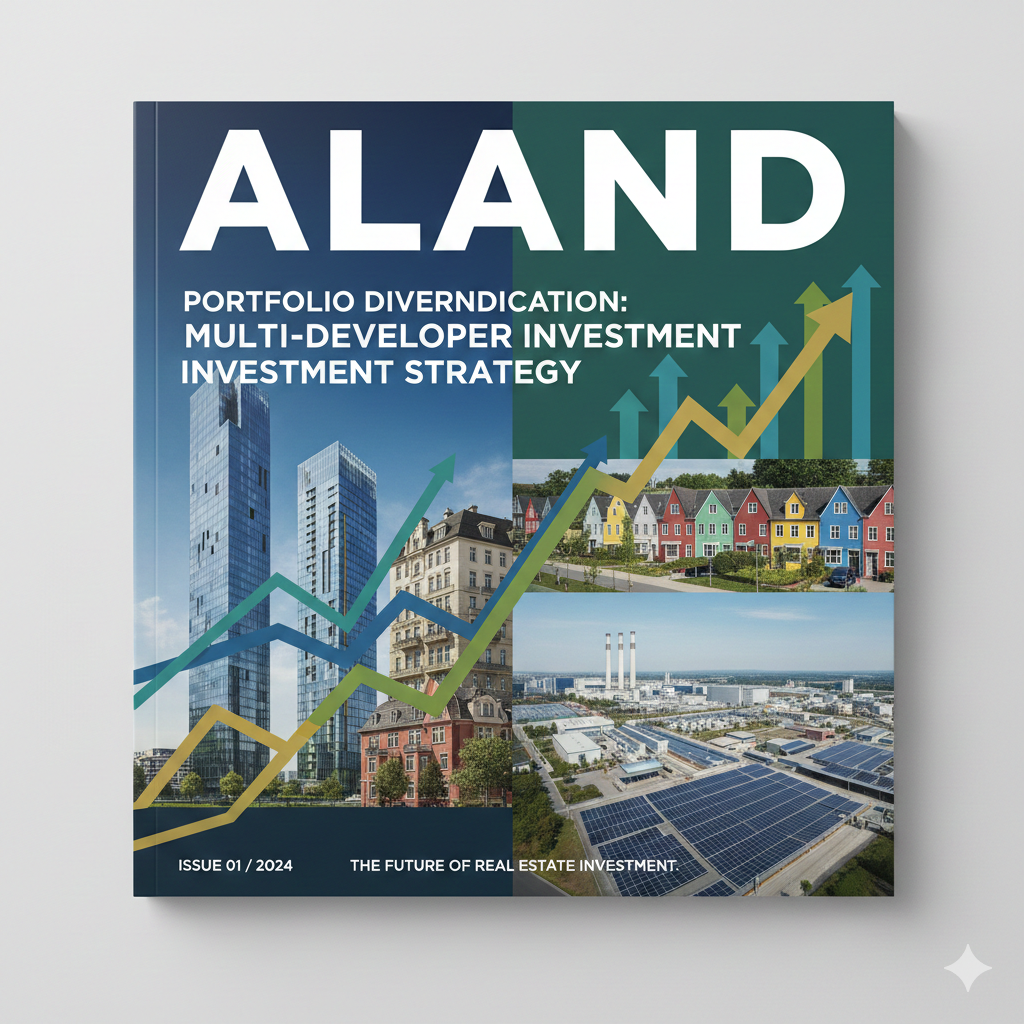
Portfolio Diversification: Multi-Developer Investment Strategy
- Published Date: 8th Jan, 2026
-
4.6★ ★ ★ ★ ★(133)
By Dr. Pooyan Ghamari
Executive Summary
In Dubai's real estate market of early 2026, portfolio diversification across multiple developers has emerged as a prudent strategy to mitigate risks associated with concentrated exposure. With substantial new supply entering the market and price growth moderating to mid-single digits, spreading investments across tier-1 giants like Emaar Properties and Sobha Realty, alongside selective mid-tier players such as Damac Properties and Danube Properties, balances stability with growth potential. Tier-1 developers provide resilience through proven execution and prime locations, while mid-tier options offer higher entry yields and appreciation upside in emerging communities. A well-structured multi-developer portfolio reduces developer-specific risks such as delays or financial strain, enhances liquidity profiles, and captures varied community maturities. Investors should allocate 60-70 percent to established names for capital preservation and the remainder to quality mid-tier projects for enhanced returns, always prioritizing location fundamentals over promotional incentives in a maturing cycle.
Company and Market Background
Dubai's property sector maintains solid fundamentals heading into 2026, supported by continued population growth and economic diversification. Transaction volumes remain elevated following the 2025 peak, though increased handovers of around 120,000 units introduce greater selectivity among buyers. Price appreciation is projected in the 5-8 percent range, with prime segments outperforming secondary locations.
Developer landscape polarization continues, with tier-1 firms dominating prime demand through brand equity and master-planned communities. Emaar Properties leads with iconic projects across Downtown, Dubai Marina, and Dubai Hills Estate. Sobha Realty emphasizes premium quality in areas like Sobha Hartland. Damac Properties focuses on lifestyle branding, while Danube and other mid-tier developers compete via attractive pricing and incentives in growth corridors. Regulatory oversight ensures escrow protection for off-plan, yet portfolio concentration exposes investors to individual developer execution risks. Multi-developer strategies gain relevance in 2026 as supply dynamics highlight the benefits of spreading exposure across proven and emerging players.
Detailed Analysis
Multi-developer portfolios strategically combine assets from tier-1 developers offering stability and liquidity with mid-tier projects delivering higher yield potential and growth, contrasting sharply with single-developer concentration and pure secondary market investments.
Tier-1 heavy allocations, primarily Emaar and Sobha in established communities, deliver resilient performance through global demand, timely delivery, and scarcity premiums. These assets maintain value during moderation phases, with strong rental depth and quick resale paths. Liquidity remains high, supported by diverse buyer pools and minimal discounts. However, entry premiums compress initial yields to 5-7 percent gross, limiting short-term income relative to cost.
Mid-tier developer exposure, such as Danube or Select Group in maturing districts like Jumeirah Village Circle or Dubai South, provides higher launch discounts and projected appreciation as infrastructure completes. Yields often start at 7-9 percent, enhanced by incentives. Yet execution risks rise, with potential delays and post-handover absorption challenges in supply-rich zones.
Single-developer portfolios amplify specific risks: over-reliance on one entity's timeline or financial health can strand capital. Secondary market-only approaches avoid construction risk but miss off-plan pricing advantages and require higher liquidity upfront.
The optimal contrast lies in balanced diversification: tier-1 anchors provide downside protection, mid-tier satellites boost returns, creating smoothed performance across cycles compared to concentrated or uniform strategies. In 2026's supply environment, this approach captures prime resilience while participating in growth corridors.
Pros and Cons
Multi-developer diversification offers significant risk mitigation by reducing exposure to any single entity's delays, quality variances, or financial issues. Spreading across tier-1 and mid-tier captures varied appreciation timelines, with established communities providing stability and emerging ones delivering upside as they mature. Liquidity improves overall, as prime assets enable quick exits while growth projects appreciate. Yield blending optimizes income, combining resilient prime rentals with higher mid-tier potentials. Geographic and community diversity further hedges against localized oversupply or demand shifts.
Additionally, investors gain broader market intelligence and negotiation leverage across projects, enhancing informed decision-making in a competitive landscape.
However, managing multiple developers increases complexity, requiring deeper due diligence and ongoing monitoring of varied handover schedules. Transaction costs multiply with separate purchases, and coordination challenges arise during resales or rentals. Over-diversification risks diluting focus on highest-conviction opportunities, potentially averaging returns downward. Mid-tier inclusions elevate execution risk, where delays can tie capital longer than anticipated. Premium pricing in tier-1 limits aggressive yield chasing, while mid-tier incentives may mask location weaknesses. In essence, while strengthening resilience, multi-developer strategies demand greater sophistication and patience compared to concentrated prime plays.
Buyer Recommendations
Conservative capital-preservation investors should adopt a tier-1 dominant multi-developer approach, allocating heavily to Emaar and Sobha across prime and maturing communities. These profiles prioritize stability and liquidity over maximum yields, suiting longer horizons with minimal involvement.
Return-oriented investors tolerant of moderate risk benefit from balanced exposure, capping mid-tier at 30-40 percent in selectively vetted projects from Damac or Danube, complementing core tier-1 holdings for enhanced performance.
Checklist for Building Multi-Developer Portfolios:
- Allocate 60-70 percent to tier-1 developers with proven track records.
- Limit mid-tier exposure to 2-3 reputable names maximum.
- Diversify across community types: prime, maturing, and selective growth.
- Ensure geographic spread avoiding heavy concentration in one area.
- Balance off-plan and ready assets for timing and liquidity.
- Verify escrow compliance and handover histories independently.
- Calculate blended portfolio yield using conservative assumptions.
- Review developer financial strength through available reports.
- Align total exposure with personal risk tolerance and liquidity needs.
- Reassess allocation annually against market evolution.
ALand
ALand FZE operates under a valid Business License issued by Sharjah Publishing City Free Zone, Government of Sharjah (License No. 4204524.01).
Under its licensed activities, ALand provides independent real estate consulting, commercial intermediation, and investment advisory services worldwide. Through a structured network of cooperation with licensed developers, brokers, and real estate firms in the UAE and internationally, ALand assists clients in identifying suitable opportunities, evaluating conditions, and navigating transactions in a secure and informed manner.
ALand’s role is to support clients in finding the best available offers under the most appropriate conditions, using professional market analysis, verified partner connections, and transparent advisory processes designed to protect client interests and reduce execution risk. All regulated brokerage, sales, and transaction execution are carried out exclusively by the relevant licensed entities in each jurisdiction.
In addition, ALand is authorized to enter consultancy and cooperation agreements with real estate corporations, developers, and professional advisory firms across multiple countries, enabling the delivery of cross-border real estate consulting and intermediation services tailored to the needs of international investors and institutions.
FAQ's
Why diversify across multiple developers in Dubai?
Which developers should anchor a diversified portfolio?
How much allocation to mid-tier developers?
Does multi-developer strategy improve liquidity?
What risks does concentration in one developer carry?
How many developers are optimal in a portfolio?
Should portfolios mix off-plan and ready properties?
How does 2026 supply impact diversification needs?