Parking Quality: Space, Ventilation, Safety: Developer Standards
- Published Date: 28th Jan, 2026
-
4.7★ ★ ★ ★ ★(96)
By Dr. Pooyan Ghamari
Assessing Parking Facility Standards in UAE Residential Projects
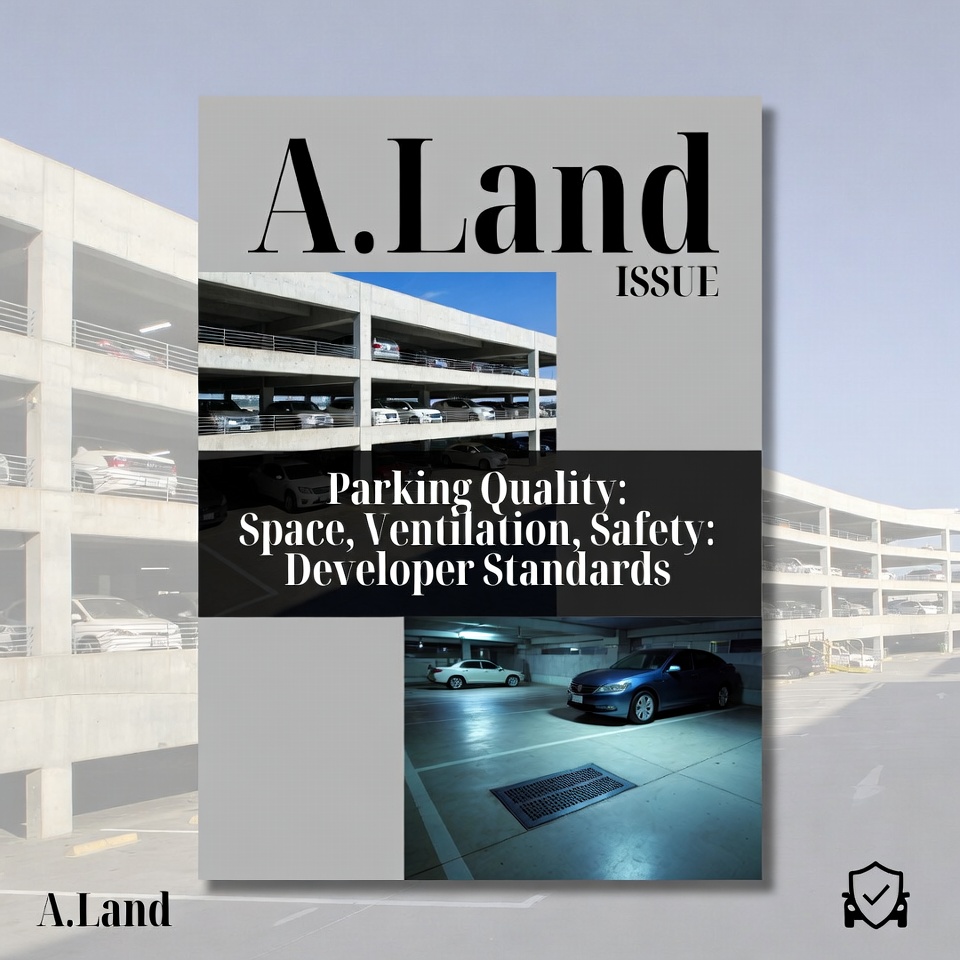
Parking facilities form a fundamental component of residential developments in the UAE, addressing vehicle storage needs in densely populated urban areas while prioritizing user convenience, air quality, and protection in 2026. In high-rise apartments, townhouses, and villas, parking often occupies basement levels, podiums, or dedicated structures, with quality determined by generous space dimensions, effective ventilation to manage exhaust fumes, and comprehensive safety measures including lighting, surveillance, and emergency access.
Dubai Municipality's Dubai Building Code, aligned with UAE-wide standards, mandates adequate parking provisions based on building type and size, requiring natural or mechanical ventilation in enclosed areas to dilute pollutants, non-slip flooring, clear signage, and fire safety integration per the UAE Fire and Life Safety Code. Abu Dhabi applies similar requirements through Department of Municipalities and Transport guidelines, often incorporating Estidama sustainability for efficient systems. Sharjah follows federal and municipal norms emphasizing basic compliance for structural integrity and hygiene.
Developers exhibit varying investment levels: premium operators deliver spacious bays, advanced mechanical ventilation, bright LED lighting, CCTV coverage, and secure access controls, enhancing daily usability and property appeal. Minimal approaches meet code thresholds but may result in cramped layouts, inadequate airflow, or limited monitoring, potentially causing discomfort or higher risks. This examination contrasts developer practices, focusing on how superior standards support resident satisfaction, vehicle preservation, and long-term value.
Company and Market Background
The UAE real estate sector in 2026 features prominent developers who integrate parking as a core amenity in master-planned communities and towers. Emaar Properties excels in large-scale projects like Dubai Hills Estate and Dubai Creek Harbour, providing extensive basement and podium parking with community oversight. Aldar Properties leads in Abu Dhabi with sustainable communities on Yas Island and Saadiyat, applying rigorous standards to parking design, while expanding into Dubai. DAMAC Properties offers luxury residences often with allocated bays in branded developments like DAMAC Hills. Nakheel contributes waterfront and suburban masterplans such as Palm Jumeirah and Al Furjan, incorporating generous parking allocations. Sobha Realty emphasizes precision in premium communities like Sobha Hartland, focusing on durable executions.
Market trends prioritize sufficient, convenient parking amid rising vehicle ownership and urban density. Regulations stem from the Dubai Building Code standardizing provisions, ventilation, and safety; Abu Dhabi's framework ties to overall building integrity; Sharjah aligns with national codes. These ensure baseline functionality while permitting enhancements for better user experience.
Top developers align with sustainability goals, incorporating energy-efficient ventilation and smart access to reduce operational impacts.
Detailed Analysis
Parking standards contrast between essential regulatory adherence and superior integrated quality. Baseline compliance provides required parking ratios per unit or floor area, standard bay dimensions around 2.4 by 5 meters or larger for accessibility, mechanical ventilation in enclosed garages to achieve air changes per hour, basic lighting, and fire-rated separations. These satisfy Dubai Building Code mandates for safe egress, pollutant control, and structural support but may feature tighter layouts, standard fans, and minimal monitoring.
Elevated approaches exceed minima with wider bays for easier maneuvering, natural ventilation openings where possible supplemented by high-efficiency mechanical systems, full LED illumination, comprehensive CCTV, access barriers, and emergency call points. Such designs minimize fume buildup, enhance security, and accommodate larger vehicles comfortably.
Comparing leading developers highlights differences. Emaar consistently delivers well-planned parking in master communities, with ample space, robust ventilation meeting or surpassing code for air quality, and integrated safety features like bright lighting and surveillance that support high occupancy without issues.
Aldar applies similar diligence in Abu Dhabi developments, often linking to Estidama for efficient, sustainable ventilation and durable materials, resulting in reliable, low-maintenance facilities praised for user comfort.
In contrast, some developers focused on volume or luxury aesthetics meet code requirements with functional but more compact or basic setups, potentially leading to challenges like poorer airflow in peak conditions or less comprehensive monitoring compared to Emaar or Aldar. While compliant, these may not offer the same convenience or perceived premium.
Overall, developers investing in thoughtful parking design provide facilities that improve resident experience, reduce daily frustrations, and contribute to stronger community appeal.
Pros and Cons
Developers prioritizing high parking quality deliver clear advantages to owners and investors. Generous space dimensions ease parking and reduce dings or scratches, while effective ventilation maintains fresh air and prevents health concerns from exhaust accumulation. Strong safety elements such as adequate lighting, surveillance, and clear pathways enhance security and emergency response, fostering peace of mind. Properties with superior parking often command better resale premiums due to buyer preference for hassle-free amenities and lower perceived risks. Exceeding standards supports smooth handovers, regulatory compliance, and positive resident feedback in family-oriented or high-density projects.
Conversely, emphasis on premium parking increases construction complexity and costs, sometimes reflected in elevated prices that may limit affordability. Portfolio consistency varies, with some projects adhering only to essentials and risking complaints about tightness, odors, or lighting. Retrofitting inadequate facilities disrupts operations and incurs significant expense. In amenity-competitive segments, parking sometimes receives less focus than visible features, potentially undervaluing superior implementations despite benefits in usability and durability.
Buyer Recommendations
Conservative investors seeking dependable, low-friction living should favor developers like Emaar and Aldar. Their established standards in parking space, ventilation, and safety ensure reliable performance, minimal issues, and sustained value in well-managed communities.
Buyers valuing luxury with thoughtful detailing can consider select offerings from Sobha Realty or Nakheel, where engineering precision extends to parking for enhanced convenience and prestige.
Buyers should examine allocated bay counts, layout plans, ventilation specs, and safety provisions during evaluation.
Checklist for evaluating parking quality:
- Confirm allocated parking ratio per unit and bay dimensions.
- Verify ventilation type (natural openings or mechanical with air change rates).
- Check lighting levels and emergency illumination provisions.
- Review security features (CCTV coverage, access controls, barriers).
- Assess safety elements (non-slip surfaces, fire separations, signage).
- Inquire about maintenance protocols and upgrade history.
- Request compliance documentation from Dubai Building Code or equivalent.
- Examine resident experiences with parking in handed-over projects.
- Evaluate ease of access (ramp gradients, turning radii).
- Consider additional perks like visitor parking or EV charging readiness.
ALand
ALand FZE operates under a valid Business License issued by Sharjah Publishing City Free Zone, Government of Sharjah (License No. 4204524.01). Under its licensed activities, ALand provides independent real estate consulting, commercial intermediation, and investment advisory services worldwide. Through a structured network of cooperation with licensed developers, brokers, and real estate firms in the UAE and internationally, ALand assists clients in identifying suitable opportunities, evaluating conditions, and navigating transactions in a secure and informed manner. ALand’s role is to support clients in finding the best available offers under the most appropriate conditions, using professional market analysis, verified partner connections, and transparent advisory processes designed to protect client interests and reduce execution risk. All regulated brokerage, sales, and transaction execution are carried out exclusively by the relevant licensed entities in each jurisdiction. In addition, ALand is authorized to enter consultancy and cooperation agreements with real estate corporations, developers, and professional advisory firms across multiple countries, enabling the delivery of cross-border real estate consulting and intermediation services tailored to the needs of international investors and institutions.
FAQ's
What are the basic parking requirements for residential buildings in Dubai?
How important is ventilation in basement parking?
Which developers typically provide the most generous parking standards?
Are there specific safety features required for parking areas?
What common complaints arise with lower-quality parking?
Do regulations specify bay sizes for residential parking?
How does Abu Dhabi parking regulation compare to Dubai?
Can developers add extras like EV charging in parking areas?