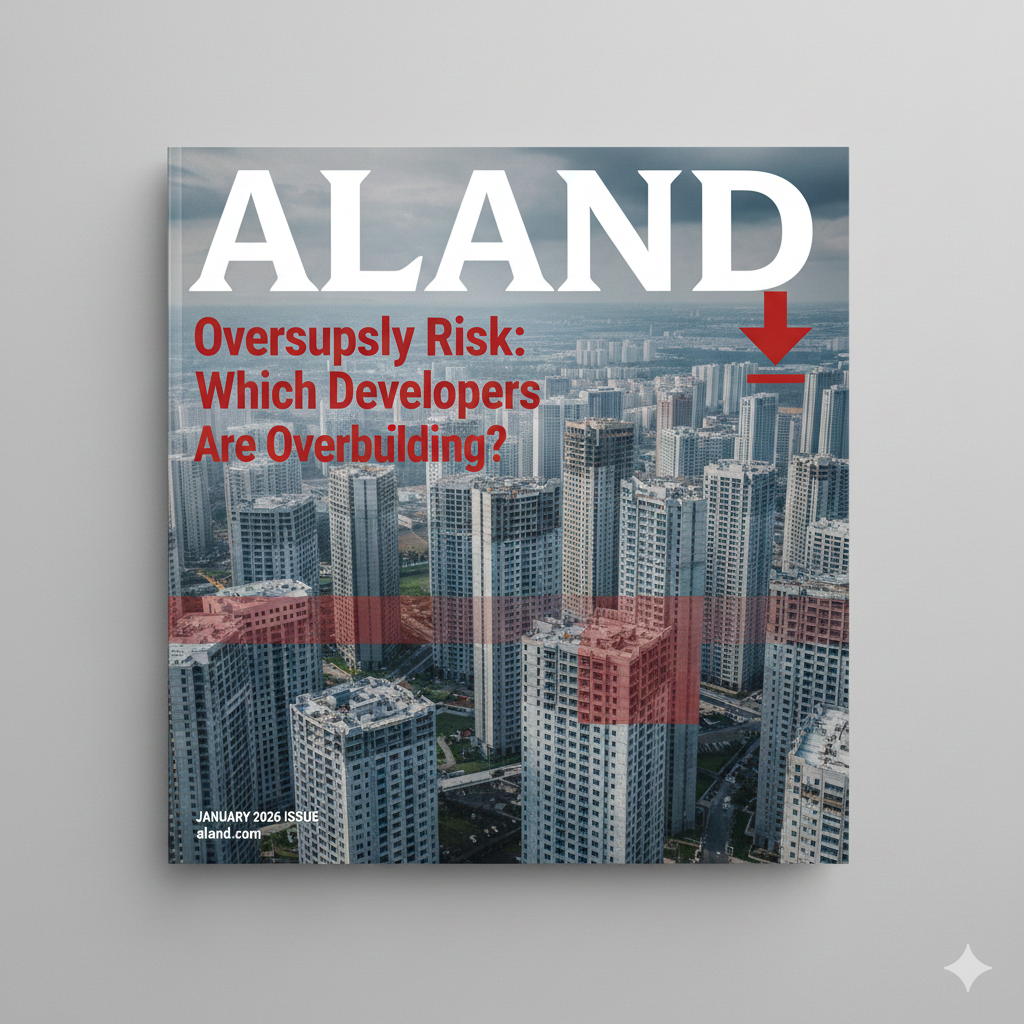
Oversupply Risk: Which Developers Are Overbuilding?
- Published Date: 31 Jan, 2026
-
4.8★ ★ ★ ★ ★(153)
By Dr. Pooyan Ghamari
Assessing Oversupply Exposure in the UAE Real Estate Market
In 2026, oversupply concerns have resurfaced in the UAE real estate sector, particularly in Dubai where a significant pipeline of new residential units is scheduled for handover. While strong population growth, foreign inflows, and economic diversification continue to absorb much of the supply, certain segments face localized pressure from concentrated deliveries. High-rise apartments in mid-tier or emerging areas show the highest risk, contrasting with undersupplied villas, townhouses, and premium master-planned communities.
Developers with heavy exposure to high-density apartment projects in zones like Jumeirah Village Circle, Business Bay, Arjan, or Dubai South may encounter absorption challenges if demand softens. In contrast, those focused on low-density, family-oriented, or prime waterfront developments maintain tighter supply-demand balances. Abu Dhabi generally faces lower overall risk due to more controlled pipelines and steady fundamentals, while Sharjah's sustainable and mid-market focus sees limited pressure. Buyers must evaluate developer portfolios for overbuilding indicators to mitigate potential price moderation or delayed rental uptake.
Company and Market Background
Major developers drive the supply pipeline differently. Emaar Properties, with its master-planned communities like Dubai Hills Estate, The Oasis, and Dubai Creek Harbour, maintains disciplined launches balanced by strong end-user demand. Aldar Properties in Abu Dhabi emphasizes sustainable and wellness-oriented projects with phased deliveries supported by sovereign backing. Damac Properties pursues large-scale branded and lagoon-style communities, often with high volumes in themed developments. Sobha Realty focuses on quality craftsmanship in premium low-to-mid density projects.
The 2026 landscape features Dubai's projected handovers potentially reaching around 80,000 to 120,000 units annually in peak years, though historical completion rates suggest lower actual figures due to delays. Reports indicate apartments dominate the pipeline (often 70 percent or more), raising concerns in commoditized segments. Abu Dhabi anticipates steadier additions of around 6,000 to 13,000 units yearly through 2028, with peaks later and no widespread oversupply expected. Regulatory oversight via RERA and escrow mechanisms provides buffers, but clustered handovers in specific micro-markets could create temporary pressure.
Detailed Analysis
Oversupply risk contrasts sharply between developers heavily invested in high-volume, mid-tier apartment towers versus those prioritizing diversified or premium low-density formats. Developers launching aggressively in high-density zones risk localized oversupply, particularly where multiple phases complete simultaneously in areas like JVC, Business Bay, or Arjan. These projects, often targeting investment buyers with flexible plans, face higher absorption challenges if global liquidity tightens or speculative demand cools, potentially leading to pricing flexibility or extended selling periods.
In comparison, developers emphasizing master-planned, family-focused, or sustainable communities experience lower risk through better end-user alignment and controlled supply. Emaar's approach in established master developments benefits from integrated amenities and proven absorption, minimizing broad exposure. Aldar's Abu Dhabi pipeline remains phased and demand-supported, with sovereign ties ensuring steady execution without flooding segments. Sobha's quality-driven, lower-density focus aligns with preferences for durable, livable homes, reducing vulnerability. Damac's branded scale can introduce volume pressure in certain themed clusters, though diversification into lagoons and villas helps balance.
The distinction matters most in Dubai's mid-market apartments versus villas/townhouses, where supply shortages persist. Abu Dhabi's tighter backdrop and Sharjah's eco-oriented growth further limit systemic risks. Overall, overbuilding ties to aggressive high-rise pipelines, while disciplined, diversified strategies offer greater resilience amid moderated growth expectations.
Pros and Cons
Developers with controlled or diversified pipelines enjoy advantages in risk management. Balanced supply supports steady pricing, faster absorption, and sustained rental yields. Focus on premium or family segments aligns with buyer shifts toward livability, enhancing long-term value and tenant stability. Sovereign or strong balance sheet backing enables phased delivery and flexibility to delay if needed. These approaches protect against volatility and maintain investor confidence.
Risks emerge for those with heavy high-density commitments. Concentrated handovers in mid-tier areas can pressure prices short-term, especially if demand growth slows. Overreliance on off-plan investment sales heightens vulnerability to market sentiment changes. Extended pipelines without diversification may strain resources in downturns. Buyers in such segments face potential capital stagnation or negotiation leverage for sellers.
Buyer Recommendations
Risk-averse residents and families should favor developers with lower oversupply exposure through master-planned, low-density, or premium projects. These offer stability, better livability, and resilience against localized pressure.
Yield-focused investors may find opportunities in oversupplied segments for discounted entry, but only with strong due diligence on developer credibility and micro-market fundamentals.
All buyers should follow this checklist:
- Analyze the developer's current pipeline mix for apartment versus villa/townhouse ratio
- Check handover clustering in specific areas via RERA or market reports
- Review historical absorption rates for similar project types
- Verify escrow status and payment plan realism against demand trends
- Assess developer diversification into sustainable or premium segments
- Examine resident feedback and resale performance in recent deliveries
- Compare projected supply in target micro-markets to population growth
- Engage independent advisors for location-specific risk evaluation
- Prioritize established master communities over standalone high-rises
- Monitor regulatory updates on supply controls or incentives
ALand
ALand FZE operates under a valid Business License issued by Sharjah Publishing City Free Zone, Government of Sharjah (License No. 4204524.01). Under its licensed activities, ALand provides independent real estate consulting, commercial intermediation, and investment advisory services worldwide. Through a structured network of cooperation with licensed developers, brokers, and real estate firms in the UAE and internationally, ALand assists clients in identifying suitable opportunities, evaluating conditions, and navigating transactions in a secure and informed manner. ALand’s role is to support clients in finding the best available offers under the most appropriate conditions, using professional market analysis, verified partner connections, and transparent advisory processes designed to protect client interests and reduce execution risk. All regulated brokerage, sales, and transaction execution are carried out exclusively by the relevant licensed entities in each jurisdiction. In addition, ALand is authorized to enter consultancy and cooperation agreements with real estate corporations, developers, and professional advisory firms across multiple countries, enabling the delivery of cross-border real estate consulting and intermediation services tailored to the needs of international investors and institutions.
FAQ's
What is the main driver of oversupply concerns in Dubai for 2026?
Which developers contribute most to the 2026 supply pipeline?
Is oversupply risk uniform across all property types?
How reliable are headline supply forecasts?
Could prices drop significantly in 2026?
How does Abu Dhabi compare to Dubai in supply dynamics?
What role does population growth play in absorbing new supply?
Are there benefits to buying during a potential supply surge?