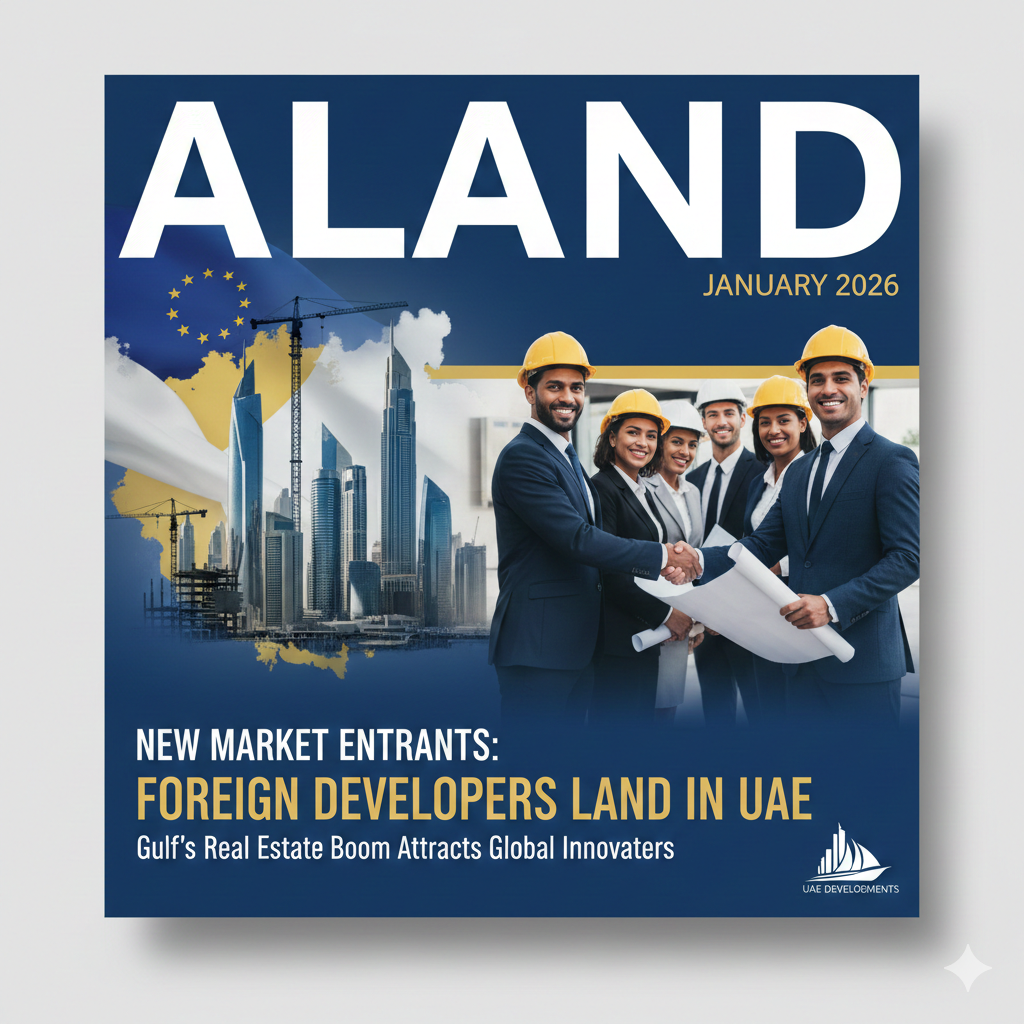
New Market Entrants: Foreign Developers Coming to UAE
- Published Date: 31 Jan, 2026
-
4.8★ ★ ★ ★ ★(122)
By Dr. Pooyan Ghamari
The Influx of International Developers in the UAE Market
As the UAE real estate sector matures in 2026, foreign and international developers are increasingly entering the market, drawn by reforms allowing 100 percent foreign ownership, strong demand from global investors, and opportunities in luxury, branded, and sustainable segments. While established local giants like Emaar Properties, Aldar Properties, Damac Properties, and Sobha Realty continue to dominate deliveries and master-planned communities, newcomers bring fresh design perspectives, hospitality integrations, and global branding that appeal to discerning international buyers.
This trend manifests through UAE-based entities partnering with overseas brands, branches of foreign firms, or new local incorporations by international groups. Key drivers include the UAE's tax advantages, residency incentives like the Golden Visa, and economic diversification attracting high-net-worth individuals. Projects often focus on luxury branded residences, waterfront or island developments, and innovative concepts in Dubai and Abu Dhabi, with emerging presence in Sharjah. Regulatory requirements from RERA, DLD, and equivalents ensure compliance, but buyers must verify licensing and track records to navigate this evolving landscape.
Company and Market Background
The UAE's real estate market in 2026 sustains momentum from 2025's record transactions, with Dubai exceeding AED 680 billion in volume and Abu Dhabi showing steady residential growth. Foreign investor participation remains high, accounting for significant portions of sales, particularly in premium segments.
Local leaders maintain strong positions: Emaar excels in iconic master communities, Aldar drives Abu Dhabi's large-scale projects with sovereign support, Damac focuses on branded luxury, and Sobha emphasizes quality craftsmanship. Foreign entrants often operate via UAE setups or partnerships, introducing concepts like hospitality-driven residences or design-led luxury.
Notable examples include Ohana Development's collaboration with Manchester City for multibillion-dirham branded residences on Yas Island in Abu Dhabi, highlighting demand for sports-themed luxury. Other international influences appear in branded projects or new players like those partnering with global architects or brands. In Dubai, developments feature international design standards, while Abu Dhabi sees newcomers like ONE Development (AI-driven), Modon (master developer on Hudayriyat Island), and Object 1 (design-focused from TSZ Group) reshaping the capital. These entrants target affluent buyers seeking differentiated offerings amid rising competition.
Detailed Analysis
Foreign developer entries contrast between partnership-based branded luxury projects and independent or branch operations introducing novel concepts. Branded collaborations, such as Ohana with Manchester City on Yas Canal waterfront residences, leverage global recognition for premium appeal, often delivering high-end units with integrated amenities and strong rental potential. These differ from traditional local developments by emphasizing hospitality or lifestyle branding, attracting international buyers from Europe, the US, and Asia who value familiar names.
Independent or newer foreign-influenced developers, like those expanding into Abu Dhabi with modern designs (e.g., Object 1's "functional art" approach or Modon's master developer role), bring international standards to underserved segments. This contrasts with Dubai's established ecosystem, where foreign elements often integrate via partnerships rather than standalone dominance. In Dubai Islands or emerging areas, launches by developers like LIV, DHG, or BEYOND incorporate global aesthetics in apartments and duplexes.
The key difference lies in market positioning: branded foreign entries command premiums through exclusivity and global cachet, while design-focused newcomers target lifestyle seekers with innovative features. Across emirates, 100 percent ownership reforms simplify entry, but credibility depends on local licensing, escrow compliance, and delivery history. Buyers gain from increased choice and competition, potentially improving quality and innovation, though newcomers require extra scrutiny compared to proven locals.
Pros and Cons
International developers introduce valuable advantages to the UAE market. They bring diverse architectural styles, global branding, and hospitality integrations that elevate project appeal, particularly in luxury segments. Partnerships with recognized names enhance prestige and rental demand from affluent tenants. Increased competition drives innovation in design, sustainability, and amenities, benefiting buyers with more options. Regulatory alignment ensures escrow protections and transparency, while foreign capital inflows support market liquidity and growth.
Challenges include verification complexities for newer entrants, as parent company strength or local execution may vary. Limited UAE track records heighten perceived delivery risks compared to established locals. Premium pricing in branded projects can compress yields initially. Integration into local ecosystems sometimes faces hurdles in governance or community standards. Buyers need rigorous due diligence to confirm compliance and avoid unproven operators.
Buyer Recommendations
Investors seeking prestige and global appeal should target branded foreign collaborations like those with international sports or hospitality brands in Abu Dhabi or Dubai for strong resale and rental potential. These suit high-net-worth buyers prioritizing lifestyle differentiation.
Risk-averse residents or families benefit from sticking closer to established locals but can explore vetted newcomers in master-planned areas for innovative features.
All buyers should follow this checklist:
- Confirm developer licensing and project registration on RERA, DLD, or equivalent portals
- Verify any international partnerships or parent company credentials
- Review escrow setup and off-plan payment safeguards
- Examine similar project deliveries or global track records
- Assess branding value and target buyer demographics
- Engage independent legal review of contracts
- Check location advantages and infrastructure alignment
- Monitor resident or investor feedback on early phases
- Compare pricing against local comparables for value
- Report concerns to regulators if discrepancies arise
ALand
ALand FZE operates under a valid Business License issued by Sharjah Publishing City Free Zone, Government of Sharjah (License No. 4204524.01). Under its licensed activities, ALand provides independent real estate consulting, commercial intermediation, and investment advisory services worldwide. Through a structured network of cooperation with licensed developers, brokers, and real estate firms in the UAE and internationally, ALand assists clients in identifying suitable opportunities, evaluating conditions, and navigating transactions in a secure and informed manner. ALand’s role is to support clients in finding the best available offers under the most appropriate conditions, using professional market analysis, verified partner connections, and transparent advisory processes designed to protect client interests and reduce execution risk. All regulated brokerage, sales, and transaction execution are carried out exclusively by the relevant licensed entities in each jurisdiction. In addition, ALand is authorized to enter consultancy and cooperation agreements with real estate corporations, developers, and professional advisory firms across multiple countries, enabling the delivery of cross-border real estate consulting and intermediation services tailored to the needs of international investors and institutions.
FAQ's
Why are foreign developers increasingly entering the UAE in 2026?
What types of projects do international developers focus on?
Can foreign developers own land directly in the UAE?
How do branded collaborations work for foreign entrants?
Are there notable foreign-influenced launches in Abu Dhabi?
What risks come with newer foreign developers?
Do foreign entrants comply with UAE regulations?
How do these developers impact competition?