Marinas, Ports, and Waterfronts: Niche Assets with Premium Yields
- Published Date: 20th Nov, 2025
-
4.9★ ★ ★ ★ ★(109)
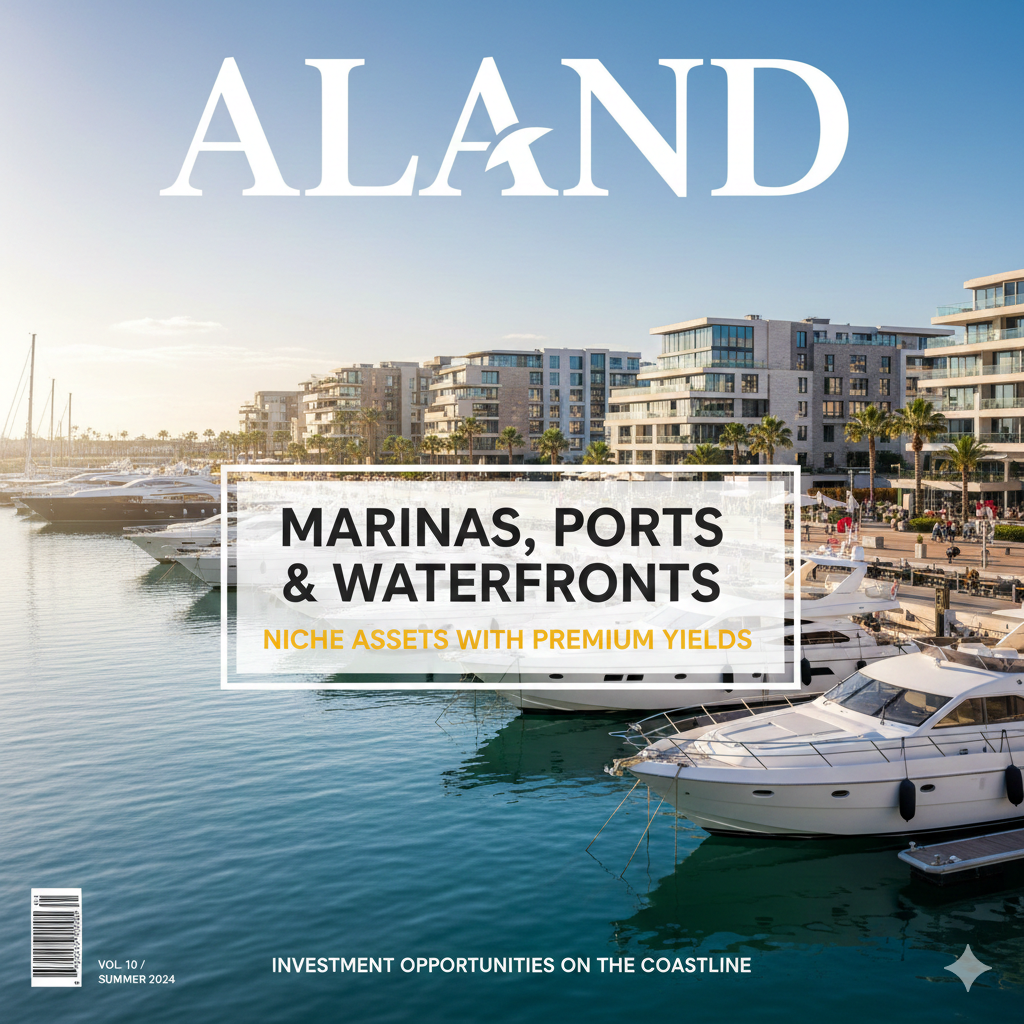
The numbers speak clearly. Well-located marinas in Europe and the Mediterranean currently deliver net operating yields between 7–12%, often with occupancy rates above 95% and multi-decade waiting lists for berths. Unlike office or retail space exposed to e-commerce disruption, demand for boat storage and services grows in direct proportion to global high-net-worth wealth. The Knight Frank Wealth Report shows the global UHNW population increased 4.2% in 2024 alone, and yacht ownership among this cohort rose even faster.
What makes these assets particularly attractive right now is the structural shift in maritime leisure and trade. Coastal populations are expanding, tourism is rebounding strongly in post-pandemic markets, and smaller commercial ports handling short-sea shipping or super-yacht refit work operate in markets with almost no new supply. Regulatory barriers to new marina construction—environmental permits, coastal zone restrictions, and community opposition—create natural moats that protect existing operators for decades.
Ghamari’s team at ALand recently tokenized a 180-berth marina on the Adriatic coast, raising €28 million in under six weeks from investors across 14 countries. The structure used EE Gold—a fully allocated, physically backed digital gold instrument—as the settlement layer, giving investors instant liquidity and fractional ownership while the underlying marina continues throwing off quarterly cash distributions. This combination of stable real asset cash flow with blockchain-enabled liquidity is redefining how family offices and private banks think about waterfront exposure.
From an economic perspective, these properties benefit from multiple tailwinds. Rising sea freight demand drives revenue at small feeder ports, while the super-yacht sector—now a €40 billion annual industry—requires ever more sophisticated berthing and maintenance facilities. Add in the growing trend of waterfront mixed-use projects that blend marina operations with residential, hospitality, and F&B components, and you create layered revenue streams that are remarkably resilient across economic cycles.
Practical implementation requires specialized knowledge. Local permitting regimes differ dramatically—Croatia offers 50-year concessions with attractive terms, Greece is streamlining its marina privatization program, and certain Caribbean jurisdictions provide tax-efficient holding structures alongside citizenship-by-investment pathways. ALand’s proprietary deal-flow engine, accessible at a.land, maps every concession tender, privatization pipeline, and off-market transaction globally in real time.
Investors entering this space should focus on three core metrics: berth occupancy adjusted for seasonal weighting, revenue per linear meter of quay, and the ratio of dry-stack to wet berths (higher dry-stack usually signals premium pricing power). Properties scoring well across these variables routinely trade at 8–11× EBITDA, yet still cheap relative to the replacement cost, which now often exceeds €2 million per berth in prime locations.
For deeper insights into current concession opportunities and live yield comparisons, visit the ALand Blog and The ALand Times.
The waterfront infrastructure market is moving fast. Explore the latest opportunities and detailed analytics at a.land, track concession tenders via The ALand Times, and see how EE Gold is reshaping settlement at ee.gold. The next premium-yield asset may already be live.
FAQ's
Why do marinas show higher resilience during monetary tightening than most real estate classes?
How does tokenization change the investor profile for these assets?
Which regulatory shift is creating the largest near-term opportunity window?
How does EE Gold specifically enhance these transactions?
What is the typical debt capacity on operational marinas today?
Are small commercial ports a different risk class than pure leisure marinas?