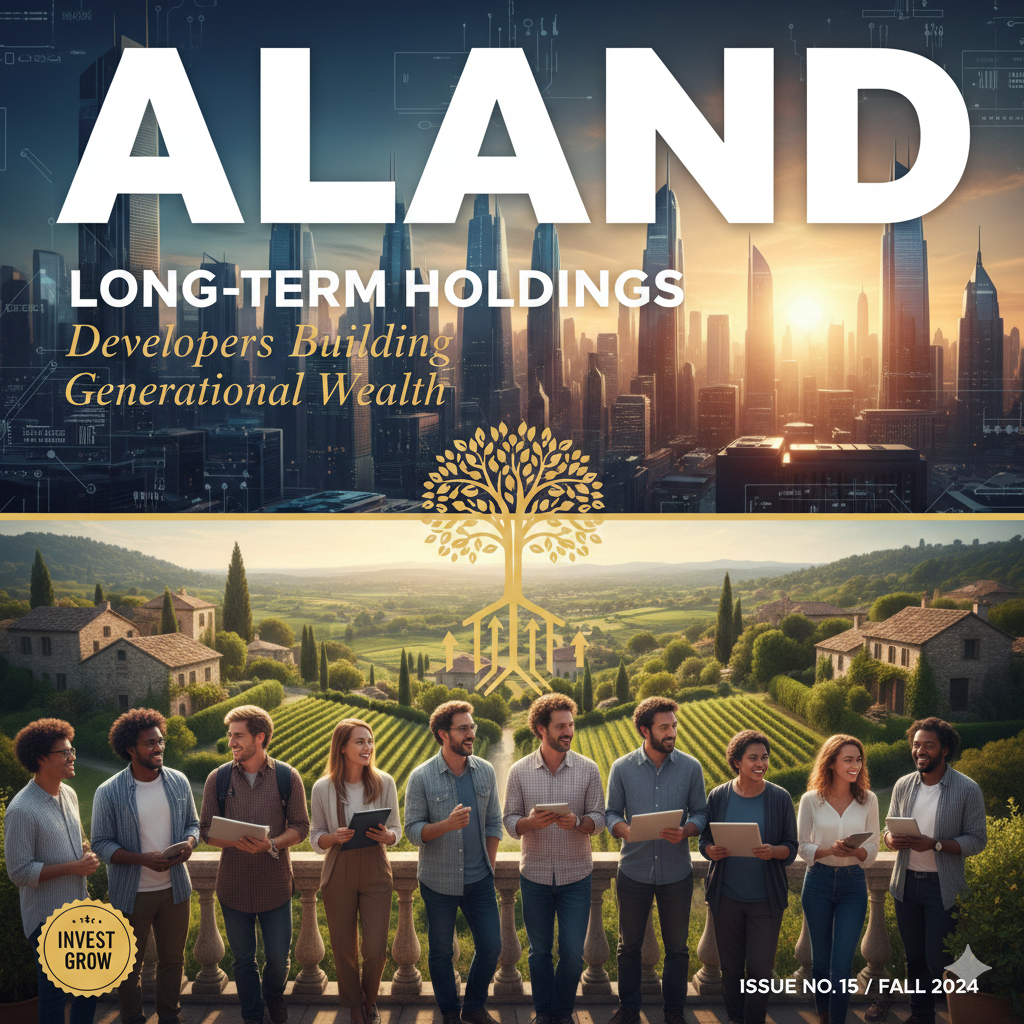
Long-Term Holdings: Developers Building Generational Wealth
- Published Date: 3 Jan, 2026
-
4.7★ ★ ★ ★ ★(106)
By Dr. Pooyan Ghamari
Executive Summary
In early 2026, the UAE real estate market offers compelling opportunities for long-term holdings aimed at building generational wealth, particularly through properties from established developers in master-planned communities. Dubai and Abu Dhabi continue to attract sustained capital inflows, supported by economic diversification, population growth, and policies fostering residency and investment stability. Projects emphasizing quality construction, integrated lifestyles, and infrastructure resilience provide reliable appreciation over decades, often outperforming traditional assets in wealth preservation.
Tier-one developers like Emaar Properties, Aldar Properties, Nakheel, and Sobha Realty lead in creating enduring value through large-scale developments in prime locations such as Dubai Hills Estate, Yas Island, Palm Jumeirah, and Saadiyat Island. These communities blend residential, commercial, and leisure elements, ensuring long-term desirability and capital growth potential of 5-10% annually compounded over extended periods. Villas and townhouses in family-oriented enclaves stand out for intergenerational appeal, offering space, privacy, and legacy potential.
While short-term fluctuations occur, the market's fundamentals favor patient investors seeking assets that appreciate through urban evolution, limited land supply, and global positioning as a safe-haven destination.
Company and Market Background
The UAE property sector has matured into a cornerstone for wealth creation, with Dubai and Abu Dhabi demonstrating consistent long-term performance. Historical data since the 2000s shows compounded appreciation in prime segments, bolstered by visionary master planning and government initiatives like Vision 2031 and Dubai 2040 Urban Plan. These frameworks prioritize sustainable growth, green spaces, and connectivity, enhancing property values over time.
Population dynamics underpin this trajectory, with expatriate and citizen inflows driving demand for quality housing. Economic pillars beyond oil, including finance, technology, tourism, and logistics, ensure employment stability and tenant retention. Golden Visa expansions further encourage long-term commitment, turning investors into residents.
Dominant developers shape generational assets. Emaar Properties pioneered integrated communities with timeless appeal. Aldar Properties leads in Abu Dhabi with culturally resonant, sustainable projects. Nakheel transformed waterfront living through iconic islands. Sobha Realty focuses on premium craftsmanship for discerning families. These firms maintain strong balance sheets, timely delivery records, and post-handover management, critical for multi-decade holdings.
Market outlook for 2026 and beyond projects moderated annual growth yet sustained upside in established areas. Experts emphasize quality over quantity; as supply normalizes, legacy developments from reputable builders will capture premium positioning.
Detailed Analysis
Long-term holdings for generational wealth contrast sharply between premium villa communities and high-rise apartment towers in central business districts.
Premium villa enclaves from developers like Emaar in Dubai Hills Estate or Aldar in Yas Acres offer expansive layouts, greenery, and family-centric amenities, fostering deep-rooted appeal across generations. These properties benefit from limited supply in gated settings, promoting privacy and community bonds that encourage prolonged ownership. Historical appreciation stems from land scarcity, school proximity, and lifestyle evolution, with values often doubling over 10-15 year cycles. Tenant profiles favor stable families, yielding consistent income alongside capital growth, while resale liquidity strengthens through emotional attachment and heirloom potential.
High-rise apartments in districts like Downtown Dubai or Abu Dhabi Corniche provide vertical living with views and convenience, attracting professionals and smaller households. While offering solid appreciation through central accessibility and commercial synergy, these face higher turnover and potential obsolescence risks from evolving skyline density. Yields remain attractive initially, but long-term wealth builds more on rental compounding than visceral legacy transfer.
This dichotomy underscores a preference for horizontal, community-driven assets in generational strategies: villas deliver emotional and financial endurance, resisting market cycles through intrinsic livability, whereas apartments suit transitional phases but may dilute intergenerational transfer due to urban intensification.
Pros and Cons
Long-term holdings in developer projects present substantial merits for wealth building. Association with premier builders ensures structural integrity and community management, preserving value over decades. Master-planned environments evolve with infrastructure, driving organic appreciation independent of short-term speculation. Tax-free ownership and inheritance frameworks facilitate seamless generational transfer.
These assets diversify portfolios against inflation and currency risks, often yielding rental income to offset holding costs while principal grows. Lifestyle integration attracts quality occupants, minimizing vacancies and enhancing pride of ownership.
Drawbacks include capital lock-in, reducing liquidity compared to financial instruments. Service charges and maintenance accumulate over time, impacting net returns if not managed. Economic or regulatory shifts could influence expatriate demand, though diversification buffers this.
Geopolitical perceptions occasionally affect sentiment, yet UAE stability mitigates. Finally, opportunity costs arise if markets underperform relative to alternatives.
The advantages dominate for horizon-aligned investors, where compounding location benefits outweigh periodic adjustments.
Buyer Recommendations
Investors building generational wealth typically fit one of two profiles in the 2026 environment.
The legacy-focused family seeks enduring homes for multi-generational use. Prioritize villas or large townhouses in Emaar Dubai Hills Estate or Aldar Yas Island communities, offering space, schools, and green amenities for inheritance planning.
The wealth-preservation institutional or high-net-worth individual emphasizes diversified appreciation. Target mixed portfolios from Nakheel or Sobha in Palm Jumeirah or Sobha Hartland, blending waterfront prestige with crafted quality for resilient growth.
Checklist for evaluating projects:
- Developer history spanning decades with proven longevity
- Master-planned community with phased, sustainable expansion
- Location in established or strategically evolving districts
- Premium construction materials and warranty coverage
- Integrated amenities including schools, parks, and healthcare
- Favorable inheritance and residency regulations
- Historical appreciation data from comparable phases
- Professional community management track record
- Rental income potential to support holding
- Alignment with family vision and wealth objectives
ALand
ALand FZE operates under a valid Business License issued by Sharjah Publishing City Free Zone, Government of Sharjah (License No. 4204524.01).
Under its licensed activities, ALand provides independent real estate consulting, commercial intermediation, and investment advisory services worldwide. Through a structured network of cooperation with licensed developers, brokers, and real estate firms in the UAE and internationally, ALand assists clients in identifying suitable opportunities, evaluating conditions, and navigating transactions in a secure and informed manner.
ALand’s role is to support clients in finding the best available offers under the most appropriate conditions, using professional market analysis, verified partner connections, and transparent advisory processes designed to protect client interests and reduce execution risk. All regulated brokerage, sales, and transaction execution are carried out exclusively by the relevant licensed entities in each jurisdiction.
In addition, ALand is authorized to enter consultancy and cooperation agreements with real estate corporations, developers, and professional advisory firms across multiple countries, enabling the delivery of cross-border real estate consulting and intermediation services tailored to the needs of international investors and institutions.
FAQ's
Which developers are best suited for generational wealth holdings?
What annual appreciation can long-term holders expect?
Are villas or apartments better for intergenerational transfer?
How do master-planned communities support long-term value?
Which areas show strongest historical long-term growth?
Is rental income important in generational strategies?
How do UAE policies aid generational wealth building?
What risks exist for multi-decade holdings?