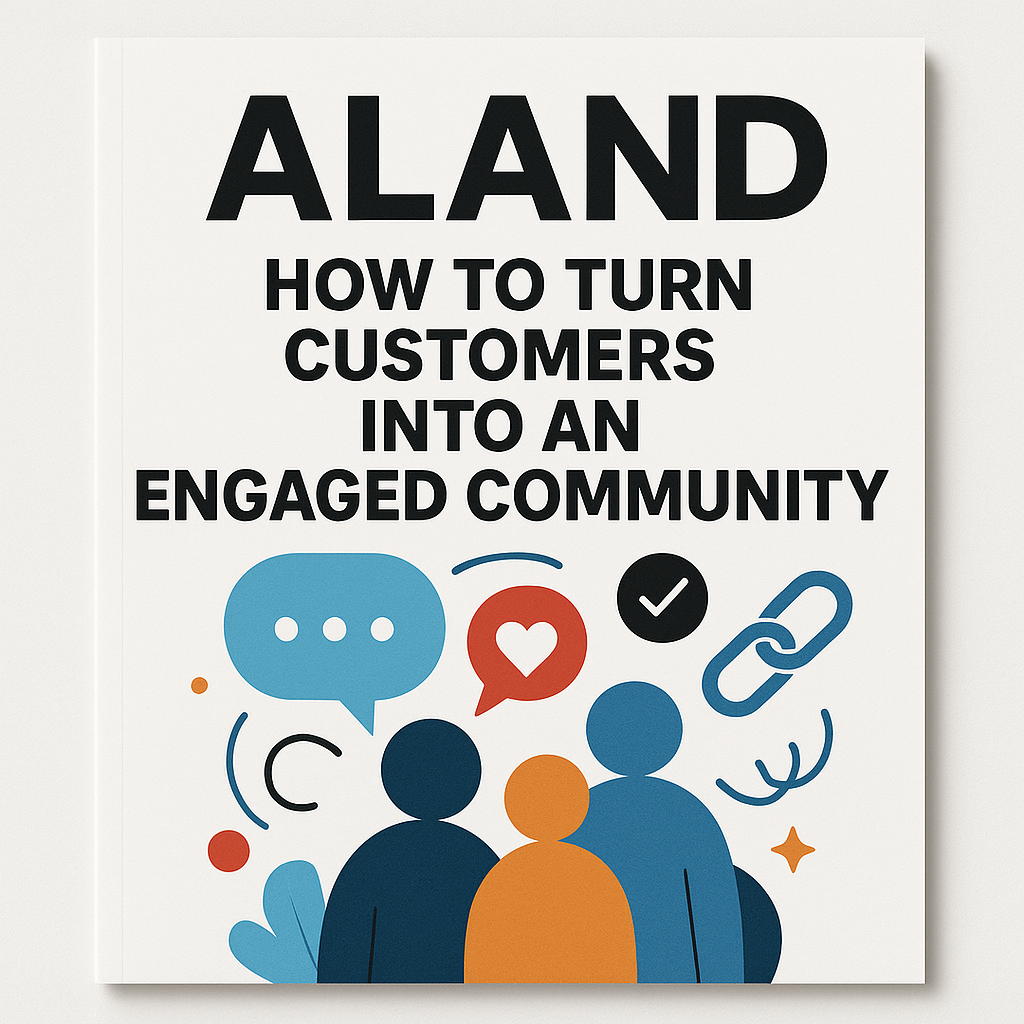
How to Turn Customers into an Engaged Community
- Published Date: 3 Jun, 2025
-
4.8★ ★ ★ ★ ★(86)
Listen to the Spotify Podcast for this article
By Dr. Pooyan Ghamari, Swiss Economist and Founder of the ALand Platform
From Passive Customers to Active Community—The True Engine of Enduring Value
In every era of economic history, certain business principles become so essential that they define the success or failure of entire industries. Today, as markets grow noisier, AI democratizes production, and attention becomes the ultimate scarce resource, one principle eclipses all others:
Turning customers into a vibrant, self-sustaining community is the most defensible competitive advantage a business can build.
Why is this transformation so vital now?
Because a transactional customer base—no matter how large—can vanish in the face of lower prices, newer features, or more aggressive marketing. By contrast, a true community offers loyalty, advocacy, feedback, resilience, and viral growth that no ad campaign or discount can replicate.
This article provides a critical blueprint for leaders, entrepreneurs, and investors seeking to transcend transactional business and create engaged communities that thrive and compound in value—through every cycle, every crisis, and every market reinvention.
The Community Imperative: Why Community-Driven Companies Win
The Collapse of the Transactional Paradigm
The old economic model viewed customers as endpoints in a value chain: businesses produced, customers purchased, and loyalty was assumed until disrupted by a competitor. But this model is now outdated. Customers today are empowered, connected, and skeptical of mere promises. They seek belonging, influence, and recognition.
Transactional relationships are easily lost. Communities, by contrast, are resilient—they are built not just on utility, but on meaning and participation.
Community as the New Moat
A thriving community does not just buy—it contributes, supports, advocates, and self-organizes. It generates its own content, answers, and evangelists.
The most successful modern brands—whether in technology, real estate, finance, or consumer goods—are no longer companies with customers; they are movements with members.
Global Megatrend: The Rise of Digital Micro-Communities
From decentralized finance (DeFi) protocols to off-plan real estate ventures, from cross-border investment platforms to private wealth networks, global competition is not for raw numbers, but for depth of engagement and quality of connection.
The companies shaping the next decade will be those that master the art and science of community-building.
Wizard Action Plan: Turning Customers Into an Engaged Community
Below is a stepwise, field-tested plan that any business—from startup to multinational—can adopt to transition from serving customers to nurturing a community.
1. Create a Private Online Group for Your Top 100 Customers
How to execute:
-
Choose a Platform: Select a medium your customers already use—Telegram, WhatsApp, Slack, Discord, or a closed LinkedIn/Facebook group.
-
Exclusive Invitations: Personally invite your top 100 customers—not just your largest, but your most vocal, loyal, and thoughtful.
-
Set the Culture: From day one, communicate that this is not a broadcast channel, but a space for connection, sharing, and influence.
-
Welcome Ritual: Onboarding new members with a personalized message or video instantly increases participation.
2. Invite Members to Share Their Own Stories and Challenges
When customers share stories, struggles, and successes, trust and empathy flourish—and others feel empowered to participate.
How to execute:
-
Prompt with Intention: Begin with a campaign—“Share your biggest challenge,” “Post your success story,” or “What do you wish you’d known earlier?”
-
Spotlight Contributors: Feature member stories in your newsletter or social media (with permission). Recognition is the most powerful reward.
-
Model Vulnerability: Have founders or leaders share their own journeys and challenges first. Authenticity is contagious.
3. Run Monthly Live Q&A Sessions with Founders or Experts
It transforms abstract leadership into real, accessible guidance and builds a habit of engagement.
How to execute:
-
Schedule Regular Sessions: The same day each month creates predictability.
-
Focus on Member Questions: Source questions in advance; answer live; invite follow-ups.
-
Bring in Outside Experts: Rotate guests from legal, financial, or industry verticals to keep content fresh.
-
Record and Archive: Make every session available to members who missed the live event, building a library of trusted knowledge.
4. Offer Exclusive Content, Early Access, or Rewards
When members receive unique benefits, the community becomes an irreplaceable part of their lives—and a source of FOMO (fear of missing out) for outsiders.
How to execute:
-
Beta Access: Let your community test new features, products, or services before public launch.
-
Exclusive Insights: Share in-depth reports, early market data, or private briefings unavailable elsewhere.
-
Reward Loyalty: Give points, badges, or real-world incentives (discounts, event invites, merchandise) to top contributors.
-
Solicit Feedback: Empower members to shape upcoming releases or strategic decisions.
5. Appoint Community Moderators from Active Members
Empowering members to lead and moderate ensures longevity, diversity of voices, and rapid resolution of issues.
How to execute:
-
Identify Natural Leaders: Look for members who consistently help, encourage, and mediate discussions.
-
Formalize Roles: Give moderators clear guidelines, authority, and recognition—maybe even compensation.
-
Foster Ownership: Let moderators organize subgroups, events, or campaigns, further embedding their sense of purpose.
-
Succession Planning: Regularly rotate or add new moderators to keep perspectives fresh.
The Strategic and Economic Power of Community
- Amplified Loyalty and Reduced Churn:Engaged community members are dramatically less likely to defect to competitors. Retention rises, churn falls, and your cost of acquisition drops.
- Viral Growth and Market Intelligence:Communities become referral engines, bringing in high-intent prospects at zero marginal cost. They surface market trends and problems long before the broader industry notices.
- Resilience in Volatility:In downturns or crises, communities provide emotional, informational, and practical support, cushioning shocks and preserving core business value.
- Policy and Industry Influence:A large, vocal community can advocate for regulatory changes, influence policy, and establish your company as a market thought leader.
-
Cross-Sector Examples:
-
Real Estate: Off-plan buyers form investment syndicates and share due diligence.
-
Finance: Investors crowdsource strategies, risk warnings, and opportunities.
-
Immigration: Expat communities crowdshare practical tips, legal updates, and cultural adaptation.
Build the Community, Build the Future
The companies that will dominate the next era will not be those with the largest marketing budgets, but those with the most loyal, engaged, and empowered communities.
Community is not a “soft” asset—it is the foundation for sustainable growth, innovation, and resilience in a world where the only constant is change.
By following this wizard action plan, any business can begin the journey from transactional relationships to transformational communities, harnessing the collective power of its customers to create something enduring, adaptable, and invaluable.
About the Author
Dr. Pooyan Ghamari is a Swiss Economist, global strategist, and Founder of the ALand Platform. Renowned for his expertise in macroeconomics, digital innovation, and international investment, he has advised institutions, governments, and private clients worldwide. Dr. Ghamari’s thought leadership shapes economic development, financial decentralization, and the strategic use of digital communities as engines of growth in a changing world.
The future belongs to those who build, empower, and sustain communities. Begin today, and you will create not just customers—but a legacy.
FAQ's
What macroeconomic indicators are the best predictors of real estate market crashes?
How does the BRICS economic alliance impact global real estate markets?
What key financial strategies should real estate investors follow during economic downturns?
How do central bank policies influence real estate affordability and pricing?
What is the future of tokenized real estate investments?
Why do high-net-worth individuals prefer real estate investments over traditional stock markets?
Which global cities are expected to become the next financial hubs for real estate investments?
How does AI-driven market analytics reshape real estate investment decisions?
What are the biggest regulatory risks facing international real estate investors in 2025 and beyond?
What role does geopolitical instability play in real estate price fluctuations?