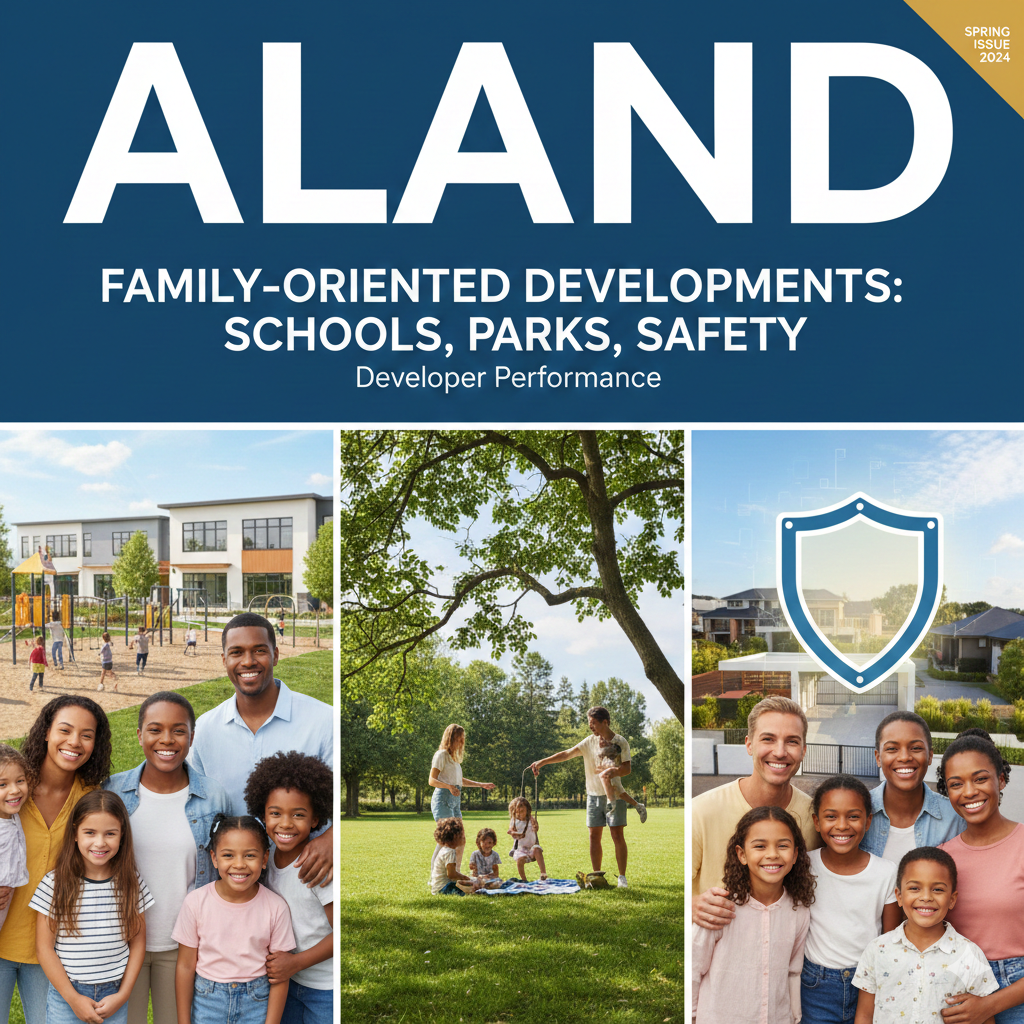
Family-Oriented Developments: Schools, Parks, Safety - Developer Performance
- Published Date: 30th Dec, 2025
-
4.7★ ★ ★ ★ ★(121)
By Dr. Pooyan Ghamari
Executive Summary
Family-oriented developments in the UAE, spanning Dubai, Abu Dhabi, and Sharjah, have become a cornerstone of the residential market in late 2025, driven by expatriate population growth, economic stability, and a focus on quality of life. Master-planned communities from leading developers prioritize integrated schools, expansive parks, and robust safety features, creating self-contained environments ideal for raising children. Emaar Properties excels in green, suburban-style projects like Dubai Hills Estate and Arabian Ranches, while DAMAC Properties offers activity-rich clusters in DAMAC Hills. Sobha Realty emphasizes craftsmanship in verdant settings such as Sobha Hartland, Nakheel delivers community-focused waterfront and inland options, Aldar Properties leads in Abu Dhabi with sustainable family enclaves on Yas Island and Saadiyat, and Arada brings affordable upscale living to Sharjah through Aljada and Masaar.
These developments benefit from the UAE's exceptional safety rankings, consistently placing among the world's safest nations and cities. Proximity to top-rated international schools offering British, American, and IB curricula supports educational needs, while vast green spaces promote active lifestyles. Rental yields in family communities range from 5% to 7%, with strong capital appreciation in mature areas due to limited supply and high demand from long-term residents. Investors and end-users alike favor these projects for their lifestyle appeal, though increasing supply in 2026 may shift focus toward established, proven locations with superior amenities and track records.
Company and Market Background
The family-oriented segment in the UAE real estate market has gained prominence by 2025, reflecting demographic shifts toward larger households and a preference for secure, amenity-rich environments. Developers have invested heavily in master-planned communities that incorporate international schools, dedicated parks, playgrounds, and gated security, addressing the needs of expatriate families comprising over 88% of the population. In Dubai, Emaar Properties dominates with iconic projects featuring golf courses, malls, and extensive greenery. DAMAC Properties targets vibrant, themed communities with sports and leisure facilities. Sobha Realty focuses on premium, nature-integrated designs, while Nakheel expands family-friendly inland and coastal clusters.
In Abu Dhabi, Aldar Properties leads with eco-conscious developments emphasizing mangroves, lagoons, and cultural integration on islands like Yas and Saadiyat. Sharjah sees growth from Arada, offering cost-effective yet upscale townhouses and villas with community centers and green corridors. Overall transaction volumes remain high, with family properties showing resilient demand amid record population influx. Safety perceptions are bolstered by national rankings placing the UAE among the top globally, supported by 24/7 patrols, CCTV, and community policing. Parks and green spaces have expanded significantly under urban plans, enhancing appeal for health-conscious buyers. Rental occupancy in these areas stays elevated due to schools and facilities attracting stable tenancies.
Detailed Analysis
A close evaluation of family-oriented developments reveals distinct differences between expansive green suburban communities in Dubai and more compact, sustainable island or urban-edge projects in Abu Dhabi and Sharjah, each delivering unique benefits in education, recreation, and security. Dubai's suburban masterpieces, led by Emaar's Dubai Hills Estate and Arabian Ranches, span vast areas with interconnected parks exceeding millions of square meters, championship golf courses, cycling tracks, and direct access to outstanding schools like GEMS Wellington and Jumeirah English Speaking School. These gated enclaves provide spacious villas and townhouses starting from AED 3 million, fostering privacy, outdoor play, and community events in low-density settings.
In comparison, Abu Dhabi's island-focused developments from Aldar, such as Yas Island and Saadiyat Lagoons, integrate natural mangroves, beachfronts, and cultural districts with family villas featuring private pools and views. These projects emphasize sustainability through recycled water and green building standards, appealing to buyers seeking tranquility and proximity to entertainment hubs like Ferrari World, alongside schools offering diverse curricula. Sharjah's offerings from Arada in Aljada and Masaar provide mid-tier pricing with modern townhouses surrounded by parks and educational facilities, prioritizing affordability and cultural alignment.
Dubai suburban communities shine in recreational scale, with parks like Dubai Hills Park offering splash pads and skate areas for daily family use, driving higher lifestyle satisfaction and appreciation rates of 10% to 15% annually in mature phases. Abu Dhabi and Sharjah variants excel in natural preservation and cost efficiency, yielding stable 6% to 8% returns from long-term family rentals amid lower entry points. Supply in Dubai favors established green giants for immediate occupancy, while newer island projects offer phased growth potential. Security remains uniformly high across emirates, but Dubai's gated suburban designs provide enhanced perceived privacy. Suburban green havens suit active, space-seeking families, whereas sustainable island or urban-edge options attract those valuing ecology and accessibility.
Pros and Cons
Family-oriented developments deliver substantial benefits that align with modern parental priorities. Integrated international schools reduce commute stress and support holistic child development through diverse curricula and extracurriculars. Expansive parks and green spaces encourage outdoor activities, promoting physical health and family bonding in pedestrian-friendly layouts. Gated communities with round-the-clock security, CCTV, and patrols offer peace of mind, reinforced by the UAE's leading global safety rankings. Community centers, playgrounds, and retail integration create self-sufficient lifestyles, minimizing external travel. Strong developer reputations ensure timely delivery and quality maintenance, while no rental income tax boosts investment appeal. Capital growth in premium locations remains robust due to scarcity and desirability among expatriates.
However, potential limitations should be noted. Higher service charges in amenity-laden projects can impact net yields, especially for villa owners with extensive facilities. Commutes to central business districts may extend for suburban residents, though improving infrastructure mitigates this. Premium pricing in top communities like Dubai Hills Estate excludes budget-conscious buyers, pushing them toward emerging areas with longer maturation timelines. Over-reliance on community amenities risks isolation if personal preferences evolve. Supply increases in secondary locations could temporarily soften short-term appreciation, and off-plan family projects carry standard handover risks despite strong oversight.
Buyer Recommendations
For families emphasizing vast green spaces and top-tier education, suburban Dubai communities from Emaar like Dubai Hills Estate or Arabian Ranches provide ideal settings with parks, golf, and renowned schools nearby.
Alternatively, buyers seeking sustainable, nature-immersed living with cultural access should explore Aldar's Abu Dhabi projects on Yas or Saadiyat Islands, offering mangroves, beaches, and family-focused amenities.
- Research school ratings and curricula to align with long-term educational goals.
- Visit communities at different times to assess safety perceptions and daily vibrancy.
- Evaluate park sizes and recreational facilities for active family lifestyles.
- Compare developer delivery histories for reliability in off-plan purchases.
- Calculate total costs including service fees against potential rental income.
- Prioritize gated access and proximity to healthcare for comprehensive security.
- Consider future infrastructure plans impacting appreciation and connectivity.
- Engage independent advisors for unbiased amenity and location comparisons.
- Review community events and resident feedback for social fit.
- Diversify across emirates if balancing investment risk and lifestyle variety.
ALand
ALand FZE operates under a valid Business License issued by Sharjah Publishing City Free Zone, Government of Sharjah (License No. 4204524.01). Under its licensed activities, ALand provides independent real estate consulting, commercial intermediation, and investment advisory services worldwide. Through a structured network of cooperation with licensed developers, brokers, and real estate firms in the UAE and internationally, ALand assists clients in identifying suitable opportunities, evaluating conditions, and navigating transactions in a secure and informed manner. ALand’s role is to support clients in finding the best available offers under the most appropriate conditions, using professional market analysis, verified partner connections, and transparent advisory processes designed to protect client interests and reduce execution risk. All regulated brokerage, sales, and transaction execution are carried out exclusively by the relevant licensed entities in each jurisdiction. In addition, ALand is authorized to enter consultancy and cooperation agreements with real estate corporations, developers, and professional advisory firms across multiple countries, enabling the delivery of cross-border real estate consulting and intermediation services tailored to the needs of international investors and institutions.
FAQ's
What makes a development family-oriented in the UAE?
Which developers excel in family communities in 2025?
How safe are UAE family developments?
What schools are common in top family areas?
Which communities have the largest parks?
Are Abu Dhabi developments suitable for families?
How do rental yields perform in family segments?
What drives demand for these properties?