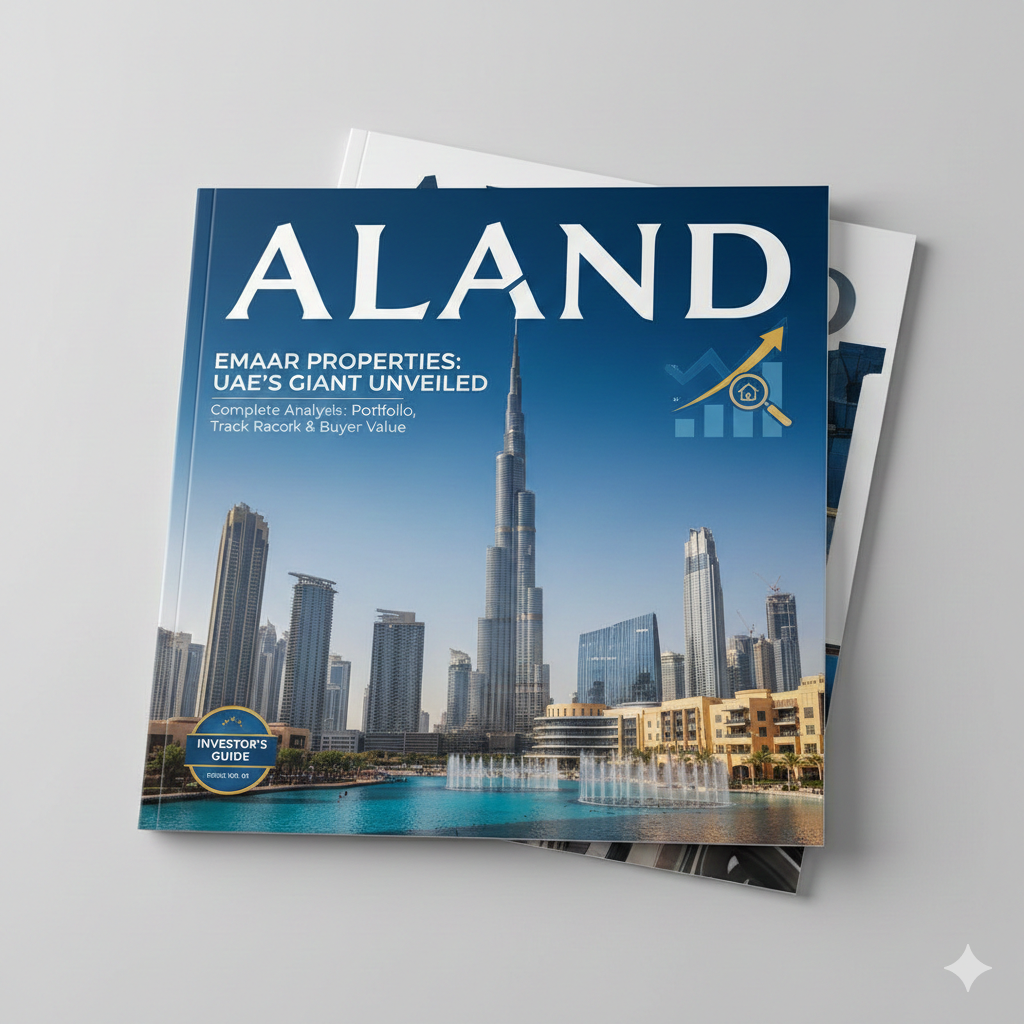
Emaar Properties: Complete Analysis of UAE’s Largest Developer - Portfolio, Track Record & Buyer Value
- Published Date: 8th Dec, 2025
-
4.8★ ★ ★ ★ ★(125)
By Dr. Pooyan Ghamari
Executive Summary
Emaar Properties remains the undisputed leader of UAE real estate, having evolved from a growth-oriented pioneer into a yield-focused institution as the market matures. Iconic landmarks such as Burj Khalifa and Dubai Mall sit alongside an expanding pipeline of master-planned communities, generating record property sales of AED 46 billion in the first half of 2025 alone. In an environment increasingly defined by transparency, regulation, and technology, Emaar’s combination of flawless delivery, financial strength, and diversified portfolio offers investors the best balance of capital preservation and income generation. The single most important action today: prioritise Emaar’s community-centric mid-market projects for the 2026-2030 cycle, where structural reforms and demographic growth will reward patient capital far more reliably than speculative luxury plays.
Company Background: The Company and the Changing UAE Ecosystem
Founded in 1997, Emaar Properties transformed Dubai from a regional trading hub into a global city brand. Today it stands as the UAE’s largest listed developer, with a market capitalisation exceeding USD 15 billion and total assets above USD 32 billion. Its portfolio spans landmark developments (Downtown Dubai, Dubai Marina, Arabian Ranches), lifestyle communities (Dubai Hills Estate, The Valley, Emaar South), beachfront luxury (Emaar Beachfront, Dubai Creek Harbour), and international projects across 12 countries. Over 100,000 residential units have been delivered to date, alongside millions of square feet of retail, hospitality, and office space.
The UAE market itself is undergoing a profound structural shift. The era of opaque off-plan sales and developer-led pricing is giving way to a transparent, investor-friendly framework driven by RERA’s escalating regulations—mandatory escrow accounts, project progress-linked payments, public disclosure of service charges, and stricter licensing. Simultaneously, PropTech and AI are revolutionising due diligence: automated valuation models, blockchain title registries, predictive rental analytics, and digital twin technology are rapidly becoming standard. These forces are maturing the market from speculative growth into a genuine income-producing asset class attractive to institutions and family offices.
Emaar has embraced this evolution more aggressively. Its projects consistently rank among the first to adopt smart-home platforms, energy-monitoring systems, and community apps. More importantly, its near-perfect on-time delivery record—even through the 2008 crisis and the pandemic—combined with a revenue backlog exceeding AED 127 billion, gives investors confidence that regulatory and technological tailwinds will translate into real, bankable stability.
Detailed Analysis: Portfolio Breakdown and Buyer Value
Emaar’s portfolio naturally divides into two dominant and contrasting asset classes that serve entirely different investor needs: Ultra-Luxury Branded Residences and Community-Centric Mid-Market Villas. Understanding the economic drivers, projected performance, and risk profile of each is essential for any serious buyer.
1. Ultra-Luxury Branded Residences
Projects: Address Beach Resort, Address Sky View, Armani Beach Residences, Bvlgari Resort & Residences, upcoming Palace Branded Residences at Dubai Creek Harbour and Al Marjan Island (Ras Al Khaimah). Typical price range: AED 5–35 million per unit.
Drivers: Global capital flows, trophy-asset demand, and lifestyle branding. Buyers are predominantly non-resident ultra-high-net-worth individuals seeking second (or third) homes, diversification away from traditional safe havens, and Golden Visa residency. Demand is highly correlated with global liquidity conditions and wealth migration trends rather than local employment.
2026-2030 outlook: Gross rental yields 4.5–6.5 %, net yields 5–7 % after service charges. Capital appreciation potential remains strong (8–10 % p.a. in prime locations) due to extreme scarcity and branding premium, but performance is volatile. Liquidity is limited—resale typically takes 12–18 months—and the segment is acutely sensitive to global risk-off events. A sustained rise in U.S./European interest rates or renewed geopolitical tension can trigger sharp capital outflows.
2. Community-Centric Mid-Market Villas
Projects: Arabian Ranches III, The Valley, Dubai Hills Estate villas, Emaar South, Emerald Hills. Typical price range: AED 1.5–4.5 million for 3–5 bedroom townhouses and villas.
Drivers: Local and regional end-user demand fuelled by UAE’s economic diversification, job creation in tech, finance, logistics, and tourism, and family-oriented immigration. These communities attract mid-to-senior expatriate professionals and Emirati families seeking space, greenery, schools, and amenities, and long-term residency.
2026-2030 outlook: Gross rental yields 7–9 %, net yields 6–8 % after modest service charges. Capital growth 6–8 % p.a., supported by continued infrastructure rollout (metro extensions, new schools, retail hubs) and population growth forecast at ~3 % annually. Liquidity is significantly better (6–9 months on average), and recession sensitivity is low because demand is anchored by salaries and mortgages rather than hot money.
Mohamed Alabbar, Founder and Managing Director of Emaar Properties, recently stated: “The next decade belongs to thoughtfully planned communities that deliver lifestyle, sustainability, and genuine family living—not just square footage. Investors who understand that will compound wealth far more reliably than those chasing short-term luxury flips.”
Global macro overlay: With U.S. rates expected to stabilise in the 3–4 % range by 2027 and oil prices likely to remain in a constructive $70–90 band, borrowing costs in the UAE will stay supportive. This environment particularly favours the mid-market villa segment, where mortgage-financed end-users dominate.
Comparison Matrix
| Metric | Ultra-Luxury Branded Residences | Community-Centric Mid-Market Villas |
|---|---|---|
| Predicted 5-Year Net Yield (2026-2030) | 5–7 % (higher volatility) | 6–8 % (stable, high occupancy) |
| Required Capital Outlay | AED 5 million + | AED 1.5–4.5 million |
| Average Resale Liquidity | 12–18 months | 6–9 months |
| Sensitivity to Global Recession | High | Low |
| Primary Buyer Motivation | Prestige, second home, Visa | Primary residence, family lifestyle |
Buyer Recommendations
Profile 1 – The Long-Term Passive Investor
(Seeking steady income, capital preservation, minimal management)
Best fit: 3–4 bedroom villas or townhouses in Dubai Hills Estate, The Valley, or Emaar South. Strategy: Buy ready or near-completion units, place with a professional leasing and management agent (Emaar Community Management is excellent), and hold for 7–10 years. Expect 6.5–8 % net yield plus mid-single-digit capital growth. Use the Golden Visa (AED 2 million threshold) for added residency security.
Profile 2 – The Opportunistic Value-Add Investor
(Comfortable with off-plan, seeks higher returns through timing and upgrades)
Best fit: Early-phase ultra-luxury launches (e.g., Palace Residences Dubai Creek Harbour, Address Al Marjan Island) or undervalued ready luxury units during temporary market softness. Strategy: Secure 20–30 % discount via off-plan payment plans, complete value-add renovations or furnishings if needed, then either flip post-handover or hold for branded rental premium. Target 9–12 % IRR over 4–6 years.
Checklist for Emaar Developer Due Diligence (applicable to any project)
- Financial solvency – Latest revenue > AED 35 billion annually, debt-to-equity comfortable, cash reserves strong.
- Revenue backlog – Currently > AED 120 billion (multi-year visibility).
- Historical completion record – 98 %+ on-time or early across 20+ years.
- Escrow & RERA compliance – Confirm trustee bank and project account status on RERA portal.
- Post-handover service quality – Emaar Community Management consistently ranks #1 or #2 in Bayut and Property Finder surveys.
- SPV structure transparency – Review the specific project SPV financials when released (mandatory under new RERA rules).
- Exit comparable transactions – Study recent resales in the same community for realistic liquidity expectations.
Key Takeaways
Emaar Properties is not merely the largest developer in the UAE—it is the standard by which all others are measured. Its combination of scale, flawless execution, financial firepower, and willingness to embrace technology and regulation positions it uniquely for the next decade. While ultra-luxury will continue to deliver headline-grabbing prices, the real wealth creation in the 2026-2030 cycle will come from Emaar’s master-planned, family-focused communities that offer genuine lifestyle alongside attractive, sustainable yields.
The UAE is rapidly graduating from an emerging speculative market into a mature, transparent, income-oriented global asset class. Investors who align with developers that have proven they can deliver through every cycle—and Emaar sits alone at the top of that list—will enjoy compounding returns and capital safety that few real estate markets on earth can match.
FAQ's
What is Emaar Properties' overall portfolio breakdown, including residential units delivered and international presence?
What is Emaar Properties' track record for on-time project completion, especially during crises like 2008 and the pandemic?
How does buyer value differ between ultra-luxury branded residences and community-centric mid-market villas?
What are the key financial metrics for Emaar Properties, such as annual revenue, backlog, and debt-to-equity ratio?
What are examples of specific ultra-luxury projects like Address Beach Resort and their typical price ranges?
What are examples of community-centric mid-market villa projects, such as Arabian Ranches III, and their price ranges?
What risks are associated with investing in ultra-luxury branded residences, including sensitivity to global recessions?
How does the mid-market villa segment perform in terms of recession sensitivity and liquidity?
What UAE regulatory changes, like RERA's escrow accounts and disclosure rules, benefit Emaar buyers?
Why does the article recommend prioritizing mid-market projects over speculative luxury for 2026-2030?