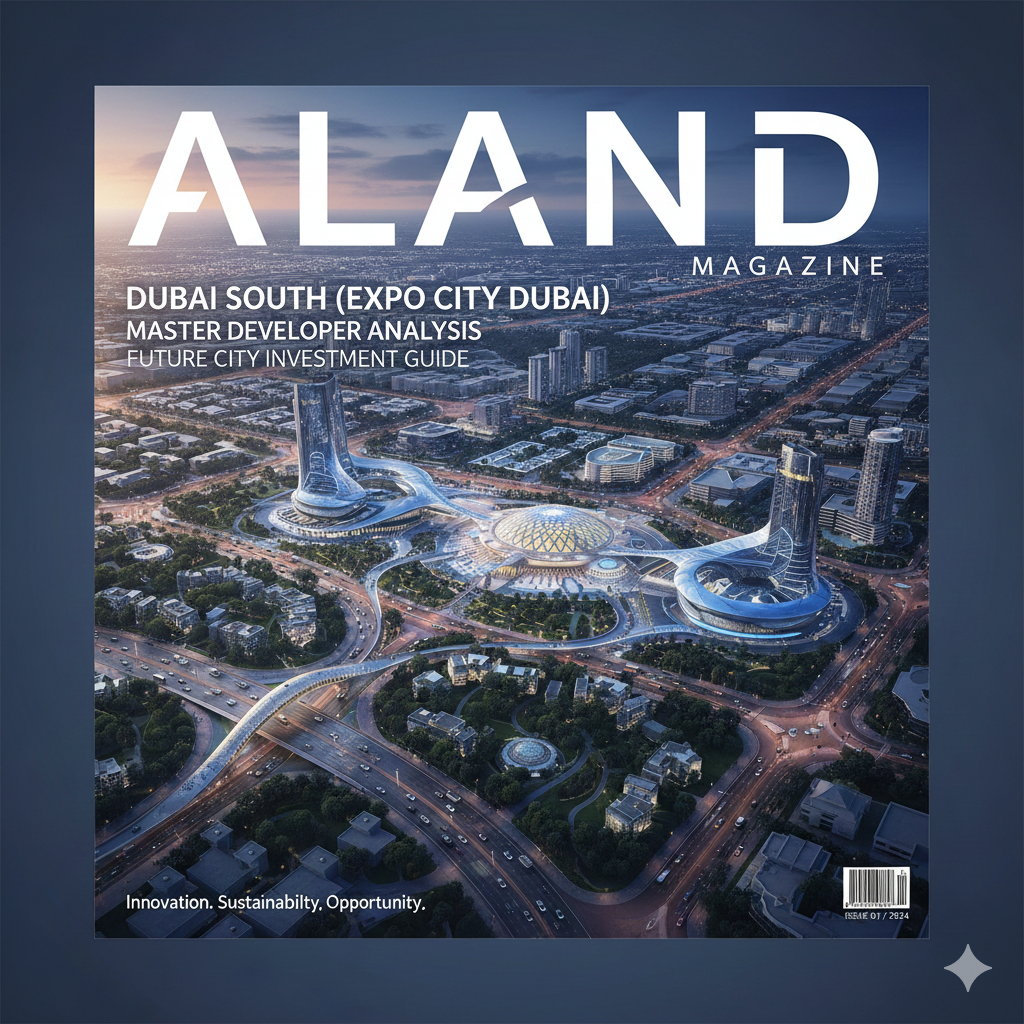
Dubai South (Expo City Dubai): Master Developer Analysis – Future City Investment Guide
- Published Date: 13th Dec, 2025
-
4.8★ ★ ★ ★ ★(76)
By Dr. Pooyan Ghamari
Executive Summary
Dubai South, originally conceived as Dubai World Central and rebranded after hosting Expo 2020, has evolved into one of the UAE’s most ambitious master-planned cities, encompassing the former Expo site now known as Expo City Dubai. As a government-backed master developer under the Dubai South Properties umbrella, it manages an 145-square-kilometre free zone projected to house 1 million residents and create 500,000 jobs by 2040. With AED 32 billion in infrastructure already invested and sales exceeding AED 18.5 billion in the first nine months of 2025, Dubai South combines logistics, aviation, residential, commercial, and exhibition districts into a single integrated ecosystem. Key residential communities like South Bay, Pulse, and Expo Village offer yields of 7–9% net, while the broader vision promises sustained capital growth of 8–12% annually through 2030. For investors, Dubai South represents the ultimate long-term play on Dubai’s “future city” narrative. The critical action today: Prioritize off-plan and near-completion residences in South Bay and Pulse for balanced yields and exposure to the district’s exponential infrastructure rollout.
Company and Market Background
Dubai South was launched in 2006 as an aviation and logistics hub centred around Al Maktoum International Airport, the world’s future largest airfield with capacity for 260 million passengers annually. The Expo 2020 legacy accelerated its transformation: the 4.38-square-kilometre Expo site became Expo City Dubai—a permanent exhibition, innovation, and sustainability district retaining iconic pavilions like Al Wasl Plaza and Terra. Managed by Dubai South Properties (a government entity), the masterplan now includes eight themed districts: Aviation, Logistics, Humanitarian, Exhibition (Expo City), Commercial, Residential, Golf, and Leisure.
The market environment has aligned perfectly with Dubai South’s long-term vision. Government initiatives like D33 (doubling the economy by 2033) and UAE Net Zero 2050 have poured billions into connectivity—Dubai Metro Route 2020 extension, Etihad Rail links, and direct airport access. RERA transparency and Golden Visa eligibility at AED 2 million have attracted international buyers (82% of residential sales), while PropTech tools provide real-time insights into rental yields and occupancy. Dubai South’s residential communities—South Bay (lakeside villas and townhouses), Pulse (affordable apartments), Expo Village (converted Expo pavilions), and upcoming phases—benefit from 98% occupancy in completed sections and a 93% on-time delivery rate for recent launches. With a AED 60+ billion pipeline and the airport’s phased expansion targeting 120 million passengers by 2030, Dubai South is Dubai’s most future-proof investment zone.
Detailed Analysis: Lakeside Premium Communities vs Affordable Urban Residences
Dubai South’s residential offerings divide into lakeside premium communities for lifestyle buyers and affordable urban residences for yield-focused investors, both supported by the district’s massive infrastructure momentum.
Lakeside premium communities like South Bay feature luxurious villas and townhouses around a 1-kilometre crystal lagoon, with prices ranging from AED 2,200–4,000 per square foot. These gated enclaves offer private beaches, clubhouses, and direct park access, appealing to families and high-net-worth individuals seeking a resort-style escape within the city. For 2026–2030, they project net yields of 6.5–8% after moderate service charges (AED 12–16 psf), with capital growth of 9–12% per annum driven by the lagoon’s scarcity value and proximity to Expo City attractions. Liquidity is strong at 6–10 months, bolstered by end-user demand and Golden Visa appeal.
Affordable urban residences, represented by Pulse and Expo Village apartments, are priced at AED 1,200–2,000 per square foot for 1–3 bedroom units in mid-rise towers. These developments emphasize convenience with metro connectivity, retail podiums, and community amenities, targeting young professionals and first-time investors. The outlook for 2026–2030 shows higher net yields of 7.5–9.5%, supported by low service charges (AED 8–12 psf) and 95%+ occupancy from airport and logistics workers. Capital appreciation is estimated at 7–10% per annum, fueled by Dubai South’s job creation and population targets. Liquidity averages 5–9 months, making these ideal for cash-flow-focused portfolios.
Khalifa Al Zaffin, Executive Chairman of Dubai South, recently stated: “Dubai South is not just a development—it’s the future economic engine of Dubai. By integrating aviation, logistics, and livable communities, we’re building a city that will drive growth for generations.”
Buyer Recommendations
For the long-term passive investor prioritizing stability and family appeal, focus on 3–4 bedroom townhouses or villas in South Bay lakeside phases, with handovers from Q2 2026. These deliver 7–8% net yields from premium tenants (AED 250k–400k annually) and benefit from the lagoon’s lifestyle premium for sustained appreciation in a government-backed ecosystem.
The opportunistic yield investor should target 1–2 bedroom apartments in Pulse or Expo Village urban residences, ready or near completion by late 2026. With 8–9.5% net yields (AED 120k–200k annually) and lower entry prices, these offer quick cash flow and exposure to Dubai South’s rapid infrastructure maturation.
Checklist for Dubai South Investment Due Diligence
- Confirm government backing and masterplan phase alignment.
- Prioritize post-2021 launches for 93%+ on-time delivery.
- Verify proximity to metro, airport, and Expo City attractions.
- Check service charges (AED 8–16 psf depending on community tier).
- Analyze occupancy rates in completed phases (95%+ typical).
- Ensure Golden Visa eligibility for units over AED 2 million.
FAQ's
What is Dubai South?
How reliable is delivery in Dubai South?
Are Dubai South properties Golden Visa eligible?
What yields can I expect?
Is Dubai South family-friendly?
How international is the buyer base?
What is South Bay?
Has Dubai South won awards?
Are service charges competitive?
Where is Dubai South expanding next?