Developer Default Risk: Warning Signs and Preventive Measures
- Published Date: 30th Jan, 2026
-
4.9★ ★ ★ ★ ★(94)
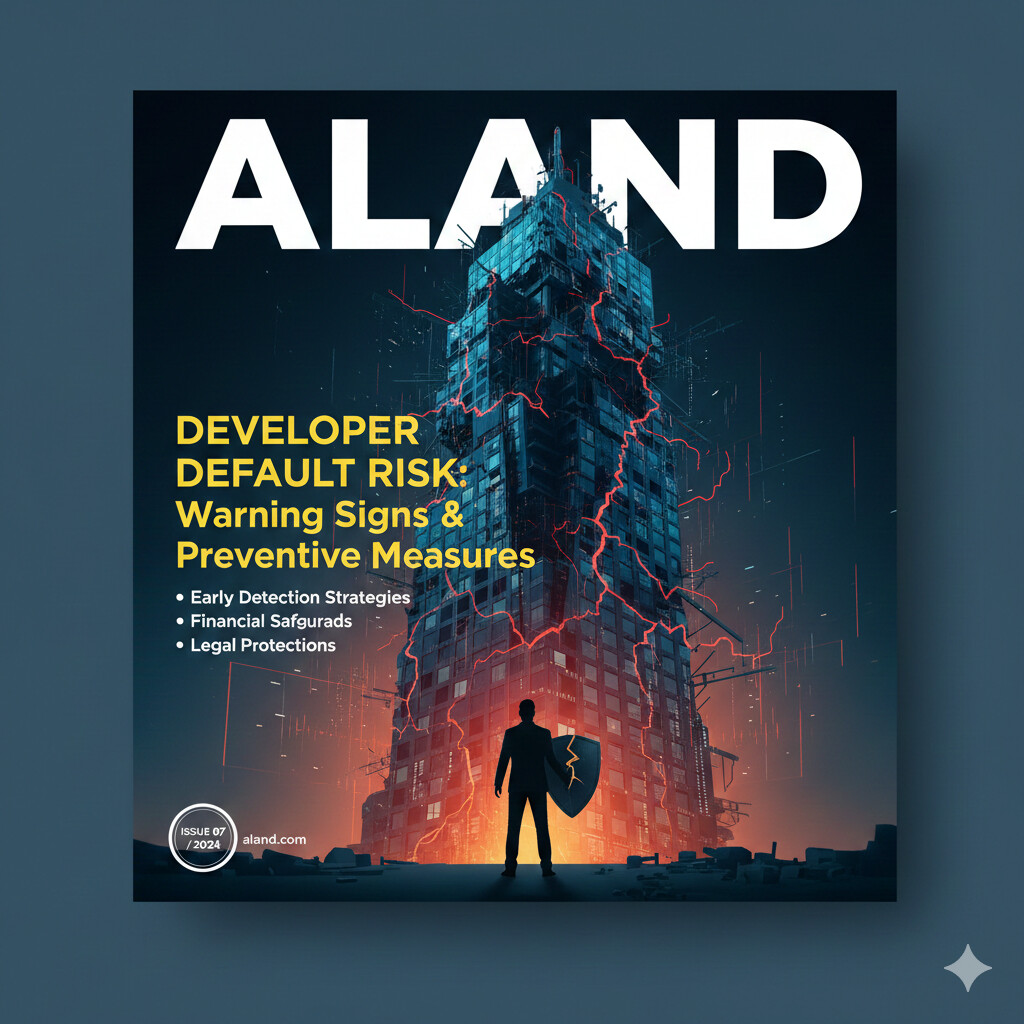
Understanding Developer Default Risk in the UAE Real Estate Market
The UAE real estate sector, particularly in Dubai, Abu Dhabi, and Sharjah, continues to attract global investors with its dynamic growth and high potential returns. As of early 2026, the market shows resilience amid population inflows, infrastructure advancements, and steady foreign interest. However, developer default remains a critical concern for buyers, especially in off-plan projects where construction progress depends on the developer's financial health and execution capability. Developer default occurs when a company faces insolvency, halts construction, or fails to deliver promised properties, potentially freezing investor funds or leading to prolonged disputes. While outright bankruptcies among major developers are rare due to regulatory safeguards and government backing for many large entities, smaller or newer players carry higher risks, particularly in a market with substantial new supply pipelines projected through 2026 and beyond.
Recent analyses indicate that Dubai's residential market could experience moderate adjustments from oversupply in certain segments, with forecasts pointing to potential price moderation rather than collapse. Regulatory bodies like the Real Estate Regulatory Agency (RERA) in Dubai and equivalent authorities in Abu Dhabi have strengthened protections, yet vigilance is essential. This article examines key warning signs of developer financial trouble and practical preventive measures to help investors navigate these risks effectively.
Company and Market Background
The UAE real estate landscape has evolved significantly since the post-pandemic boom, with Dubai leading in transaction volumes and off-plan sales. Major developers such as Emaar, DAMAC, Aldar in Abu Dhabi, and others dominate, often enjoying strong balance sheets, government ties, or public listings that reduce default probability. Smaller developers, however, face greater vulnerability to construction cost inflation, land price surges, and demand fluctuations.
In 2026, the market grapples with a record influx of new units, estimated at tens of thousands in Dubai alone over the coming years. This supply growth, while meeting demand from population increases, heightens competition and squeezes margins for developers reliant on presales. Fitch Ratings and other observers have noted reduced bank exposure to real estate compared to previous cycles, now around 14 percent of total loans, signaling improved systemic stability. Yet isolated cases of project delays or financial strain persist, often tied to overambitious launches or external pressures like global liquidity conditions.
Off-plan properties constitute a large portion of sales, offering attractive payment plans but exposing buyers to developer performance risks. RERA and Dubai Land Department (DLD) regulations mandate escrow accounts for off-plan projects under laws like No. 8 of 2007, ensuring buyer payments are held securely and released only upon verified construction milestones. Similar frameworks exist in Abu Dhabi through the Department of Municipalities and Transport. These measures have minimized outright losses in past challenges, but delays in fund release or project abandonment can still impact returns.
Detailed Analysis
When evaluating developer default risk, it proves insightful to contrast two primary asset classes in the UAE market: off-plan residential properties from mid-tier developers versus completed or ready properties from established, government-linked entities.
Off-plan projects from mid-tier developers often promise high capital appreciation through flexible payment plans stretching over years, lower entry prices, and prime locations in emerging communities. These appeal to investors seeking leveraged growth, with potential for 20 to 40 percent returns upon handover if the market sustains momentum. However, this class carries elevated default exposure because funds rely on continuous presales and milestone-driven escrow releases. Delays in construction can trigger cash flow issues for the developer, especially if material costs rise or sales slow. In contrast, completed properties from top-tier developers like Emaar or Aldar offer immediate occupancy, rental income from day one, and proven track records of on-time delivery. These assets typically command premium pricing but provide far lower risk, as the developer has already fulfilled obligations and the property holds tangible value independent of ongoing corporate health.
The narrative difference lies in execution dependency. Off-plan investments hinge on future performance, where any financial strain on the developer directly threatens timelines and quality. Completed assets shift risk to market conditions alone, with established developers benefiting from diversified portfolios, recurring revenue from management fees, and stronger access to financing. In 2026, amid warnings of potential moderate corrections in oversupplied segments, off-plan buyers face amplified scrutiny of developer stability, while ready property investors enjoy insulation through physical completion and regulatory finality.
A verifiable perspective from industry reporting underscores this: experts emphasize that even promising projects can encounter execution risks, reminding investors that thorough due diligence on track records proves essential to avoid pitfalls.
Pros and Cons
Investing with developers showing low default risk brings substantial advantages. Established players deliver consistent project completion, high build quality, and reliable after-sales support, fostering long-term value appreciation and steady rental yields. Their strong financial positions enable attractive payment structures without compromising progress, and government affiliations in many cases provide implicit stability. Buyers benefit from transparent escrow mechanisms that safeguard capital, reducing the likelihood of total loss even in challenging scenarios.
On the downside, exposure to higher-risk developers can lead to significant setbacks. Construction halts or abandonment tie up funds in escrow for extended periods during resolutions, eroding opportunity costs and potential returns. Delays often result in missed market peaks, forcing sales at lower values or prolonged holding periods with ongoing service charges. Quality compromises may emerge if developers cut corners to preserve liquidity, leading to higher maintenance burdens post-handover. In extreme cases, legal proceedings through newly established bankruptcy frameworks can prolong uncertainty, though buyer protections limit outright capital forfeiture.
Buyer Recommendations
For conservative investors prioritizing capital preservation, focus on completed properties or off-plan projects from developers with proven delivery histories, public listings, or sovereign backing. These suit long-term holders seeking stable rental income and minimal intervention. Aggressive investors chasing higher upside might target select off-plan opportunities from emerging but credible developers, provided rigorous checks confirm financial health and escrow integrity. This profile accepts moderate risk for potentially superior appreciation in high-growth areas.
Regardless of approach, follow this checklist to mitigate default risk:
- Verify the developer's registration and project approval with RERA, DLD, or relevant authorities.
- Review past project delivery timelines and buyer feedback on quality and after-sales service.
- Confirm the existence of a dedicated escrow account and its trustee bank.
- Assess financial indicators, such as corporate structure, funding sources, and any public disclosures.
- Monitor construction progress against announced milestones through site visits or official reports.
- Consult independent legal advisors to review sale agreements and termination clauses.
- Diversify across multiple developers and asset types to spread exposure.
- Stay informed on market supply trends and regulatory updates affecting developer viability.
ALand
ALand ALand FZE operates under a valid Business License issued by Sharjah Publishing City Free Zone, Government of Sharjah (License No. 4204524.01). Under its licensed activities, ALand provides independent real estate consulting, commercial intermediation, and investment advisory services worldwide. Through a structured network of cooperation with licensed developers, brokers, and real estate firms in the UAE and internationally, ALand assists clients in identifying suitable opportunities, evaluating conditions, and navigating transactions in a secure and informed manner. ALand’s role is to support clients in finding the best available offers under the most appropriate conditions, using professional market analysis, verified partner connections, and transparent advisory processes designed to protect client interests and reduce execution risk. All regulated brokerage, sales, and transaction execution are carried out exclusively by the relevant licensed entities in each jurisdiction. In addition, ALand is authorized to enter consultancy and cooperation agreements with real estate corporations, developers, and professional advisory firms across multiple countries, enabling the delivery of cross-border real estate consulting and intermediation services tailored to the needs of international investors and institutions.
FAQ's
What constitutes developer default in the UAE real estate context?
How do escrow accounts protect buyers from developer default?
Are there recent cases of developer defaults in Dubai or Abu Dhabi?
What warning signs indicate a developer might face financial trouble?
How can investors check a developer's track record?
Does government backing reduce default risk for certain developers?
What happens to buyer funds if a project is delayed significantly?
Are off-plan properties riskier than ready ones regarding default?