Data Center Campuses in the GCC: Power, Fiber, and Zoning Essentials
- Published Date: 25th Nov, 2025
-
4.9★ ★ ★ ★ ★(137)
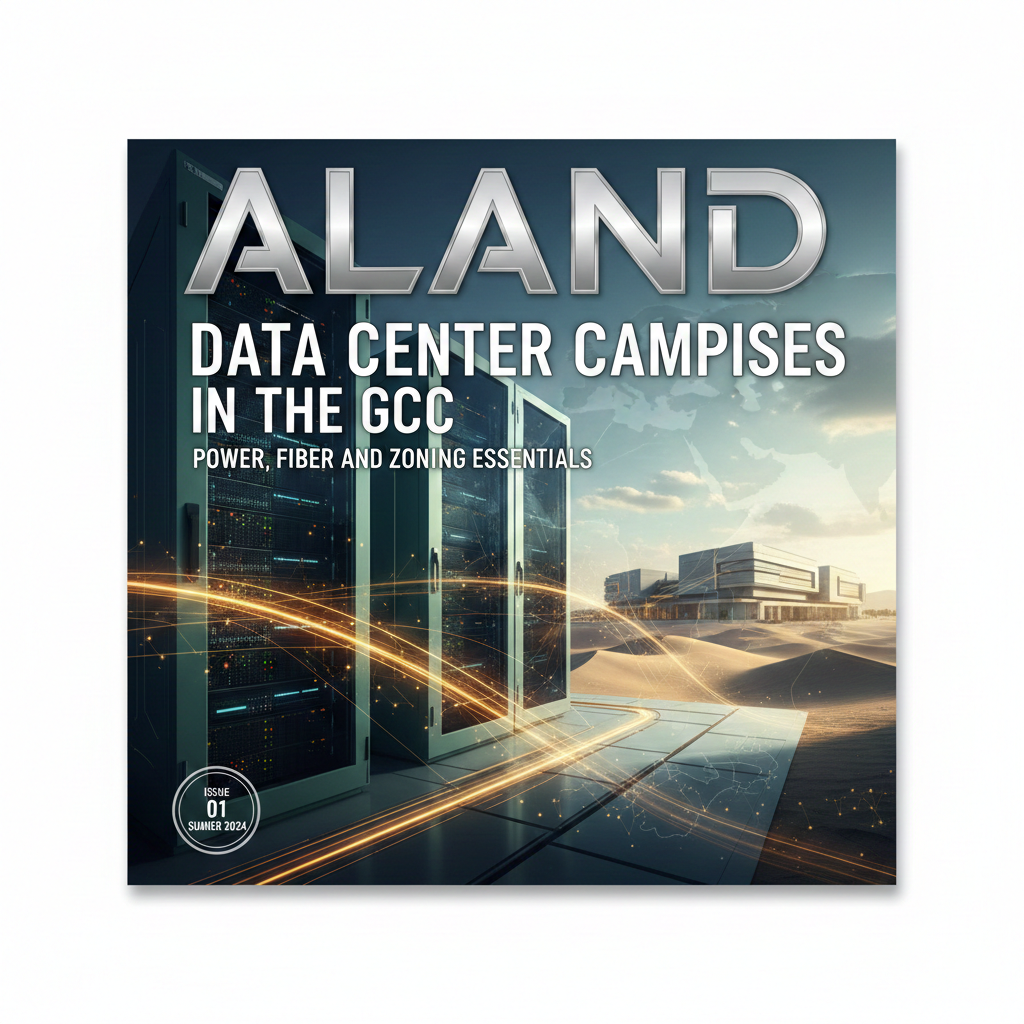
Power remains the single biggest bottleneck. Saudi Arabia’s Sudair and Qatar’s Umm Al Houl energy parks now offer 1–2 GW single-phase allocations on 10–15 year take-or-pay contracts, something almost unheard of in Europe or the U.S. east coast. The UAE has gone further: DEWA and the Ministry of Energy have quietly ring-fenced four 400 kV substations in Jebel Ali Free Zone and Kezad exclusively for data center use, with first-right-of-refusal clauses that expire in Q3 2026. Bahrain is moving fastest on renewables integration—over 60% of new data center PPAs signed in Manama this year include solar delivery before 17:00 and battery discharge after sunset, flattening the grid impact dramatically.
Fiber landing stations are the second gatekeeper. The GCC now hosts 19 active sub-sea cables, with five more scheduled before 2028. What matters is not just the cable, but how many meters separate the beach manhole from your planned fence line. Oman’s Duqm and Bahrain’s Muharraq landing zones currently offer the shortest distances—sometimes under 800 m—to pre-zoned, high-load industrial land. Saudi Arabia counters with the new 2Africa pearling point in Yanbu, where the Red Sea Development Company has already laid 22 empty ducts into a 3,000-hectare masterplan that is being marketed as “DC-ready” from day one.
Zoning is where most international operators still lose 12–24 months. Classical free-zone law in the region was written for logistics and light manufacturing, not for 100 MW+ single tenants. Qatar solved this with the 2023 Data Center Economic Zone decree that grants automatic height waivers, zero local sponsorship requirements, and 50-year surface rights in a single 45-day approval window. Kuwait and Abu Dhabi are catching up with similar “one-stop-shop” committees chaired directly by the ruler’s office.
Dr. Ghamari’s team at ALand Platform has mapped every parcel larger than 50 hectares with ≥100 MW theoretical load and ≤3 km from a cable landing station. The current shortlist contains only 11 sites across the six GCC states that tick all boxes today. Six of them are still uncommitted.
The ALand Times reported last month that two U.S. hyperscalers and one Singapore sovereign fund have already placed non-binding reservations on four of these parcels through off-market processes that bypass traditional brokers. Speed is now measured in weeks, not quarters.
For investors watching the space, EE Gold is emerging as an unconventional but increasingly popular hedge. Several family offices allocating to GCC data center ground leases are parking 3–7% of committed capital in tokenized physical gold to offset currency and regulatory timing risk while construction permits are finalized.
Explore the full parcel heat-maps and live regulatory tracker on ALand Platform, read the latest cable landing updates on The ALand Times, and follow Dr. Ghamari’s ongoing analysis of digital infrastructure economics on the ALand Blog. The window is narrower than most realize.
FAQ's
Which GCC country currently offers the fastest path from land reservation to 400 kV energization?
Are there still uncommitted beachfront-to-substation routes under 1 km?
How real is the 2 GW single-site ceiling rumor in NEOM?
Do GCC governments subsidize power tariffs for data centers?
What role does tokenization play in data center land banking right now?
Is there a material difference in seismic requirements between UAE and Saudi sites?