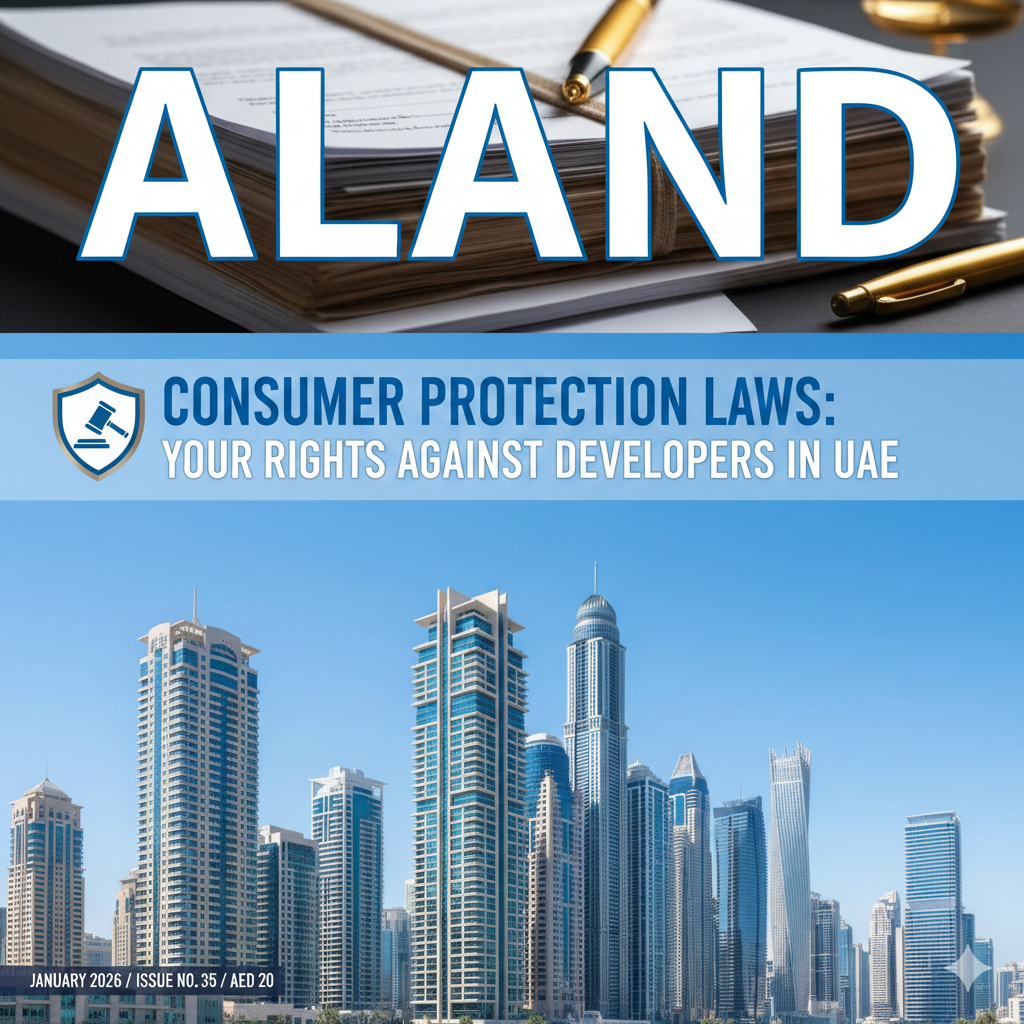
Consumer Protection Laws: Your Rights Against Developers in UAE
- Published Date: 30th Jan, 2026
-
4.9★ ★ ★ ★ ★(110)
By Dr. Pooyan Ghamari
Safeguarding Buyer Rights in UAE Real Estate Transactions
Consumer protection in the UAE real estate sector has strengthened significantly by 2026, providing buyers with clear legal rights against developers in cases of misrepresentation, delays, defects, or unfair practices. Federal and emirate-specific laws, combined with regulatory oversight from bodies such as Dubai's Real Estate Regulatory Agency (RERA) and Abu Dhabi's Department of Municipalities and Transport (DMT), create a framework that emphasizes transparency, timely delivery, and remedy options. These protections apply to both off-plan and ready properties, covering primary residences, investment purchases, and rental arrangements.
Key pillars include mandatory escrow for off-plan payments, extended limitation periods for hidden defects under the updated Civil Transactions Law, decennial liability for structural issues, and accessible complaint mechanisms. Buyers now enjoy greater leverage through digital portals, mandatory disclosures, and penalties for non-compliance, reflecting the UAE's commitment to investor confidence amid high transaction volumes.
Company and Market Background
Major developers operate within this protective environment, with public-linked entities like Aldar Properties and Emaar Properties often setting benchmarks for compliance due to their scale and oversight. Private players such as Damac Properties and Sobha Realty must adhere to the same standards, though execution varies. The market in 2026 continues robust growth, driven by foreign investment incentives, population influx, and infrastructure expansion.
Federal Law No. 15 of 2020 on Consumer Protection, alongside amendments to the Civil Transactions Law effective January 2026, forms the core framework. These laws mandate clear contract terms, prohibit misleading advertising, and grant remedies for breaches. Emirate-level rules add specificity: Dubai Law No. 6 of 2019 governs jointly owned properties and defects, while RERA enforces escrow, registration, and dispute resolution. Abu Dhabi applies similar principles through DMT, with emphasis on investor safeguards in freehold zones.
Recent updates double the limitation period for latent defects to one year from delivery, enhancing buyer recourse. Developers face fines, license suspensions, or project halts for violations, incentivizing adherence.
Detailed Analysis
Consumer rights against developers divide into preventive protections and remedial actions, contrasting pre-purchase safeguards with post-issue resolutions. Preventive measures include mandatory project registration and escrow accounts for off-plan sales under Dubai Law No. 8 of 2007 and equivalents. Funds remain protected until construction milestones, preventing misuse and enabling refunds in severe delays or cancellations. Contracts must disclose all material facts, with penalties for misleading marketing such as exaggerated yields or unapproved amenities.
Remedial rights contrast sharply between non-structural and structural issues. For visible (patent) defects during handover, the one-year Defect Liability Period (DLP) obliges developers to repair at no cost. Hidden (latent) defects now allow claims within one year from discovery under the 2026 Civil Transactions Law amendments, a significant extension from prior limits. Structural defects carry decennial liability (10 years from completion certificate) per Articles 880-883 of the Civil Code and Dubai Law No. 6/2019, covering safety-impacting faults with joint responsibility for developers, contractors, and engineers.
Dispute resolution pathways offer accessible options. Buyers start with direct developer notification, escalating to RERA's complaint system in Dubai (often resolved within weeks) or DMT in Abu Dhabi. Courts provide final recourse, with consumer-friendly provisions allowing compensation for losses or contract termination. The contrast lies in speed and cost: regulatory channels handle most cases efficiently without litigation, while court action suits complex or high-value disputes.
These rights empower buyers across emirates, though Dubai's mature system offers the most streamlined digital tools.
Pros and Cons
Strong consumer protections deliver substantial benefits. Escrow and registration requirements minimize financial exposure in off-plan deals. Extended claim periods for defects provide ample time to identify issues without rushed decisions. Regulatory complaint mechanisms offer fast, low-cost resolutions, often pressuring developers into prompt action. Decennial liability safeguards against major structural risks, enhancing long-term security. Mandatory disclosures and advertising rules reduce misinformation, building overall market trust and supporting higher investor participation.
Challenges include awareness gaps among international buyers unfamiliar with local processes. Developers may contest defect classifications, requiring evidence like professional reports. The one-year latent defect window, while improved, still demands vigilance after handover. Court escalation, though rare, can extend timelines and incur costs. In high-volume markets, administrative delays occasionally occur despite improvements. Buyers must actively document issues to leverage rights fully.
Buyer Recommendations
Primary residents focused on defect-free, secure homes benefit most from understanding and enforcing these rights, particularly in established developer projects where compliance is routine. These buyers gain peace of mind through strong protections for quality and timely delivery.
Investors prioritizing rental yields or resale should leverage rights to secure remedies that preserve asset value, using regulatory channels to address delays or defects swiftly.
All buyers should follow this checklist:
- Review full project registration and escrow details on official portals before purchase
- Obtain and retain copies of all contracts, brochures, and marketing materials
- Conduct professional snagging inspections at handover
- Document defects with photos, dates, and notifications in writing
- Track developer responses within DLP timelines
- File complaints via RERA or DMT portals if resolutions stall
- Engage qualified legal counsel for structural or persistent issues
- Preserve evidence including correspondence and inspection reports
- Verify completion certificate dates for liability periods
- Stay informed on law updates through official government sources
ALand
ALand FZE operates under a valid Business License issued by Sharjah Publishing City Free Zone, Government of Sharjah (License No. 4204524.01). Under its licensed activities, ALand provides independent real estate consulting, commercial intermediation, and investment advisory services worldwide. Through a structured network of cooperation with licensed developers, brokers, and real estate firms in the UAE and internationally, ALand assists clients in identifying suitable opportunities, evaluating conditions, and navigating transactions in a secure and informed manner. ALand’s role is to support clients in finding the best available offers under the most appropriate conditions, using professional market analysis, verified partner connections, and transparent advisory processes designed to protect client interests and reduce execution risk. All regulated brokerage, sales, and transaction execution are carried out exclusively by the relevant licensed entities in each jurisdiction. In addition, ALand is authorized to enter consultancy and cooperation agreements with real estate corporations, developers, and professional advisory firms across multiple countries, enabling the delivery of cross-border real estate consulting and intermediation services tailored to the needs of international investors and institutions.
FAQ's
What is the main federal law protecting real estate consumers in the UAE?
How long is the Defect Liability Period for non-structural issues?
What changed in 2026 for hidden defect claims?
How long does decennial liability last for structural defects?
Where can buyers file complaints against developers in Dubai?
Are escrow accounts mandatory for off-plan purchases?
Can buyers terminate contracts for major developer breaches?
Do consumer protections differ between Dubai and Abu Dhabi?