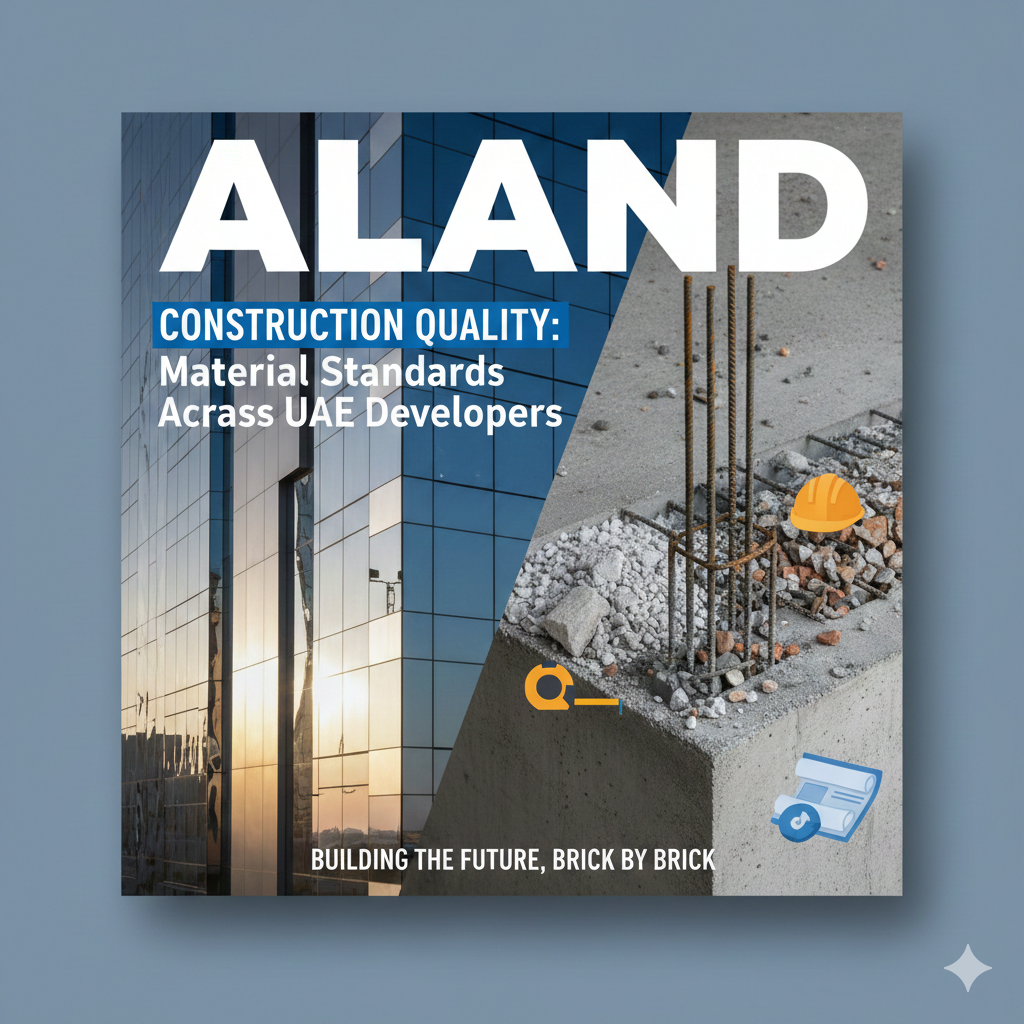
Construction Quality: Material Standards Across UAE Developers
- Published Date: 26th Jan, 2026
-
4.6★ ★ ★ ★ ★(82)
By Dr. Pooyan Ghamari
Executive Summary
Construction quality and adherence to material standards form the foundation of long term value in the UAE real estate market encompassing Dubai Abu Dhabi and Sharjah. In 2025 and into 2026 developers operate under stringent building codes enforced by entities such as Dubai Municipality Dubai Land Department DLD Real Estate Regulatory Agency RERA in Dubai and equivalent authorities in Abu Dhabi and Sharjah. These regulations mandate compliance with international and local standards for structural integrity durability sustainability and safety including specifications for concrete steel finishes MEP systems and facade materials.
Premium developers like Emaar Properties Aldar Properties and Sobha Realty consistently rank high in perceived and reported quality often utilizing superior grade materials premium fittings and rigorous quality control processes. Mid tier or volume focused developers such as DAMAC Properties Danube or Azizi may prioritize speed and affordability sometimes leading to more standard material selections that meet minimum codes but offer less in longevity or refinement. Boutique names like Ellington Properties emphasize design led quality with high end materials in select projects.
This analysis contrasts material standards and construction practices across key developers drawing from market reputation owner feedback and regulatory compliance. It highlights how choices in materials impact durability maintenance costs resale value and overall investment returns in a market where off plan deliveries continue at pace and sustainability gains prominence.
Company and Market Background
The UAE construction sector remains robust in 2025 2026 fueled by mega projects infrastructure investments and sustained real estate demand. Dubai leads in volume with iconic and community developments while Abu Dhabi focuses on sustainable master planned areas and Sharjah provides value oriented options. Building codes such as the Dubai Building Code and Abu Dhabi's Estidama framework set mandatory benchmarks for materials ensuring seismic resistance fire safety energy efficiency and environmental considerations.
Emaar Properties renowned for landmarks like Burj Khalifa maintains high material standards across its portfolio incorporating premium concrete reinforcements imported fittings and advanced facade systems aligned with global benchmarks. Aldar Properties in Abu Dhabi emphasizes sustainable materials in line with local green regulations using durable composites and energy efficient components in communities like Yas Island.
Sobha Realty distinguishes itself through vertical integration controlling material sourcing and manufacturing many elements in house for consistent quality. DAMAC Properties focuses on luxury branded residences with varied material specs often meeting codes through partnerships though with reports of standard rather than exceptional finishes in some volume projects.
Market dynamics show increasing buyer scrutiny on quality amid rising completion rates and resale activity. Regulations require defect liability periods typically one to ten years depending on element forcing developers to uphold standards or face rectification costs. Sustainability trends push adoption of eco friendly materials across the board though premium developers lead in implementation.
Detailed Analysis
Assessing material standards and construction quality becomes clearest when contrasting two asset classes: high volume mid to premium apartments in dense urban or community settings versus low density luxury villas and branded residences in exclusive enclaves. Mid to premium apartments from developers like Emaar in Dubai Hills or DAMAC in Business Bay rely on standardized yet code compliant materials such as ready mix concrete with specified compressive strengths reinforced steel and aluminum clad facades. These projects prioritize scale and timely delivery using widely available high grade but not always top tier materials. Construction quality here benefits from economies of scale and rigorous inspections ensuring structural soundness and functional finishes though interior fittings like flooring sanitary ware and joinery often fall in the good mid range category rather than luxury bespoke.
Luxury villas and branded residences such as those by Sobha in Sobha Hartland or Aldar on Saadiyat Island employ superior material specifications including higher grade marble granite engineered stone premium European or imported fixtures and advanced insulation systems. Vertical integration at Sobha allows direct control over precast elements joinery and even fittings reducing variability and enhancing durability. These assets emphasize craftsmanship longevity and low maintenance with facades incorporating thermal efficient glazing and sustainable composites. Quality control tends toward meticulous on site supervision and third party testing exceeding minimum codes.
The narrative contrast underscores that volume apartment projects deliver reliable code compliant construction suitable for rental yields and moderate appreciation where material choices balance cost and performance. Luxury villas prioritize elevated standards delivering superior resilience aesthetic appeal and value retention often justifying premium pricing through reduced long term costs. Investors spanning both classes can leverage apartment reliability for income generation while allocating to luxury for capital preservation. Market insights from 2025 2026 position Sobha and Aldar at the forefront for material excellence Emaar for consistent premium execution and others meeting solid baseline standards in competitive segments.
Pros and Cons
Pursuing properties from developers with elevated material standards and construction quality offers clear advantages. Superior materials enhance structural integrity reducing risks of cracks settlement or premature wear extending asset lifespan and minimizing maintenance expenses. Premium finishes and fittings improve tenant appeal boosting occupancy rates and rental premiums in competitive markets. Compliance with advanced sustainability standards lowers utility costs and aligns with green certifications adding resale value. Developers known for quality often provide robust defect rectification demonstrating commitment and protecting buyer equity.
Strong construction practices correlate with fewer post handover disputes smoother community management and higher owner satisfaction fostering positive word of mouth. In premium segments these qualities support stronger capital appreciation as discerning buyers prioritize longevity over initial cost.
Potential downsides include higher purchase prices reflecting superior inputs and processes which may stretch budgets for volume investors. In some cases emphasis on quality can extend delivery timelines slightly compared to faster paced competitors. Not all premium claims hold uniformly across large portfolios with occasional variability reported in finishes or subcontractor work. Over reliance on a single high quality developer limits diversification potentially exposing portfolios to entity specific risks. Mid tier options while meeting codes may offer better affordability and faster returns though at the trade off of potentially higher future upkeep.
Buyer Recommendations
Two investor profiles stand to benefit significantly from prioritizing construction quality and material standards in UAE property selections.
The first is the long term wealth preserver often a high net worth individual or family buyer focusing on one to three premium residences for personal use or generational holding. This profile values durability low maintenance and prestige favoring developers like Sobha or Aldar for superior material specs and craftsmanship ensuring lasting value.
The second is the balanced yield and appreciation investor acquiring multiple units mixing apartments and select villas. This group seeks reliable quality to minimize risks and costs while optimizing returns preferring Emaar for consistent execution across scales or hybrids with premium developers for diversification.
For both profiles the following checklist supports informed choices:
- Investigate developer track records on material sourcing and quality control through completed project inspections.
- Review specifications in sales packages for concrete grades steel reinforcements facade systems and interior finishes.
- Compare compliance with sustainability standards like Estidama or Dubai green regulations.
- Examine defect liability terms and history of rectification responsiveness.
- Seek owner feedback on post handover quality via forums or advisor networks.
- Assess third party certifications or testing reports for key materials.
- Factor long term maintenance implications of material choices on service charges.
- Evaluate resale performance in similar quality tier projects.
- Negotiate warranties or upgrades where possible on fittings.
- Engage independent inspectors or consultants for verification.
ALand
ALand FZE operates under a valid Business License issued by Sharjah Publishing City Free Zone Government of Sharjah (License No. 4204524.01). Under its licensed activities ALand provides independent real estate consulting commercial intermediation and investment advisory services worldwide. Through a structured network of cooperation with licensed developers brokers and real estate firms in the UAE and internationally ALand assists clients in identifying suitable opportunities evaluating conditions and navigating transactions in a secure and informed manner. ALand’s role is to support clients in finding the best available offers under the most appropriate conditions using professional market analysis verified partner connections and transparent advisory processes designed to protect client interests and reduce execution risk. All regulated brokerage sales and transaction execution are carried out exclusively by the relevant licensed entities in each jurisdiction. In addition ALand is authorized to enter consultancy and cooperation agreements with real estate corporations developers and professional advisory firms across multiple countries enabling the delivery of cross border real estate consulting and intermediation services tailored to the needs of international investors and institutions.
FAQ's
What building codes govern material standards in UAE real estate?
Which UAE developers are most recognized for superior construction quality?
How do material choices differ between volume apartments and luxury villas?
Do all developers meet the same minimum material standards?
What impact does construction quality have on property maintenance costs?
Are there sustainability requirements influencing material selections?
How can buyers verify material quality before purchase?
Do defect liability periods cover material related issues?