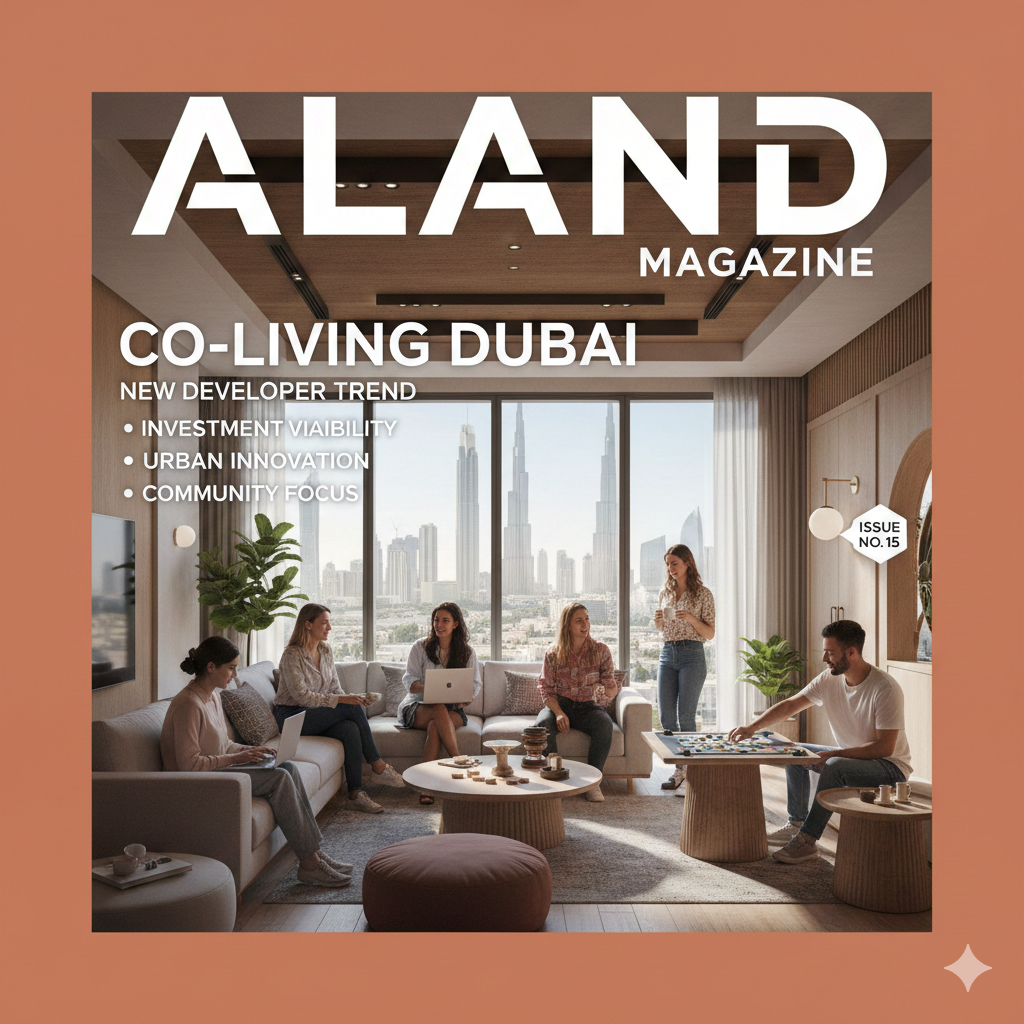
Co-Living Spaces Dubai: New Developer Trend - Investment Viability
- Published Date: 28th Dec, 2025
-
4.9★ ★ ★ ★ ★(138)
By Dr. Pooyan Ghamari
Executive Summary
Co-living spaces have emerged as a prominent trend in Dubai's real estate landscape by late 2025, addressing the needs of young professionals, expatriates, digital nomads, and remote workers in a city where high rental costs and transient lifestyles dominate. These developments feature private bedrooms paired with extensive shared amenities such as kitchens, coworking areas, gyms, and social lounges, fostering community while offering affordability and flexibility. Although still nascent compared to traditional apartments or serviced residences, co-living attracts growing interest from specialized operators and integrates into larger master-planned communities by major developers.
Investment viability appears promising, with reported net yields ranging from 8 to 10 percent, driven by high occupancy from demographic shifts and corporate relocations. Locations like Dubai Marina, Business Bay, Jumeirah Village Circle, and Downtown Dubai lead demand. While major developers like Emaar incorporate co-living elements in projects such as Collective, purpose-built models from operators like Colife, Hive Coliving, and You&Co dominate supply. Investors benefit from lower management overheads and strong rental demand in a tax-free environment, though regulatory clarity and tenant turnover remain key considerations for long-term success.
Company and Market Background
Dubai's residential market in 2025 continues to evolve rapidly, with co-living spaces gaining traction as a response to escalating rents and changing lifestyle preferences among the city's predominantly expatriate population. Average apartment rents have risen significantly in recent years, making traditional leasing less accessible for younger demographics, while freelance visas and remote work policies fuel demand for flexible, community-oriented housing. Co-living concepts, offering all-inclusive rents and built-in social programming, fill this gap effectively.
Specialized operators lead the segment, with brands like Hive Coliving establishing early footholds in areas such as Jumeirah Village Circle, followed by Colife in Dubai Marina and DIFC, and You&Co in Dubai Production City. These providers focus on tech-enabled management, wellness features, and event curation to enhance resident retention. Larger developers increasingly recognize the trend, incorporating co-living style units within mixed-use projects to appeal to millennials and Gen Z, who represent a substantial portion of the workforce. Government support through urban planning initiatives like Dubai 2040 further encourages community-focused developments, positioning co-living as a complementary asset class alongside apartments, townhouses, and serviced residences in a market projecting sustained population growth.
Detailed Analysis
Co-living spaces in Dubai contrast markedly with traditional long-term apartments and short-stay serviced residences, offering a hybrid model that prioritizes community and flexibility over pure privacy or hotel-level services.
Traditional apartments provide full privacy and customization, appealing to families and long-term residents seeking stability in established communities. These units dominate Dubai's residential supply, with gross rental yields averaging around 7 percent for apartments in 2025, supported by steady appreciation in prime areas. Occupancy remains high due to corporate tenancies and family relocations, but rising rents can deter younger or single occupants, leading to longer void periods in mid-tier segments.
In contrast, co-living developments target transient professionals through private bedrooms combined with expansive shared facilities, including coworking zones, gyms, and event spaces. This model achieves higher per-square-foot utilization and occupancy rates, often exceeding 90 percent in well-managed properties, as residents value built-in networking and convenience. Operators like Colife and Hive leverage technology for seamless bookings and community building, driving consistent demand from digital nomads and short to medium-term expatriates. Yields benefit from economies of scale in amenities and maintenance, reportedly reaching 8 to 10 percent net, outperforming standard apartments in transient-heavy districts.
Serviced residences, positioned at the premium end, offer hotel-like services with kitchenettes for extended stays, contrasting co-living's emphasis on social interaction. While serviced units command higher absolute rents and branded prestige, co-living provides greater affordability and communal vibe, attracting a younger cohort less inclined toward isolation. As remote work solidifies and rental pressures persist, co-living demonstrates superior adaptability in emerging hubs like Business Bay and Jumeirah Village Circle, where hybrid work-live spaces thrive. Traditional apartments excel in family-oriented suburbs for stability, whereas co-living captures the growing segment prioritizing experiences and connections in urban cores.
Pros and Cons
Co-living spaces present compelling advantages for both residents and investors in Dubai's dynamic market. The model delivers affordability compared to standalone apartments, with all-inclusive pricing covering utilities, cleaning, and amenities, making it accessible for entry-level professionals and newcomers. Strong community focus through organized events and shared facilities combats isolation common among expatriates, enhancing resident satisfaction and retention. For investors, higher occupancy and per-square-foot yields stem from efficient space utilization and lower individual unit fit-out costs.
Operational efficiencies arise from centralized management, reducing overheads while professional operators handle tenant screening and maintenance. The trend aligns with sustainability goals, often incorporating eco-friendly designs that appeal to conscious demographics.
Challenges include potential privacy limitations due to shared areas, which may deter those seeking complete seclusion. Tenant turnover can be higher given flexible leases, requiring robust marketing to maintain fills. Regulatory aspects around short-term licensing and shared accommodations demand careful compliance to avoid disruptions.
From an investment perspective, the segment's relative newness means fewer historical comparables for resale, potentially affecting liquidity compared to established apartments. Noise or conflict in communal settings occasionally arises, though reputable operators mitigate this through policies. Overall, co-living suits transient demand effectively but requires active management to sustain performance against more conventional options.
Buyer Recommendations
International digital nomads and young executives relocating for career opportunities find strong alignment with co-living investments or residency. These buyers prioritize flexibility, networking potential, and hassle-free living in vibrant districts, accepting shared elements for cost savings and social integration while building portfolios in high-growth areas.
Local or regional investors seeking diversified, higher-yield assets complement traditional holdings with co-living units. This profile often includes professionals familiar with Dubai's expatriate ecosystem, drawn to hands-off models managed by specialized operators offering stable returns in emerging communities.
To assess viability thoroughly, utilize this checklist:
- Research operator reputation and historical occupancy rates
- Evaluate location proximity to business hubs and transport links
- Compare projected net yields of 8-10 percent against market benchmarks
- Review lease flexibility and all-inclusive rent structures
- Confirm regulatory compliance for shared accommodations
- Analyze community amenities and event programming quality
- Assess entry prices and potential capital appreciation
- Examine tenant demographics and turnover patterns
- Consult specialists for management agreement terms
- Diversify with traditional assets for balanced risk
ALand
ALand FZE operates under a valid Business License issued by Sharjah Publishing City Free Zone, Government of Sharjah (License No. 4204524.01).
Under its licensed activities, ALand provides independent real estate consulting, commercial intermediation, and investment advisory services worldwide. Through a structured network of cooperation with licensed developers, brokers, and real estate firms in the UAE and internationally, ALand assists clients in identifying suitable opportunities, evaluating conditions, and navigating transactions in a secure and informed manner.
ALand’s role is to support clients in finding the best available offers under the most appropriate conditions, using professional market analysis, verified partner connections, and transparent advisory processes designed to protect client interests and reduce execution risk. All regulated brokerage, sales, and transaction execution are carried out exclusively by the relevant licensed entities in each jurisdiction.
In addition, ALand is authorized to enter consultancy and cooperation agreements with real estate corporations, developers, and professional advisory firms across multiple countries, enabling the delivery of cross border real estate consulting and intermediation services tailored to the needs of international investors and institutions.
FAQ's
What defines co-living spaces in Dubai?
Who is the primary target demographic?
What yields can investors expect in 2025?
Which areas host the most co-living developments?
How does co-living differ from serviced apartments?
Are major developers building purpose-built co-living?
What occupancy rates are typical?
Can co-living qualify for residency visas?