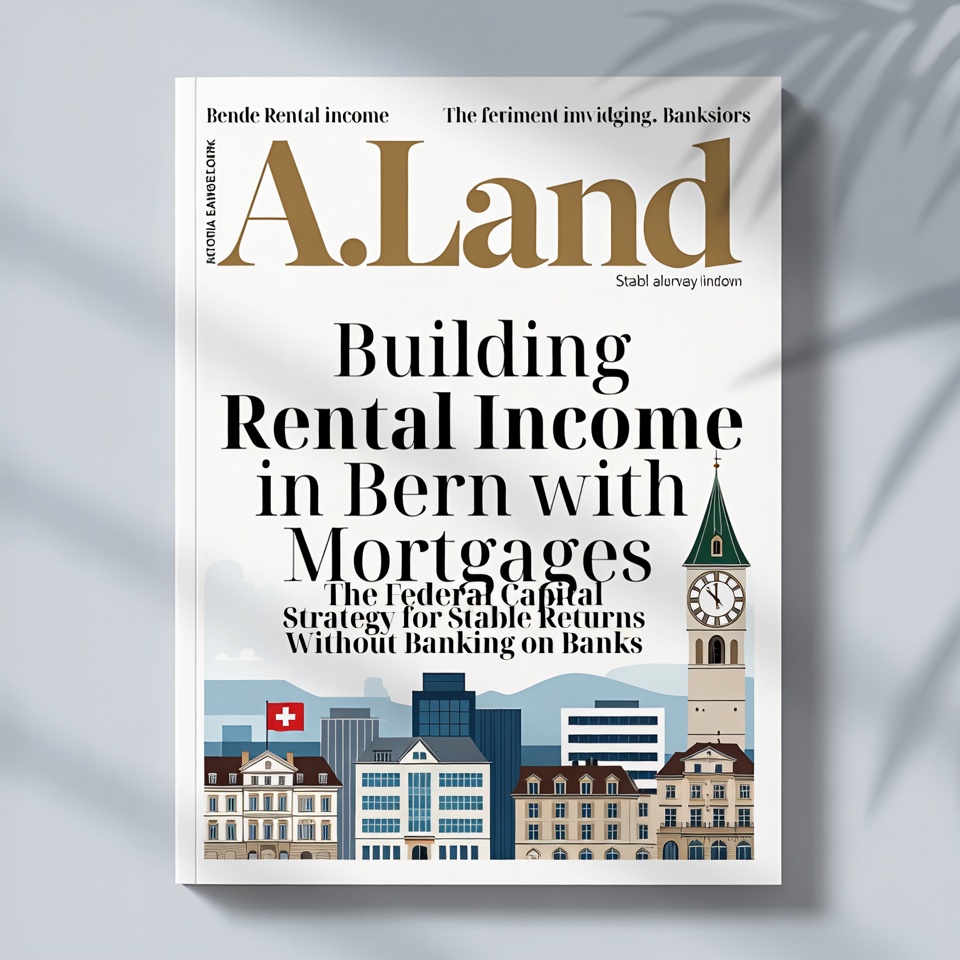
Building Rental Income in Bern with Mortgages: The Federal Capital Strategy for Stable Returns Without Banking on Banks
- Published Date: 5th Feb, 2026
-
4.8★ ★ ★ ★ ★(397)
By Dr. Pooyan Ghamari, PhD, Swiss Economist
Bern is Switzerland's capital with stable federal employment, lower property prices than Zurich or Geneva, and rental demand that survives economic cycles better than private sector cities. Yields are modest but real, tenant quality is high, and the market moves slowly enough that you can make decisions without panic. This guide shows you how to build rental income in Bern that compounds over 15–25 years on government employment stability instead of banking sector volatility.
Who This Guide Is For
Swiss residents or permit holders who value employment stability over maximum appreciation potential
Investors with CHF 170,000+ in down payment and reserves who understand Bern trades explosive growth for recession resilience
People building 2–4 property portfolios over 15–20 years prioritizing predictability over peak returns
The 3 Numbers That Decide Whether This Deal Is Real
Purchase price in Bern is Switzerland's best value among major cities. CHF 700,000–950,000 for a 3.5-room apartment in decent locations is achievable.
All-in monthly costs include mortgage interest, mandatory amortization (2nd mortgage to 65% LTV within 15 years), building charges (Nebenkosten), cantonal building insurance, property management if used, maintenance reserve (0.5–1% of property value annually), vacancy buffer (3–5%), wealth tax on net equity, and income tax on rental profit. Canton Bern's wealth tax is moderate compared to Geneva or Vaud.
Realistic rent is regulated but enforcement is less aggressive than Geneva or Vaud. Canton Bern's rent control exists but allows more landlord flexibility than French-speaking cantons. Check ImmoScout24 and Homegate for comparables, subtract 8%, and use that number. Bern tenants are reasonable but informed—don't attempt to charge Geneva-level rents for Bern-level amenities.
Step-by-Step Blueprint
1. Define Target Tenant and Micro-Location
Bern's tenant base clusters around federal employment and university. Länggasse and Breitenrain attract university students and young professionals. Kirchenfeld and Elfenau house federal civil servants and established professionals. Wankdorf and Bümpliz serve middle-income families prioritizing value and space.
Federal employees are Bern's gold standard tenants. Civil servants, diplomats, and federal administration workers earn CHF 80,000–150,000+, enjoy exceptional job security, and stay 5–10+ years. They tolerate modest rent increases if justified and maintain properties well. Target them with 3–4.5 room apartments near tram lines connecting to Bundeshaus.
University of Bern affiliates (students, professors, researchers) create steady demand near Länggasse. Students churn annually but fill quickly. Professors and researchers stay long-term with stable income. Match property type to specific segment—studios for students, 3-rooms for junior faculty, 4+ rooms for senior academics.
2. Choose Property Type That Rents Fastest
Students: 1.5-room or 2-room apartments near University or Länggasse tram stops. Condition matters less than price and location. Budget CHF 800–1,100/month rent range.
Federal employees: 3.5-room with modern finishes, near tram lines 6, 7, 8 connecting to Bundesplatz, parking optional but adds CHF 100–180/month premium. These tenants value quality and stability over luxury.
Families: 4-room or larger with parking, elevator if above 2nd floor, near quality schools and green space. Köniz, Ostermundigen, and parts of Bern Nord perform well for this segment at lower entry costs than city center.
3. Build an All-In Cost Sheet
Canton Bern's costs are moderate by Swiss standards:
Property tax: I cannot confirm exact rates, but expect 0.1–0.25% of property value annually depending on municipality. City of Bern rates differ from Köniz or Muri. Verify with your specific Gemeinde.
Wealth tax: Canton Bern levies moderate wealth tax on net property equity: roughly 0.1–0.3% depending on total wealth and municipality. On CHF 300,000 net equity, expect CHF 400–1,000 annually.
Building charges (Nebenkosten): For condominiums, budget CHF 250–500 monthly depending on building age and services. Older buildings without elevators run lower. Request 3 years of actual charges.
Cantonal building insurance: Mandatory Bern building insurance varies by construction type. Budget CHF 400–1,000 annually.
Vacancy reserve: Bern's rental market is stable with low vacancy. Budget 3–5% of annual rent for turnover—federal employment stability keeps demand consistent.
Maintenance reserve: 0.5–1% of property value annually. On a CHF 850,000 property, that's CHF 4,250–8,500/year or CHF 355–710/month.
Property management: If hiring (recommended if you don't speak German), expect 5–8% of monthly rent plus VAT. On CHF 2,500/month rent, that's CHF 125–200 monthly.
Amortization: Swiss banks require mortgages above 65% LTV be amortized to 65% within 15 years. On a CHF 850,000 property with 20% down (CHF 680,000 mortgage), you must amortize CHF 127,500 within 15 years—CHF 8,500/year or CHF 708/month.
4. Mortgage Strategy That Banks Accept
Swiss banks offer 65–80% LTV depending on property type and your profile. Investment properties typically get 65–75% LTV. Bring 20–35% down payment plus 3–5% for notary, taxes, and registry. On a CHF 850,000 property, plan CHF 200,000–300,000 in total upfront cash.
I cannot confirm current rates, but Bern mortgage rates follow Swiss norms with local banks sometimes offering competitive terms to residents. Expect 1.5–3% for fixed-rate mortgages as of early 2025. Get quotes from Berner Kantonalbank (BEKB), PostFinance, Raiffeisen, and brokers.
Banks stress test at calculation rates of 4.5–5% regardless of actual market rates. Your total housing costs at stress rate cannot exceed 33–35% of gross income. On CHF 140,000 annual income, maximum affordable housing costs are roughly CHF 46,200–49,000 annually.
Amortization is mandatory and significantly increases monthly costs. Many Bern properties approach break-even or run modest negative cash flow initially—better than Geneva but not immediate positive income.
5. Pre-Approval Checklist
Bern banks require standard Swiss documentation:
Last 3 months of pay slips and last 2 years of tax returns (Steuerveranlagung)
Proof of down payment source with documented history (minimum 10% from non-borrowed funds)
Pension fund statements if using 2nd pillar for down payment
Residence permit: C permit holders get best terms, B permit acceptable with employment stability
Complete debt profile: all existing obligations factor into stress test affordability
Federal employees often receive favorable treatment from local banks given employment stability. Mention federal employment during initial conversations—it materially improves approval odds and potentially terms.
6. Deal Screening Formula
Gross yield: Annual rent ÷ purchase price. Bern gross yields typically range 3.2–4.5%, notably higher than Zurich, Geneva, or Lausanne. A CHF 850,000 property renting for CHF 2,700/month gives (CHF 32,400 ÷ CHF 850,000) = 3.81% gross.
Net yield: Subtract all non-mortgage costs. With CHF 7,500/year in taxes, charges, insurance, and maintenance, net rent is CHF 24,900. Net yield: CHF 24,900 ÷ CHF 850,000 = 2.93%.
Cash-flow reality: Bern properties often approach break-even or run modest negative cash flow (CHF 50–250/month) initially. This is Switzerland's sweet spot—minimal subsidy with solid equity buildup through amortization. You're building wealth without hemorrhaging cash monthly.
7. Due Diligence Checklist
Land registry (Grundbuch): Canton Bern's registry is reliable. Verify ownership, mortgages, liens, easements, and restrictions.
Building quality: Request renovation history. Bern has many older buildings (1950s–1970s) needing modernization costing CHF 40,000–120,000. Assess responsibility and timing.
Energy efficiency: Bern winters are cold. Poor insulation means high heating costs that tenants notice and complain about. Energy efficiency affects tenant satisfaction and retention.
Nebenkosten breakdown: Get 3 years of actual building charges: heating, water, elevator, cleaning, reserve fund. Verify trends and pending special assessments.
Transit connectivity: Bern's tram and S-Bahn network is excellent. Properties more than 10 minutes walk from transit rent slower and at discounts. Verify actual walking times, not map distances.
Stockwerkeigentum rules: For condominiums, review bylaws and meeting minutes. Look for owner disputes or deferred maintenance catching up.
8. Negotiation Strategy
Bern's market moves deliberately. I cannot confirm exact trends, but sellers negotiate more readily than Zurich or Geneva. Properties listed over 90 days may accept 6–10% below asking. Under 60 days, expect 3–6% movement.
Use building inspections and energy assessments as leverage. Pending renovations, poor insulation, or deferred maintenance justify price adjustments.
Bern transactions are straightforward and German-speaking. Be direct, professional, and decisive. The market isn't cutthroat—good deals don't vanish overnight, but indecisiveness still costs you.
9. Closing Process Explained Simply
After price agreement, sign a reservation agreement with 5–10% deposit securing the property during contract preparation.
A notary prepares the Kaufvertrag. Both parties sign at the notary's office—notarization is mandatory.
Ownership transfers when registered in the Grundbuch. Registration takes 2–4 weeks.
Transaction costs include notary fees, land registry, and Canton Bern transfer taxes. Total: 3–5% of purchase price. On a CHF 850,000 purchase, budget CHF 25,500–42,500 separate from down payment.
10. Tenant Selection System
Screen tenants thoroughly. Request last 3 pay slips, employment contract, Betreibungsregisterauszug (debt enforcement extract), and previous landlord references.
Tenant income should be 3–3.5x monthly rent. For CHF 2,700/month rent, require CHF 8,100–9,450 gross monthly income. Federal employees' job security allows slightly lower ratios if desired.
Standard lease (Mietvertrag) runs indefinitely with 3-month notice periods. Landlords can terminate only for legal reasons: personal use, major renovations, or tenant breach. Bern's tenant protections are moderate—stronger than German-speaking cantons, weaker than Vaud or Geneva.
Security deposit (Mietzinsdepot) is capped at 3 months' rent, held in blocked account. Cannot be accessed during tenancy—only for unpaid rent or documented damages.
11. Rental Operations
Budget CHF 500–1,200 annually for minor repairs. Bern tenants are reasonable and don't demand Geneva-level response times, but still expect professional landlord behavior.
Property managers handle tenant communications, rent collection, and repairs. Essential if you don't speak German. The 5–8% fee ensures smooth operations and regulatory compliance.
Maintain 6–9 months of operating costs in reserves. While Bern's federal employment base provides stability, major repairs or unexpected vacancy still require cash buffers.
12. Portfolio Expansion Plan
Don't buy property #2 until property #1 has operated successfully for 18–24 months. Banks want proven rental income before extending more credit.
After 5–7 years, if property #1 has appreciated and you've completed mandatory amortization, you can refinance or use equity for another down payment. Banks reassess total debt service.
Risk discipline: never let total real estate debt exceed 3.5x your annual gross income. On CHF 150,000 annual income, cap combined mortgages at CHF 525,000. Bern's moderate costs allow slightly higher leverage than Geneva, but discipline still matters.
Realistic Example
Scenario 1: Cautious (2.5-Room Near Länggasse)
Purchase price: CHF 600,000
Down payment + closing costs: CHF 155,000 (25%)
Mortgage: CHF 445,000 at 2% interest = CHF 742/month interest
Amortization: CHF 55,000 over 15 years = CHF 306/month
Rent: CHF 1,750/month (conservative for university area)
Monthly costs:
Mortgage interest: CHF 742
Amortization: CHF 306
Property/wealth tax: CHF 65 (CHF 780/year)
Nebenkosten: CHF 260
Insurance: CHF 60
Maintenance reserve: CHF 250
Vacancy reserve (4%): CHF 58
Total costs: CHF 1,741/month
Cash flow: CHF 1,750 - CHF 1,741 = +CHF 9/month
Essentially break-even cash flow while amortization builds CHF 306/month equity. Net monthly wealth gain: CHF 315. This is Bern's advantage—building equity without monthly subsidies. Requires income of CHF 90,000+ to qualify comfortably.
Stress test: If rates climb to 3.5% (CHF 1,299/month interest) or rent drops to CHF 1,600, monthly shortfall reaches CHF 490. Manageable for stable earners with reserves.
Scenario 2: Normal (3.5-Room in Kirchenfeld)
Purchase price: CHF 900,000
Down payment + closing costs: CHF 230,000 (25%)
Mortgage: CHF 670,000 at 2% interest = CHF 1,117/month interest
Amortization: CHF 82,500 over 15 years = CHF 458/month
Rent: CHF 2,800/month (federal employees)
Monthly costs:
Mortgage interest: CHF 1,117
Amortization: CHF 458
Property/wealth tax: CHF 95 (CHF 1,140/year)
Nebenkosten: CHF 380
Insurance: CHF 85
Maintenance reserve: CHF 375
Vacancy reserve (3%): CHF 70
Property manager (6%): CHF 168
Total costs: CHF 2,748/month
Cash flow: CHF 2,800 - CHF 2,748 = +CHF 52/month
Slight positive cash flow plus CHF 458/month equity buildup through amortization. Net monthly wealth gain: CHF 510 while generating modest income. Requires income of CHF 125,000+ to qualify but highly sustainable.
Stress test: If rates hit 3.5% (CHF 1,954/month interest) or rent falls to CHF 2,600, monthly deficit reaches CHF 585. Still manageable given federal tenant employment stability.
Mistakes I See Europeans Make in Bern
Expecting Zurich appreciation rates in Bern. Bern grows steadily but slowly—3–5% annually vs Zurich's 5–8% in strong years. You're trading peak appreciation for stability and better yields. Accept this trade-off or invest elsewhere.
Underestimating federal employment's value for tenant quality. Civil servants pay reliably, stay long-term, and rarely cause problems. This stability justifies accepting slightly lower rents than you might theoretically charge. Stable CHF 2,700/month beats theoretical CHF 2,900/month with vacancy risk.
Buying properties distant from tram/S-Bahn without parking. Bern's public transit is excellent but coverage matters. Properties more than 10 minutes walk from transit need parking to compensate. Don't buy transit-distant units without parking—they rent slower and at discounts.
Ignoring building age and energy efficiency. Bern has many 1950s–1980s buildings needing retrofits. Budget CHF 50,000–100,000 for energy improvements before buying older properties, or verify this work is already complete.
Expecting Geneva-level rent increases. Bern's rent control exists but is less aggressive than Geneva or Vaud. However, federal tenant salaries are capped by civil service pay scales. Don't expect 8–10% annual increases—2–3% is realistic.
Treating Bern like a high-growth market. Bern is a stability play. Federal employment survives recessions better than finance or tech. Buy Bern for predictable tenant quality and steady equity accumulation, not explosive appreciation.
Not speaking German and skipping property managers. Bern is German-speaking. All tenant interactions, maintenance coordination, and regulatory compliance happen in German. If you're not fluent, property managers aren't optional—they're mandatory.
Verification Map
Property and wealth tax: Check with your specific Gemeinde or Canton Bern tax administration (Steuerverwaltung Bern)
Mortgage rates: Compare Berner Kantonalbank (BEKB), PostFinance, Raiffeisen, and independent brokers
Land registry:Grundbuchamt Bern for ownership verification, liens, and easements
Rental regulations: Mieterverband (tenant association) and cantonal housing office for rent control requirements
Building permits: Amt für Gemeinden und Raumordnung for regulations and renovation permits
Tenant debt check: Betreibungsamt Bern for debt enforcement extracts
Bern rental property is Switzerland's stability play—federal employment that survives recessions, yields that approach break-even cash flow, and appreciation that compounds predictably for 15+ years without requiring you to bet on finance booms or pharma cycles.
FAQ's
Should I target federal employees or university affiliates?
How does Bern compare to Zurich for investment?
How does federal employment affect recession resilience?
When should I refinance in Bern?
What's the real cost of problem tenants in Bern?
Should I buy in city center or suburbs like Köniz?
What if I need to sell before 12 years?
How do I handle building renovations?
Can Bern properties generate positive cash flow?
Is Bern's slower appreciation a disadvantage?