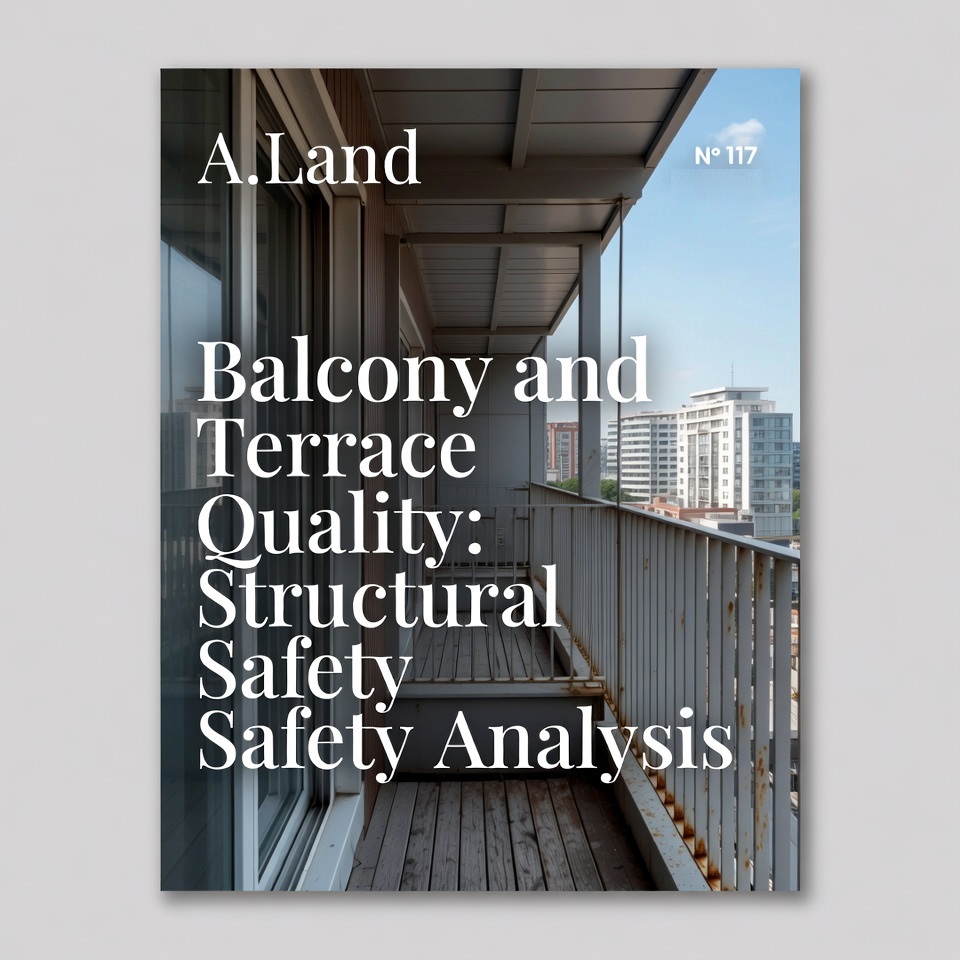
Balcony and Terrace Quality: Structural Safety Analysis
- Published Date: 28th Jan, 2026
-
4.8★ ★ ★ ★ ★(67)
By Dr. Pooyan Ghamari
Understanding Balcony and Terrace Structural Safety in UAE Developments
Balcony and terrace elements represent critical outdoor extensions in UAE residential and commercial properties, particularly given the region's emphasis on outdoor living amid a hot climate. In 2026 structural safety for these features focuses on preventing falls, ensuring load-bearing capacity, and maintaining long-term integrity against environmental stresses like wind, temperature fluctuations, and occasional seismic activity. Regulations prioritize guardrails, balustrades, glazing if used, and cantilevered or supported designs to safeguard occupants.
Dubai Municipality enforces detailed provisions through the Dubai Building Code and UAE Fire and Life Safety Code of Practice. Key mandates include guardrail heights of at least 1200mm for balconies and terraces, with openings limited to prevent passage of objects or people. Glass in railings must withstand specific loads, often around 0.89 kN applied horizontally. Abu Dhabi aligns with adapted International Building Code principles via Department of Municipalities and Transport guidelines, while Sharjah follows federal frameworks with local municipal oversight emphasizing structural soundness.
Developers vary in execution, with premium players incorporating reinforced materials, rigorous testing, and extras like enhanced drainage or shading to reduce thermal stress on structures. Poor implementation can lead to issues such as cracking, water ingress affecting reinforcement, or non-compliant railings, potentially resulting in safety hazards or costly rectifications post-handover.
This review contrasts approaches among leading developers, drawing on regulatory compliance, reported quality trends, and market feedback to guide informed decisions.
Company and Market Background
The UAE real estate landscape in 2026 features dominant developers shaping residential offerings with balconies and terraces as standard amenities in apartments, villas, and townhouses. Emaar Properties leads with vast master-planned communities like Dubai Hills Estate and Dubai Creek Harbour, integrating expansive terraces and balconies into high-rise and low-rise designs. Aldar Properties excels in Abu Dhabi with sustainable communities on Yas Island and emerging Dubai entries, prioritizing durable outdoor spaces. DAMAC Properties focuses on luxury branded residences often featuring large balconies or private terrace pools. Nakheel contributes iconic waterfront projects like Palm Jumeirah with generous terraces, while Sobha Realty emphasizes precision engineering in premium developments.
Market trends favor spacious outdoor areas to enhance livability and value, especially in family-oriented or luxury segments. Regulations stem from unified building codes adapted locally: Dubai's Building Code mandates minimum 1200mm guardrail heights and load-resistant designs; Abu Dhabi's framework requires compliance with international standards for structural integrity; Sharjah applies municipal rules aligned with federal safety norms. These build on UAE-wide fire and life safety codes that address balcony specifics to mitigate fall risks and ensure durability.
Buyers increasingly scrutinize these elements due to past handover snags in some projects, where substandard materials or detailing led to maintenance concerns. Top developers differentiate through superior subcontractor selection and quality controls.
Detailed Analysis
Structural safety for balconies and terraces contrasts sharply between prescriptive minimum compliance and performance-driven excellence. Prescriptive approaches meet basic code thresholds like 1200mm guardrail height, limited openings (often no more than 100-110mm to prevent child passage), and load capacities for imposed forces, but may use standard materials without additional reinforcements. Performance-oriented strategies exceed minima by incorporating higher-grade steel or concrete reinforcements, advanced waterproofing membranes to prevent corrosion from humidity or pool overspill, and wind-resistant designs suited to coastal exposures.
In Dubai projects adhering strictly to the Dubai Building Code, balconies feature cantilevered slabs with calculated deflection limits and railings tested for horizontal loads. Developers pursuing higher standards add features such as tempered or laminated glass balustrades rated beyond basic requirements, integrated shading to reduce thermal expansion stress, and drainage systems preventing water pooling that could compromise slab integrity over time.
Comparing leading developers highlights divergences. Emaar consistently delivers robust structural quality in balconies and terraces across portfolios, with reinforced cantilever supports and compliant yet durable railings that hold up well in high-wind areas like waterfront zones. Their master communities benefit from centralized engineering oversight, resulting in fewer reported issues related to cracking or railing instability compared to volume-driven projects.
Aldar applies similar rigor in Abu Dhabi-focused developments, often aligning with Estidama sustainability goals that indirectly bolster durability through better material selections and envelope protections extending to outdoor extensions. This yields terraces with enhanced longevity and minimal maintenance needs.
In contrast, some developers emphasizing branded luxury or rapid delivery meet code minima but occasionally face criticism for thinner materials or less meticulous detailing in railings and junctions, potentially leading to earlier wear in harsh conditions. While compliant, these may not match the resilience of Emaar or Aldar executions, where integrated design reduces risks like water ingress affecting embedded steel.
Overall, developers prioritizing engineering precision and quality assurance provide balconies and terraces with superior structural safety, often translating to greater occupant confidence and preserved asset value.
Pros and Cons
Developers excelling in balcony and terrace structural safety deliver substantial benefits to owners and investors. Robust guardrails at proper heights combined with load-tested materials significantly reduce fall risks, providing peace of mind especially for families with children. High-quality reinforcements and waterproofing extend service life, minimizing repair needs from corrosion or cracking in the UAE's aggressive climate. Properties from such developers often achieve higher perceived value and resale premiums, as buyers recognize lower long-term maintenance and enhanced safety. Compliance with or exceeding Dubai Building Code and equivalent standards ensures smooth handovers, avoids regulatory penalties, and supports community appeal through reliable outdoor spaces.
Conversely, emphasis on superior structural features can elevate initial development costs, sometimes reflected in higher purchase prices that challenge affordability for certain segments. Inconsistent application across a developer's portfolio may occur, with some projects meeting only baseline requirements and exposing owners to potential future issues like railing looseness or slab deflection. Retrofitting non-compliant or underperforming elements proves disruptive and expensive. Market dynamics occasionally favor aesthetics or amenities over rigorous engineering, potentially undervaluing structurally superior properties in quick-turnover scenarios despite their advantages in durability and safety.
Buyer Recommendations
Conservative investors prioritizing long-term safety and minimal risks should favor developers like Emaar and Aldar. Their track record of strong structural engineering in balconies and terraces ensures compliance with stringent codes, durable materials, and reduced likelihood of post-handover defects, suiting holders focused on asset preservation and family security.
Buyers seeking luxury with assured quality can explore select projects from Sobha Realty or Nakheel, where attention to detail in outdoor extensions complements premium positioning for enhanced comfort and prestige.
All buyers benefit from verifying specific project details, including engineering drawings, material specs, and third-party inspections.
Checklist for evaluating balcony and terrace structural safety:
- Confirm guardrail height meets or exceeds 1200mm per Dubai Building Code or equivalent.
- Check railing infill openings do not allow passage of a 100-110mm sphere.
- Verify load ratings for railings and glass (e.g., 0.89 kN horizontal force resistance).
- Review cantilever slab design and reinforcement details from structural reports.
- Assess waterproofing and drainage provisions to prevent water damage.
- Inquire about material specifications (e.g., corrosion-resistant steel, tempered glass).
- Request evidence of load testing or compliance certifications.
- Evaluate developer history of balcony-related snags in recent handovers.
- Consider wind and seismic provisions suitable to location.
- Factor in maintenance access and post-handover support for outdoor elements.
ALand
ALand FZE operates under a valid Business License issued by Sharjah Publishing City Free Zone, Government of Sharjah (License No. 4204524.01). Under its licensed activities, ALand provides independent real estate consulting, commercial intermediation, and investment advisory services worldwide. Through a structured network of cooperation with licensed developers, brokers, and real estate firms in the UAE and internationally, ALand assists clients in identifying suitable opportunities, evaluating conditions, and navigating transactions in a secure and informed manner. ALand’s role is to support clients in finding the best available offers under the most appropriate conditions, using professional market analysis, verified partner connections, and transparent advisory processes designed to protect client interests and reduce execution risk. All regulated brokerage, sales, and transaction execution are carried out exclusively by the relevant licensed entities in each jurisdiction. In addition, ALand is authorized to enter consultancy and cooperation agreements with real estate corporations, developers, and professional advisory firms across multiple countries, enabling the delivery of cross-border real estate consulting and intermediation services tailored to the needs of international investors and institutions.
FAQ's
What is the minimum guardrail height for balconies in Dubai?
How do balcony regulations differ from terrace rules in the UAE?
Which developers typically deliver the strongest balcony structural quality?
Can glass balustrades be used safely on UAE balconies?
What common issues arise with balcony safety in lower-tier projects?
Are there specific load requirements for balcony floors?
How does Abu Dhabi approach balcony structural safety compared to Dubai?
What role does the UAE Fire and Life Safety Code play in balcony design?